Archive for the ‘thriller’ Category


.

A scientific experiment gone horribly wrong sends an
apocalyptic firestorm raging throughout the Eastern seaboard. If it reaches the
Atlantic, it might just be game over for the world.

.

.

Fireline

by Peter Berk

Genre: Action, Eco Thriller, Suspense

An unhinged scientist introduces a nano-based chemical
compound into the Potomac that’s designed to purify the world’s waterways but
that instead sets the river on fire and rapidly spreads directly toward
Manhattan, with only the young chemist who first warned against the experiment
the worlds best hope of stopping it.

Fireline takes us from the heart of Washinton, D.C. to the Statue of Liberty –
all of which are direclty impacted by an out-of-control firestorm snaking its
way to the Atlantic where it could go on to threaten every corner of the
world.

A science gone astray disaster novel, Fireline also touches on such timeless
themes as personal redemption, heroism in the face of seemingly insurmountable
obstacles, friendship and even father-son dynamics – all handled with touches
of humor and romance.

Amazon * Bookbub
* Goodreads

.

,
.

Peter Berk has written six novels, three TV pilots and
a dozen screenplays, including several with his father which became the basis
for the TimeLock series of novels. The original TimeLock novel
is a Finalist in the 2023
Chanticleer International Book Awards
for Science Fiction, Mystery,
and Global Thrillers. TimeLock was also named as a Distinguished Favorite in the
TechnoThriller category of the 2024 Independent Press Award
. TimeLock
2: The Kyoto Conspiracy
was published in 2023 and the third book in
the series will be published by IngramElliott. Peter and his family live
in Southern California.

Website * Facebook * Facebook * Instagram * Instagram 

TikTok * Bookbub * Amazon *
Goodreads

.

Follow the tour HERE for special content and a giveaway!

.


Enter the Fireline Giveaway Here

.

.

~~~~~

Thanks so much for visiting fuonlyknew and Good Luck!

For a list of my reviews go HERE.

To see all of my giveaways go HERE.


Merry-Go-Round Broke Down by David Woo & Margalit Shinar Banner

.

MERRY-GO-ROUND BROKE DOWN
by David Woo & Margalit Shinar
July 20 – August 14, 2026 Virtual Book Tour


Synopsis:
A novel of nine linked parables about globalization, ambition, hope, love, and greed spanning two decades and eight countries.

Fall 2008. The Waldorf Astoria New York. Two armed men storm the hotel’s famed bar and hold the occupants hostage: an American corporate raider, a Chinese tycoon, a British hedge fund manager, a Japanese housewife-turned-celebrity, a Mexican undocumented worker, a Wall Street bond salesman, and a Norwegian environmentalist. Who are these terrorists? What do they want? And what ties them to their captives? Merry-Go-Round Broke Down is a genre-breaking novel that explores globalization’s “butterfly effect”: how choices made in one corner of the world ignited an unstoppable chain of consequences that upended lives across continents.

/

Praise for Merry-Go-Round Broke Down:

“What a fantastic tapestry of wordsmithing and storytelling! It left me with a much better understanding of how the world was woven so tightly by globalization, all through the dramatic stories of fascinating cultures and characters that are relevant to this day.” ~ Paul Tudor Jones, Chief Investment Officer of Tudor Investment Corporation “You might think that it would be impossible to write a novel that helps the reader put her arms around the complex issues raised by globalization. Yet, David Woo and Margalit Shinar have done precisely this. The result is most engaging and insightful. It is also one that even globalization experts such as myself can profit from.” ~ Jagdish Bhagwati, University Professor of economics and law at Columbia University, author of In Defense of GlobalizationMerry-Go-Round Broke Down depicts the key socio-economic developments of the last quarter-century. It brings to life the people who put them into effect, as well as those who were affected by them. Few were untouched.” ~ Howard Marks, the co-founder and co-CEO of Oaktree Capital and international best-selling author of The Most Important Thing “A timely portrait of a world bound together by the pursuit of profit.” ~ Kirkus Reviews “An ambitious thriller with rich characterizations and a heart-pounding pace, Merry-Go-Round Broke Down also offers a stark, on-the-ground vision of globalization’s devastation.” ~ Booklife by Publishers Weekly “David Woo and Margalit Shinar have perfectly illustrated how even a tenuous connection between individuals can have a profound, far-reaching effect across the world that could never have been predicted.” ~ Reader’s FavoriteMerry-Go-Round Broke Down is a contemporary fiction novel with the propulsion of a financial thriller. It’s fiction, but it wants to explain the world while it entertains you… If you want a story that makes you look up from the page and think, “Wait, is this how it really works?,” then it delivers.” ~ Literary Titan

,

Merry-Go-Round Broke Down Trailer:

.


.

Book Details:

Genre: Financial Thriller

Published by: Regalo Press Publication Date: March 31, 2026 Number of Pages: 288 ISBN: 9798895655801

Book Links: Amazon | Kindle | Barnes & Noble | BookShop.org | Goodreads | BookBub | Simon & Schuster

.

Enjoy this peek inside:

.

Chapter 4
TOMOKO WATANABE Tokyo, Japan, January–July 2005
“Low interest rates punish savers.” —Bill Gross THE HOUSE IN KASHIWA, CHIBA Prefecture, southeast of Tokyo, was a two-storied box with aluminum windows and clad in white mosaics. It had a grey-tiled roof and a tiny front garden. The wind was howling outside as Tomoko struggled to get up from her bed. It was six o’clock in the morning and still dark, and everybody in the house was asleep. She was loath to abandon the warmth of the heavy duvet, but today was her husband Akihiro Watanabe’s birthday, and she wanted to surprise him with a special breakfast. Tomoko shivered as her feet, encased in thick white socks, trod silently on the tatami mat covering the floor. It was cold, even for January, and this was one time she wished there was heating in the bedroom upstairs. She put on her slippers, pulled on a heavy cardigan over her fleece pajamas, and went down to the kitchen. The kitchen, Tomoko’s kingdom, was small, but she ran it like a tight ship, every utensil and small appliance kept in its assigned place. She began to prepare her husband’s favorite menu: clam miso soup and omelet rolls. There was smoked fish left over from the previous night, as well as cooked rice. After turning on the small heater and quickly swallowing a cup of hot tea, she put on her old blue-checked apron and set to work. Poor Aki, she was thinking, as she removed from the fridge the asari clams she had bought the previous afternoon; he really deserved some cheering up. Only eight months ago he had lost his lifelong employment, the first serious crisis in their marriage of twenty-two years. The electronics company he had given his all to for over thirty years had gone bankrupt after its main customer decided to outsource to China. She rinsed the clams in cold water, rubbed them clean with a dishcloth, and set them aside to soak in salt water. She then filled a pot with water from the sink and blanched a leaf of kelp. When it had softened, she removed it with chopsticks and then put it back in the pot to boil for a minute or two before taking it out again. Though Aki had found a new job quickly enough, Tomoko was worried. It not only paid a third less than his previous salary, it was a temporary job, with a contract that had to be renewed every six months. While Tomoko was, by nature, someone who took life’s setbacks with a pragmatic optimism, she felt helpless in the face of the loss of their financial security. As she added dried bonito flakes to the boiling water, she shook her head and pursed her lips at the injustice of it. When the fish was cooked, she passed the broth through a fine sieve lined with a cloth. Discarding the scum, she sieved it again. And again. Inspecting the liquid for any telltale specks, she repeated the process until she was satisfied the broth was perfectly clear. She now reached out for the clams, soaking in their bath of brine. Usually, Tomoko loved the ritual fuss of birthdays, especially her husband’s—the shopping for presents, the paper decorations and cards, the candles on the cake—but this year there wasn’t much cause for celebration. She rinsed the clams and tipped them into the broth. Bringing the liquid to a boil, she skimmed it patiently. Once the clams had opened, she mixed in the miso paste, squeezing it through a small sieve with a spoon. The soup was ready. Now for the omelets. What was more worrying, she thought, breaking eggs into a bowl with a deft flick of her wrist, was that his pension was gone. And the new job offered no pension at all. The bleakness of their future agitated her as she whisked the eggs with more vigor than necessary and poured them into the frying pan. The omelets were done. When they had cooled a bit, she rolled them up into narrow, finger-shaped wraps and put them aside. Then she arranged the fillets of cold smoked fish in the middle of a long rectangular plate, which she decorated in one corner with a dollop of daikon radish infused with ponzu sauce. Finally, she heated up the rice and took out some nattō, fermented soybeans, everyone’s favorite. She looked out the window above the sink. The heavy night darkness was lifting, and she could make out the falling snowflakes and the leafless branches of the cherry tree in their garden bending in the wind. A cold grey light was beginning to infiltrate the kitchen. She switched off the overhead lamp, figuring she could do without it now. A brown Formica-top table with six chairs stood in a nook just off the kitchen. Poor Aki, she repeated to herself as she began to set it. At the age of fifty-three, there was little chance of his finding steady employment again. Although they never talked about it, she knew that, ashamed and frustrated, her husband was unraveling. His drinking binges had become more frequent, and he had taken to coming home at all hours. He was also becoming moody and short-tempered. Only last week he had flown off the handle when she told him she was thinking about looking for a part-time job. He wouldn’t hear of it, he had responded angrily. Their son was still at school and needed her. Besides, what would their neighbors think? It was out of the question. Though Tomoko knew his objections had more to do with his pride, she didn’t bring up the subject again. She vowed to herself she would find another way to help. But how? Tomoko put down a small flower arrangement, teacups, bowls, and chopstick supports on the table. She had to find a way to help Aki. Whereas she could still take comfort in little things, he had just lost his entire world. She took a moment to align the chopsticks just so. Taking a step back from the table, she viewed the result with satisfaction. Tomoko glanced at the kitchen clock squeezed between the toaster oven and a shelf. It was seven-thirty and all was ready. Plenty of time left for a leisurely meal before Aki left for the office and their son, Nishio, left for school. What a pity her daughter, Keiko, wasn’t there. Tomoko brushed that regret away, together with a lock of her permed black hair that had strayed onto her forehead, and stood meekly at the entrance of the kitchen, waiting. She could hear her family coming down the narrow wooden stairs. She bowed to her husband and her mother-in-law as they appeared, her face faintly flushed from her efforts, her shoulders hunched forward ever so slightly. “Ohayō gozaimasu,” she said, with the politest of greetings. But Aki only grunted a barely discernible thank-you as he viewed the mini-feast she had prepared and sat down, noisily pushing back his chair. Then he buried his face in the morning newspaper that Tomoko had laid, neatly folded, to the right of his chopsticks. He was followed by Nishio. At fifteen, he was a tall and gawky youth, with a few wisps of dark downy hair on his upper lip and chin. He advanced towards the table and sat down in silence. He sat there sullenly, looking down under lowered eyelids, not once making eye contact with his mother. He consumed his soup in a few rapid gulps and hurriedly shoved some rice into his mouth. Then with a curt, barely mumbled good-bye, he got up and was gone. “Don’t forget your bento box,” Tomoko’s voice rang out after him, “you must eat lunch!” The third person at the table was Mishimo, Tomoko’s mother-in-law. It was she who owned the house, and after the death of Akihiro’s father some ten years before had given over most of the space to her son’s family, keeping only one room for herself. It was a situation not without friction. She had never liked Tomoko and was of the opinion that her handsome son could have found a better match than the daughter of a taxi driver. Or, at the very least, a prettier one. Though their exchanges were invariably on the right side of civil, Mishimo inevitably found fault with everything Tomoko did. But this morning was different. She spooned down the soup slowly, savoring every sip. “Excellent, Tomoko,” she remarked loudly. “Well done.” A compliment! Tomoko was touched to the bottom of her heart. She then turned to her husband. “Anata,” he said, using a Japanese term of endearment. “I hope you’ll be home on time for dinner. I bought a cake for tonight. And there will be eel as a main course.” Aki didn’t shift his eyes from the newspaper. “No. I’m eating out. Client dinner. Don’t wait up for me. I’ll be back late.” If Tomoko was disappointed, she showed no sign of it. “Akihiro-san. I also bought you a small gift,” she announced timidly. She had bought it out of her personal savings and had hoped to give it to him at the evening meal. She would have to give it to him now instead. She went to the living room where she had hidden it. Coming back, she bowed respectfully and held out the package in her two open palms like an offering, saying “Happy birthday” in English. Aki finally deigned to lower the newspaper and stared at the box wrapped in delicately folded bright blue paper, tied with a slender red-and-gold string. He reached out to take it. But instead of opening it, he put it in the pocket of his suit jacket. “Have to rush now,” he said dismissively. “It’s the lighter you always wanted,” said Tomoko. But Aki responded with a dead gaze of bitterness at the wall behind her. Suddenly, he jumped up from his chair with such violence that it crashed to the floor. “Baka! You stupid woman! Kono ama, you bitch!” He exploded in an inexplicable fit of rage. Tomoko shrank back. “How many times do I have to tell you not to waste money?” he yelled. “Don’t you see the situation we’re in?” Without warning, he grabbed the cast-iron teapot from the table. He seemed ready to hurl it straight at her. Tomoko raised her arm to defend herself. He had hit her before, and she thought she knew what to expect. At the last moment, however, perhaps in response to a whispered word from Mishimo that never reached Tomoko’s ears, he changed the direction of his aim and the heavy pot went flying toward the kitchen. Spurting tea, it smashed loudly into one of the kitchen cabinets. In the silence that followed, Tomoko couldn’t move. Her heart beat wildly in her chest. But she didn’t say a word. Out of the corner of her eye, she was just in time to catch the expression of icy disapproval on Mishimo’s face. *** Excerpt from MERRY-GO-ROUND BROKE DOWN by David Woo & Margalit Shinar. Copyright 2026 by David Woo & Margalit Shinar. Reproduced with permission from David Woo & Margalit Shinar. All rights reserved.


.

David Woo & Margalit Shinar


About Author David Woo:

.

David Woo is a renowned global macro strategist, widely recognized for his bold and prescient calls on some of the biggest economic, political, and geopolitical stories over the past quarter century. Bloomberg called him “one of the most outspoken voices on Wall Street,” while Business Insider named him among “the twelve smartest people on Wall Street.” His views have shaped debates across markets, policy circles, and the global media. David began his career at the International Monetary Fund before going on to hold senior positions at Bank of America, Barclays Capital, and Citigroup. He earned a PhD in economics from Columbia University and a bachelor of arts in mathematics from Tufts University. A true product of globalization, David was born in Pittsburgh, raised in Taiwan, and educated in the United States. His career has taken him from Washington DC to London and New York. He is fluent in English, Chinese, and French.

Catch Up With David Woo:

www.davidwoounbound.com Amazon Author Profile Goodreads Facebook

,


About Author Margalit Shinar:

Margalit Shinar is an architect. Margalit was born in New York, the daughter of French émigrés. She has a master’s degree in art history from Tufts University and a bachelor of arts in architecture from the Technion, Israel Institute of Technology. She has edited a history book on ancient Israel. She is fluent in English, French, Hebrew, and Italian.

Catch Up With Margalit Shinar:

Amazon Author Profile Goodreads

.


Tour Participants:

Click through the other tour stops for can’t-miss reviews, insider interviews, exclusive guest posts, and more chances to win! Click here to view the Tour Schedule  


New Thriller, New Gift Card—Jump In!
This giveaway is hosted by Partners in Crime Tours for David Woo & Margalit Shinar. See the widget for entry terms and conditions. Void where prohibited.

.

MERRY-GO-ROUND BROKE DOWN by David Woo & Margalit Shinar | Gift Card Can’t see the giveaway? Click Here!

Get More Great Reads at Partners In Crime Tours

.

~~~~~

Thanks so much for visiting fuonlyknew and Good Luck!

For a list of my reviews go HERE.

To see all of my giveaways go HERE.


One Leg on Earth

By ‘Pemi Aguda


Publication date: May 5th 2026
Genres: Adult, Horror, Occult Fiction, Thriller

From the author of the National Book Award finalist Ghostroots, a debut novel that thrills with its eerie mix of folklore and history.

Something is haunting the pregnant women of Lagos. Across the city, they are walking into water . . . and drowning.

Twenty-three-year-old Yosoye arrives in Lagos ready to start her life. Working for a slick architectural firm, she finds a city of adventure and opportunity. Her new world is one of fancy gallery openings, glamorous friends, and all the shiny potential of the future, encapsulated in projects like Omi City, the ultra-luxury development her company is building, a symbol of the dawn of a brighter Lagos.

But Yosoye’s idyllic vision of Lagos soon begins to seem naive, and its darker, stranger layers trouble her. Something is not right about Omi City, and as construction speeds ahead, stories of strange deaths in the city’s open waters reach a fever pitch. And then, after a chance encounter, Yosoye discovers she is pregnant . . . a revelation which puts her on a collision course with an inexplicable force that is as seductive as it is deadly. A masterwork by a writer hailed as “an astonishing talent” (Lauren Groff), One Leg on Earth is an ambitious novel like no other: a coming-of-age story, an uncanny exploration of motherhood, and a chilling vision of the dark side of progress.

Goodreads / Amazon / Barnes & Noble / iBooks / Kobo

~~~~~

Enjoy this peek inside:

MIRIAM AIKI PRAYED FOR THE FRUIT OF THE WOMB for thirteen years. Thirteen years of chafed knees: blood and shredded skin staining church altars, shrine altars, her bedside rug, her mother-in-law’s living room tiles. Thirteen years begging for a miracle, for strength, for patience. Her cries were answered. At thirty-eight, her womb was unfurling its first bloody fruit.

Now, in the passenger seat of her husband’s car, she smiled at her taut six-month belly. An ugly joy stirred within her. Ugly because it sat heavy on top of her growing baby, nausea amassing saliva in her mouth. But mothers who’d hunted long for that title knew that this unpleasantness was welcome, embraced.

Miriam smoothed a hand over her lace buba. She smiled at her husband, Victor, who frowned at the standstill traffic. They were running late for his cousin’s wedding and hadn’t moved in twenty minutes. His knuckles tapped an agitated beat on the steering wheel along to soft jazz playing on the radio. Past her husband’s head, the blue BRT bus keeping them in merciful shadow advertised a “We Are Lagos” music concert. Celebrating our oneness together! Miriam turned her beaming face to her window, gap-tooth a narrow darkness in an otherwise white smile.

These shining eyes, these stretched lips, these deep dimples. The people of Third Mainland Bridge stuck in traffic with Miriam would always remember the fizzy happiness in these details.

Miriam’s bliss bubbled up, feathering her insides, shimmering around her baby, erupting from her throat in a giggle—a curious misplaced sound in that car.

Victor turned to her, startled. His hand brushed her thigh, her rounded belly.

“Are you okay?”

Miriam giggled again. Her head slid down the leather headrest, neck tilting backward for more happiness to escape, clavicle bared to her husband’s confused gaze. This frothing joy within Miriam, she wanted to warble it out, to dance through it, until she and her baby were heady with the fervor of it.

She pushed the passenger door open. Stepped out. Victor sat there, blinking in shock for what would later seem like two lifetimes. The humid air crowded in to displace cool air-conditioning. He clicked the radio off, leaned toward the open mouth of the door.

“Miriam? What are you doing?”

Miriam kicked her sandals off, flung the fuchsia-pink slingbacks behind her. One heel struck the car’s bonnet, leaving a silver chink. She wound between the bridge’s stalled vehicles: engines turned off; gears stuck in neutral. She skipped and spun and squealed. Even in the midst of that sweltering Lagos day of thumping car music and raucous engines and the truck that honked at her for dancing too close, Miriam’s squeal stood out, a siren.

Passengers lowered their half-eaten Pure Bliss wafers and leaned out of windows to watch this odd but entertaining episode. Drivers, stretching their legs in small huddles, paused their whining—about traffic and heat and wives and money and that new backache that made their worlds flush dark when they bent at the wrong angle. All necks craned toward Miriam. Hawkers hitched boxes higher and nudged each other to behold the spirited pregnant woman.

Miriam swayed, shoulders shaking with laughter at a joke nobody else could hear. Her legs kicked. Hands stretched, twirling as if being spun about. What joy! What joy!

Victor leaned on the horn. His feet hit tar, finally going after her. Had she gone mad? He yelled her name, using the tone his father wielded on his mother, demanding Miriam return to the car immediately.

But Miriam didn’t want to get back in the car. She wanted to dance, to be free, to glide forward with the happiness surging from her womb, her baby. Her husband navigated between fascinated watchers. He shouted, “Miriam! Miriam! Miriam!” But by the time he got to the railings, she had launched herself off Third Mainland Bridge, laughing and screeching into the lagoon below, belly-first, like a child jumping into the arms of a beloved parent.

.


About Author Pemi Aguda:

Pemi Aguda is a Nigerian writer known for her short stories and debut collection Ghostroots (2024). Her work often explores complex themes surrounding motherhood, identity, and the supernatural. Ghostroots, which includes previously published stories such as “Breastmilk” and “The Hollow”, was a finalist for the 2024 National Book Award for Fiction and received critical acclaim for its unifying themes and narrative cohesion.

Aguda’s stories have been widely recognized, earning multiple accolades, including an O’Henry Award in 2022 for “Breastmilk” and again in 2023 for “The Hollow”. Additionally, “Breastmilk” was shortlisted for the 2024 Caine Prize for African Writing. Her forthcoming novel, The Suicide Mothers, which won the 2020 Deborah Rogers Foundation Award, is slated for release in 2025.

Website / Goodreads / Instagram

.

GIVEAWAY

/

One Leg on Earth Blitz

.

~~~~~

Thanks so much for visiting fuonlyknew and Good Luck!

For a list of my reviews go HERE.

To see all of my giveaways go HERE.


The Vanishers by R. G. Belsky Banner

THE VANISHERS
by R. G. Belsky
June 15 – July 10, 2026 Virtual Book Tour


Synopsis:
Megan Foley knows she saw the little boy. So why does everyone at the perfect seaside house insist he never existed? The house was perfect. That was its first lie.

When Megan and her husband Patrick accept an invitation to spend the summer at a luxurious house share in Stone Beach, Connecticut, everything seems too good to be true. The rent is absurdly low. The host, Mrs. Monahan, is attentive to the point of unease. The other guests are pleasant — until they aren’t. One day, Megan sees a boy, Tommy, playing… and the next, Tommy is simply gone. Not moved. Not spoken of. Erased, as though he never existed. All the other guests at the house look at Megan blankly when she asks. One by one, the guests succumb to long hours in front of the television in a glassy trance. Patrick grows cold and distant. Something stirs in the attic. Megan alone seems immune — but for how long? As she begins to doubt herself and the house tightens its hold, she must confront the terrifying truth about Mrs. Monahan, the attic room, and the price of a perfect summer. A chilling gothic thriller for fans of atmospheric domestic horror — available in Kindle Unlimited.


.

MY REVIEW

A vacation at a beautiful seaside house. Sounds like a dream. But….. it could also be too good to be true, as Meagan is soon to discover. People start behaving strangely, including her husband. Then, people start disappearing and no one even remembers they existed at all. Why is Meagan the only one who sees that something is wrong? What is going on? And can she and her husband even leave?

I watch a lot of horror movies, gothic ones included. The synopsis grabbed me right away. I wondered whether the plot was going to be predictable. It wasn’t. I was kept on my toes, ever curious to what was behind the eerie occurrences. About halfway through I was pretty sure I had things figured out. But, I didn’t. Not really. There was a thing or two that I felt could have been left out. They didn’t work for me. That said, I still enjoyed this book and would definitely recommend it.

4 STARS

.

Book Details:

Genre: Paranormal Gothic Thriller

Published by: dp DIGITAL PUBLISHERS Publication Date: May 7, 2026 Number of Pages: 298 ISBN: 978-1918343335

Book Links: Amazon | KindleUnlimited | Goodreads | dp DIGITAL PUBLISHERS

.

Enjoy this peek inside The Vanishers:

.

PROLOGUE
Hudson Lake, Michigan
I know everyone in this diner is looking at me like I’m strange. Well, I’m sure used to that by now. It wasn’t always that way, of course. I mean I’m blonde-haired, just turned 30 and once – a million years or so ago before the terrible times happened – people said I was pretty. But now I realize that I look old beyond my years. I’ve lost a lot of weight, my face is pale and gaunt and I’m trembling noticeably right now even though it is the first real warm day of spring. I make my way unsteadily over to a stool at the diner’s counter and sit there quietly, without talking, even when a guy comes over and asks for my order. “What’ll it be, ma’am?” he smiles. I stare at him with a confused look on my face. Nothing people say these days – even simple questions like that – seem to make sense to me anymore. “Ma’am,” he repeats. “Pardon?” “My name is Danny. Danny Heller. I own this place. What do you want?” I think about if for a second, then say: “Do you think I could have some tea?” “Tea, sure.” He walks over to the kitchen area, pours a cup and brings it back to me. “How about something to eat?” he asks. “A sandwich. Some soup. Maybe a nice piece of pie. We got some nice pies today. Apple. Cherry. Lemon meringue.” “Lemon meringue?” “Sure. Want a piece?” I nod. “Yes, that would be nice.” Danny Heller cuts an extra large slice of the pie, places it onto a plate and carries it back to where I am sitting. I begin eating. Silently and without any emotion. Just like I do everything else now. “Are you from around here?” he asks. “No, not from around here.” What’s your name? “Uh, I’m Megan… “Well, I’m glad to meet you, Megan. Are you just visiting around these parts?” “I’m…,” I hesitate, because it’s painful to say the words., “I’m…looking for a vacation house.” “Hey we’ve got some good ones. The lake this time of year is one of the prettiest spots in all of Michigan. Or anywhere else, for that matter. Have you looked at many houses?” “Not here. Other places.” “You’ve been traveling then?” “Yes, I’ve been traveling quite a bit.” The truth is I have been traveling for nearly a year. I started back east, moving from resort town to resort town along the New England coast. When fall came, I started moving down along the coast toward the winter resorts. Miami Beach. The Gold Coast. The Gulf Shore. Then, with the advent of spring, I had come north and inland to look at lake areas. Ohio. Minnesota. And now Michigan. In all the places, I’ve done the same thing. Gone through ads for house rentals. Checked with real estate brokers. Driven aimlessly around shore areas looking. Always looking. Looking for the house. The house I can never forget. The house of my nightmares. “We have some local house listings on that bulletin board over there,” Danny Heller says, pointing to a wall at the end of the counter. “People with a place to rent put stuff up there. Maybe you’ll find something you want.” I get up from my stool and walk over to the bulletin board. Looking through the ads posted on the bulletin board without really expecting to find anything. But then I see it. And I scream! I scream so loudly that everyone in the diner stops eating and looks at me. It’s a scream that keeps gathering momentum as it goes on like a runaway train, terrifying everyone there. “What’s wrong?” Danny says, rushing over to where I’m standing by the bulletin board. I point to a picture of a house in one of the ads. “It’s here,” I whisper. “What?” “The house.” And it is. The house I’ve been looking for. The house from Pleasant Street. “I don’t understand,” Danny is saying. “It’s the house,” I sob. “Oh, my God, it really is the same house…” *** Excerpt from The Vanishers by R. G. Belsky. Copyright 2026 by R. G. Belsky. Reproduced with permission from R. G. Belsky. All rights reserved.


About Author R.G. Belsky:

.bout A

R. G. Belsky

R.G. Belsky is an award-winning author of crime fiction and a journalist in New York City. His newest mystery, THE VANISHERS, was published by dp DIGITAL PUBLISHERS. Belsky has published 26 novels. He also writes thrillers under the name Dana Perry. And he is a contributing writer for The Big Thrill magazine and BookTrib.

Catch Up With R. G. Belsky:

www.RGBelsky.com Amazon Author Profile Goodreads BookBub – @dickb79983 Instagram – @dickbelsky Threads – @dickbelsky X – @DickBel Facebook – @RGBelsky


.

Tour Participants:

Click through the other tour stops for can’t-miss reviews, insider interviews, exclusive guest posts, and more chances to win! Click here to view the Tour Schedule  


The Only Thing Vanishing Here Is Your TBR Time
This giveaway is hosted by Partners in Crime Tours for R. G. Belsky. See the widget for entry terms and conditions. Void where prohibited.

.

THE VANISHERS by R. G. Belsky | Gift Card Can’t see the giveaway? Click Here!

Get More Great Reads at Partners In Crime Tours

.

~~~~~

Thanks so much for visiting fuonlyknew and Good Luck!

For a list of my reviews go HERE.

To see all of my giveaways go HERE.


SHADOWS OF FRENCHMEN by Michael Rigg Banner

SHADOWS OF FRENCHMEN
by Michael Rigg
June 22 – July 31, 2026 Virtual Book Tour


Synopsis:
A Jonathan Gray, M.D. Mystery

  On a frosty Sunday morning in February, Dr. Jonathan Gray, Coroner of Orleans Parish, faces a gruesome sight. A dead man splayed against the circular steel and cut-glass blocks of the city’s AIDS memorial in Washington Square Park has strange symbols carved into his forehead and chest. A coded note—a cipher—has been placed under one hand. The body mutilation and note are hallmarks of a serial killer dubbed by the news media as the “Mardi Gras Sweeper,” because he strikes during Carnival season and leaves coded manifestos taunting police and giving hints about his next victim. Hoping to avoid a panic during the city’s most profitable season, Mayor Max Jamerson asks Gray to investigate the murder “on the sly,” without formal assistance from the New Orleans Police Department. Time is of the essence as Gray races to figure out the cipher and track down the Sweeper in order to prevent additional killings—and save Mardi Gras.

.

Praise for Shadows of Frenchmen:

.

“A chilling, razor-sharp mystery set against the explosive energy of Mardi Gras. This cat-and-mouse hunt fuses cryptic clues, relentless suspense and rising terror into a tale that gives us a horrifyingly intimate glimpse into a killer’s mind. Dr. Jonathan Gray is a hero you won’t forget—and the Mardi Gras Sweeper is a nightmare you won’t escape.” ~ Kathleen Antrim, Bestselling Author, President-Outliers Writing University “Michael Rigg does it again, with another thrilling mystery that you won’t be able to put down featuring New Orleans Coroner Jonathan Gray. Shadows of Frenchmen takes readers into the darkest corners of New Orleans’ lush settings and spooky cemeteries as Gray and his colleagues hunt for a possible serial killer, all against the backdrop of raucous Mardi Gras celebrations. Rigg’s love for this extraordinary city shines through on every page, even as danger lurks among the Spanish moss and above-ground tombs.” ~ Ellen Byron, USA Today Bestselling & Agatha Award Winning Author “As a coroner, Dr. Jonathan Gray is the new Kay Scarpetta. In Shadows of Frenchmen, author Michael Rigg skillfully uses beads, beignets, bullets, bombs, and bodies to make New Orleans vivid and alive.” ~ John DeDakis, Former CNN editor, writing coach, and author of the Lark Chadwick mystery-suspense-thriller series, at johndedakis.com. “Great action from the get-go! Atmosphere, characters, and all the right ingredients. A great read by Michael Rigg!” ~ Heather Graham, New York Times Bestselling Author “Featuring smart and complex characters, Shadows of Frenchmen pulses with energy, taking the reader on a breathless chase for a serial killer terrorizing the city in the days leading up to a city-wide Mardi Gras celebration. Fans of the intrepid New Orleans coroner Dr. Jonathan Gray will not be disappointed!” ~ K.L. Murphy, Author of the Detective Callie Forde Mysteries, The Great Forgotten, and the award-nominated Her Sister’s Death

.

Shadows of Frenchmen Trailer:

.


.

Book Details:

Genre: Medico-Legal (Coroner) Thriller

Published by: Level Best Books Publication Date: May 5, 2026 Number of Pages: 336 ISBN: 979-8898202354 Series: A Jonathan Gray, M.D. Mystery, Book 2

Book Links: Amazon | Kindle | Barnes & Noble | Bookshop | Goodreads | BookBub | Level Best Books

.

Enjoy this peek inside:

.

Chapter One
Alpha and Omega Sunday, February 1, 2015 – 1:47 a.m.
Twenty-plus years with the Orleans Parish Coroner’s Office taught Jonathan Gray to expect the unexpected. But Washington Square Park had always been a tranquil haven on the fringe of the French Quarter. So crime-scene tape draping the square’s wrought-iron fence presented the visual equivalent of fingernails on a chalkboard. Moonlight filtering through stately live oaks cast eerie—almost funereal—shadows, adding to the dissonance. Fluttering in the nippy midwinter breeze, the neon-yellow ribbon communicated a mute warning. On this side, normalcy. On the other, insanity. Stepping into the dysfunction never got easier. Regardless, turning back wasn’t an option. As if speaking the incantation aloud would immunize him against the unfolding drama, he repeated his trite pre-crime scene mantra: “Abandon all hope, ye who enter here.” His breath lingered in the frosty air before evaporating. After checking in with the uniformed officer monitoring access, Jonathan angled toward floodlights illuminating a temporary canopy above the city’s AIDS memorial. More tape—red as opposed to yellow—identified the innermost “Do Not Cross” perimeter. Crime scene technicians in white Tyvek protective suits busied themselves measuring and photographing what must be the reason he’d been summoned. A male corpse sitting upright on the ground—its arms and legs twisted at seemingly impossible angles—leaned against the memorial’s circular cut-glass and steel panels surrounded by a pool of thick, dark-crimson liquid. A curved, nearly rectangular piece of wood with brass edges—most likely a knife handle—protruded from under the right side of the dead man’s rib cage. A portion of his intestines spilled out of the wound. A second knife—its handle and part of its blade visible—had been thrust downward into the soft tissue between the left collarbone and neck. Cause of death seemed too obvious to require someone of Jonathan’s seniority. A first-year med student could have made the call. But markings carved into the dead man’s forehead and chest hinted at something more sinister. No wonder Mitch Broussard from NOPD had called him in the middle of the night. The man’s heavy flannel shirt lay open, exposing his chest and a series of capital letters etched into his skin. The letters—G I D I A I D I V—made no sense, at least not in English. A folded piece of paper with similar letters and other symbols, not quite readable from that distance, lay under the man’s left hand. Lack of blood covering the letters in the chest signaled they had been added postmortem. Jonathan focused on two marks in the man’s forehead. An uppercase “A” and what looked like an upside-down horseshoe—the Greek letter Omega—apparently cut while the victim was still alive. It couldn’t have been two years already. But there it was. Alpha and Omega. Jonathan bit his lip and cursed under his breath. Then, a silent prayer. Looked like the nightmare was about to begin—again. One of the CSTs stood and raised her clear face shield. “Hey, Doc. Welcome to Funsville.” Excerpt from SHADOWS OF FRENCHMEN by Michael Rigg. Copyright 2026 by Michael Rigg. Reproduced with permission from Michael Rigg. All rights reserved.


.

About Author Michael Rigg:

.

Michael Rigg

Agatha and Anthony-nominated author Michael Rigg, a lawyer for more than four decades, writes mysteries and thrillers set in two very different locations: Virginia Beach (where he lives) and New Orleans (which he visits as often as possible “for research,” including participation in three Mardi Gras Krewes). He is a retired Navy Judge Advocate and a retired civilian government attorney, formerly working for the Department of the Navy Office of the General Counsel. He is a member of International Thriller Writers, Mystery Writers of America, and both the Sisters in Crime national organization and its Southeastern Virginia Chapter—Mystery by the Sea.

Catch Up With Michael Rigg:

www.MichaelRigg.com Amazon Author Profile Goodreads BookBub – @michaelrigg716 Instagram – @michael.rigg716 Threads – @michael.rigg716 X – @MDR102030 LinkedIn Facebook


Tour Participants:

Click through the other tour stops for can’t-miss reviews, insider interviews, exclusive guest posts, and more chances to win! Click here to view the Tour Schedule  


Beads, Beignets & Bookish Bounty
This giveaway is hosted by Partners in Crime Tours for Michael Rigg. See the widget for entry terms and conditions. Void where prohibited.

.

SHADOWS OF FRENCHMEN by Michael Rigg | Gift Cards Can’t see the giveaway? Click Here!

Get More Great Reads at Partners In Crime Tours

.

~~~~~

Thanks so much for visiting fuonlyknew and Good Luck!

For a list of my reviews go HERE.

To see all of my giveaways go HERE.


THOSE WHO SHALL DIE by Michael Bradley Banner

THOSE WHO SHALL DIE
by Michael Bradley
June 22 – July 17, 2026 Virtual Book Tour


Synopsis:

A collective of mystery writers, known as the Society of Fibbers, has captivated thousands with their addictive podcast—catapulting each member into the limelight. But when one of their own is found dead under chilling circumstances, the remaining Fibbers realize their newfound fame may have painted a target on their backs. Rebecca Stanchion, one of the group’s co-founders, is convinced her friend’s murder is a tragic case of domestic violence—until a sinister attempt on her own life shatters that theory and threatens her family. Meanwhile, Zach Hargrove, a fellow writer, becomes obsessed with the cryptic black cards left at both crime scenes. Each card seems to whisper a warning: the killer is watching. Is this the work of a fan driven to madness, or has betrayal seeped into the heart of the Society itself? As an annual writers’ conference approaches, Zach and Rebecca race against time to unmask the killer before the Society of Fibbers’ headline appearance turns into a deadly final act.

.

Praise for Those Who Shall Die:

,

“Michael Bradley has done it again! Those Who Shall Die is a thrilling novel of mystery and suspense, a tense and twisty page-turner that will leave you desperate to learn who is killing mystery authors and why.” ~ Lisa Malice, bestselling author of Lest She Forget, winner of the 2023 IBPA Best New Voice in Fiction award. “A well-written, clever whodunit with crafty twists that will keep readers guessing.” ~ Jennifer Sadera, award-winning author of I Know She Was There. “… keeps the reader’s head spinning as secrets emerge, friendships fail, alliances dissolve, and animosities rise to surface until the final betrayal is revealed. A page turner that plumbs the depths of ambition, betrayal, and murder.” ~ Jane Kelly, Author of the Meg Daniels mysteries.

.

Those Who Shall Die Book Trailer:

.


.
Book Details:

Genre: Amateur Sleuths, Suspense Thrillers

Published by: Initium Books Publication Date: July 7, 2026 Number of Pages: 388 ISBN: 9780986200243 (ISBN10: 0986200247)

Book Links: Amazon | Kindle | Barnes & Noble | BookShop.org | Goodreads | BookBub

.
Enjoy this peek inside:

.

Chapter One
Zach Hargrove held the serrated hunting knife in a white-knuckled grip as he silently crept forward. No room for mistakes this time. This had to be silent, swift and deadly. Just one fierce thrust into the carotid artery. It would be messy, but she had to die. Nellie sat—unmoving—in a black leather office chair, facing the third-floor windows that looked out over Old Mill Creek. If she was aware that he was behind her, she gave no sign. Her dark straggly hair hung over the back of the chair in tangled clumps. Zach couldn’t remember the last time he’d run a brush through it. She needed a wash too, but he’d given up on that long ago. Nellie had been exactly what he needed at first, but after so many years, she’d become more of a burden than a help. He hated having to move her heavy, awkward body from chair to chair, room to room. Caring for her had become arduous. No one would miss Nellie if he got rid of her . . . Her head tilted to the right, blocking her neck from his view, and he hesitated. He wouldn’t be able to strike cleanly from this direction with her head tilted. He swapped the knife from his right hand to his left. The rubber handle felt awkward in his grasp. A few practice swings with his non-dominant hand felt odd and clumsy, so he tried some overhead plunges. Maybe he could stab Nellie in the back of the neck instead. A quick blow to sever her spinal cord, and she’d die in seconds. What if he yanked her head back and ran the knife across her neck, slitting it open from side to side? He shook his head. Too clichéd. Everyone slashed throats these days. He toyed, for a moment, with driving the knife through the back of the chair and into Nellie’s back. I’d never get the knife deep enough to kill her, he thought. She’d survive with a flesh wound—if that happened, he’d never hear the end of it. With a frown, he shifted the knife back to his right hand and decided to continue with his original plan: one fast jab to the right side of the neck. Zach glanced at his prey. Nellie remained still, oblivious of what he was about to do. He inched forward, his gray Skechers silent on the plush beige carpet. His fingers tightened on the knife handle, and he drew his arm back. The muscles on his shoulder were taut, but his arm had a slight tremble. He had to get this right on the first try. After two more cautious steps, he stood behind Nellie, staring down at a scalp of unkempt hair. Oh, how he hated that hair. With one barbaric swing, he brought his arm down, but the blow didn’t go quite as planned. The knife tip deflected off her head, tangled in a clump of hair, and plunged into Nellie’s shoulder. “Damn it,” Zach shouted. He stood for a moment, studying his handiwork. Nellie slumped forward, the knife standing tall in her shoulder. He tried to withdraw the knife slowly, but the serrated blade caught on several threads and tore the seam in Nellie’s shoulder. Clumps of polyester stuffing—like giant cotton balls—tumbled out of the hole and fell to the floor. Zach let out a long sigh as he placed the knife on the nearby desk. Now he’d have to sew her up. He spun the office chair around and stared at Nellie. Her featureless face and black button eyes stared blankly back at him. Patches—both big and small—covered her arms, abdomen, head, and legs—scars of the many instances of his mistreatment. “I’m glad you don’t hold a grudge,” he said. Zach wrapped his arms around the life-size dummy and lifted her out of the chair, her canvas skin rough on his bare arms. A trail of white filling marked his steps as he manhandled her across the room and propped her up on the sofa. Dropping into his desk chair, he reviewed the previous few paragraphs he’d written just before he attempted to kill Nellie. The murder scene “seemed” to flow, but he wasn’t satisfied with the way it turned out. His antagonist—the mysterious Mr. Price—had entered the home of Dallas Kincaid with the intention of killing Kincaid’s new girlfriend. But Zach had found the scene difficult to write. There was something about the logistics that bothered him, hence his attempt to “kill” Nellie, his long-time partner for acting out crime scenes. For her part, Nellie had endured a dozen or more stabbings, being thrown from windows, run over by cars, and even shot twice. And yet she never once complained. Zach stood again, snatched a Bic pen from the desk, and paced around the room, pausing on occasion to glance out the windows that covered all four walls. The third floor of his house, his “Author’s Loft,” as he liked to call it, had a 360-degree view of the surrounding yard as well as the creek that flowed past the back of his property. The small Delaware town of Lewes hadn’t been his first choice of places to call home. But when he’d first toured the house three years ago, the bright openness of the room couldn’t have been more perfect for him. It satisfied his need for a place to write, and the room’s openness was preferred over the more confined spaces he’d seen in every other house he’d toured. He’d put an offer on the place immediately and moved in a month later. As he paced, Zach furiously clicked the button on the pen with his thumb. He passed the lone bookshelf, stuck in the corner between the adjoining walls’ windows, and paused to study the colorful hardback spines of his previous eight Dallas Kincaid Mystery novels. Five of them had become New York Times bestsellers, but not the last two. His protagonist, Dallas Kincaid, had become increasingly more difficult to write over the past couple years. The character had become too clichéd, too much like every other amateur detective in the market, and Zach was struggling to keep each new book fresh and original. He was ready for something new, something different. “This will be the last Kincaid novel,” he’d told his agent, Mariah Maddison. “Don’t be too hasty,” she’d said. “You might regret those words once the book is released.” With a sigh, Zach slipped the Bic pen into his pants pocket, returned to his desk, and hovered his fingers over the keyboard of his laptop. He stared at the text on the screen, the words fading together into a jumble of pixels that made no more sense than when he’d read them a few minutes ago. Pushing back from the desk, he growled, “Hell,” and stood, rounding the half wall that hid the stairs from view and descended into the house below. In the kitchen, Zach grabbed a Sierra Nevada Pale Ale from the fridge, twisted the top off and took a long sip. A calendar—tacked to a nearby corkboard—was open to the month of June. A quick glance over the dates made his stomach churn. He had until mid-July to finish the first draft of the next Dallas Kincaid novel. That gave him six weeks. The manuscript was only thirty percent done. He sighed as he eyeballed the next few weeks. There was an upcoming recording session for the Society of Fibbers podcast. A book signing with Jasper Stone and Martina Vargas in Virginia. He flipped up the calendar page and looked over July. The week after Independence Day was blocked out for ThrillNYC in New York City. Damn, that only gives me five weeks to finish the book. His stomach twisted in knots as his anxiety rose. Zach moved through the open dining room to the sliding glass door, stepped onto his back deck, and gazed out across the creek. The tide was out, and the muddy banks were exposed to the Tuesday afternoon sun. An eagle was perched in the tree that hung over the water. The lush cordgrass stood tall along the edges of the creek, outlining the maze of the twisting waterway. A gentle breeze rustled the tips of the grass. The faint aroma of marsh water punctuated each deep breath. So peaceful. So relaxing. He closed his eyes and listened to the tranquility around him. But it did little to subdue the angst within him. When was his next therapy appointment? Maybe it was time to try some of the meds his therapist had so often suggested. From within the house, the shrill of his mobile phone interrupted the serenity of the moment. Moving back into the kitchen, he scooped up the phone from the counter where he’d left it. The voice that greeted him was grave and somber. “Zach? It’s Rebecca. Something terrible has happened. Martina Vargas is dead.” *** Excerpt from Those Who Shall Die by Michael Bradley. Copyright 2026 by Michael Bradley. Reproduced with permission from Michael Bradley. All rights reserved.


.

About Author Michael Bradley:

,

Michael Bradley

Michael Bradley is an award-winning author from Delaware who started life as a radio disc jockey, working at stations in New Jersey and West Virginia. His time in radio provided him with a wealth of fond, enduring, and sometimes scandalous memories that he hopes to one day commit to paper. After spending eight years “on-the-air,” he realized that he needed to get a real job. He has spent the next twenty or so years working in Information Technology. And yes, he has said “try turning it off and on again” more times than he wants to admit. Never one to waste an experience, he used his familiarity with life on the radio for many of his suspense novels. His third novel, DEAD AIR (2020), won a Foreword INDIES Award and a IBPA Benjamin Franklin Award.

Learn more about Michael Bradley and his books:

mbradleyonline.com Amazon Author Profile Goodreads – @mjbradley88 BookBub – @mjbradley88 Instagram – @mjbradley88 Threads – @mjbradley88 Facebook – @mjbradley88


,
Tour Participants:

Click through the other tour stops for can’t-miss reviews, insider interviews, exclusive guest posts, and more chances to win! Click here to view the Tour Schedule  


Win Before The Next Victim Falls
This giveaway is hosted by Partners in Crime Tours for Michael Bradley. See the widget for entry terms and conditions. Void where prohibited.

.

THOSE WHO SHALL DIE by Michael Bradley | Gift Card & Books Can’t see the giveaway? Click Here!

Get More Great Reads at Partners In Crime Tours

.

~~~~~

Thanks so much for visiting fuonlyknew and Good Luck!

For a list of my reviews go HERE.

To see all of my giveaways go HERE.


.

Some secrets are better left buried.

Others are waiting to pull you under.

.

.

Our Toxic Traits

by Rebecca Christo

Genre: Dark Romantic Suspense Thriller

Some secrets are better left buried. Others are waiting to
pull you under.

Jill Davis is just trying to survive the hustle of New York
City. As a private dog walker for the elite residents of an Upper East Side
high-rise, she’s used to navigating the eccentricities of her wealthy clients.
From the icy and demanding Briar Whitney, to the mysterious and unnervingly
attractive Christopher Bennett. Jill prides herself on blending into the
background; but in a city where everyone is watching, staying invisible is
becoming a dangerous game.

While a serial killer that the media has dubbed the
“Socialite Strangler” stalks the shadows of Central Park, Jill’s carefully
curated life begins to unravel. A series of unexplained “glitches” in her daily
routine, and a questioning detective suggest that the danger isn’t just in the
park, but in the building where she works.

When a high-stakes Halloween party turns a theatrical hoax
into a gruesome reality, Jill is thrust into the centre of a nightmare. Caught
in a web of obsession and lethal deception, she must decide who to trust.

In a world where everyone is connected, there is nowhere
left to hide. Can Jill break free before her own toxic traits and those around
her, become her undoing?

Amazon * B&N
* Bookbub
* Goodreads

.

.
.
.
.

Avid dog lover and Author Rebecca Christo was born in
Toronto, Ontario, where she developed an early love of both reading and
writing. Of particular interest to her was creating a story with emotionally
mature content that was still entertaining enough to be read for fun on a
relaxing vacation. She hopes she’s succeeded with her very first published
novel: Mirrored Wounds.

When she’s not travelling with her husband, Darcy Christo, Rebecca enjoys
spending time with him, her children Ali, Brittany and Maxwell, and her puppies
(Lucy and Winston) in Wasaga Beach, Ontario where she currently lives.

Website * Instagram * Goodreads

.

Follow the tour HERE for special content and a giveaway!

.


Enter the Our Toxic Traits Giveaway Here

.

~~~~~

Thanks so much for visiting fuonlyknew and Good Luck!

For a list of my reviews go HERE.

To see all of my giveaways go HERE.


Night Home

By Rose Titus


Publication date: December 2nd 2017
Genres: Adult, Paranormal, Thriller

When Muriel Aubrey inherits an old house in a small town, she imagines that moving into the rural community will be deathly dull. But the old house once belonged to her eccentric granduncle, a professor who was said to be researching something very mysterious and unusual before his untimely death. While exploring the slightly rundown Victorian age home, she finds the research notes that had been hidden away and discovers that the professor was researching vampires.

It isn’t long before Muriel meets residents of the small town who knew the professor almost a century ago, and that everything he wrote in the notes he kept is true… And she suddenly finds herself stalked by a vampire hunter.

Goodreads / Amazon

~~~~~

Enjoy this peek inside:

There was the usual convenience store stuff on the rack: Tabloids, celebrity gossip, fashion magazines, newspapers. The store sold lottery tickets, junk food, candy, beer, a few grocery items, even a few small appliances. She noticed the guy who owned the place was watching her. It made her nervous. Not because he watched her, but because he was so pale. He did not look unhealthy. It was like he just never got out into the sun.

“You must be the new girl.”
“Huh?” She spun around to face him.
“You’re new in town. You just moved into that old house.”
“H-how do you know?”

“Well, how could I not know? I live across the field and saw the light was on for the first time in a long time.”

“Oh,” she felt silly. “Yeah. That’s right. I’m new in town. The house will need some work, but it’s not really that bad. My eccentric old uncle owned it a long time ago and—”

“I know. Professor Aubrey. He was a good man,” there was sadness in his voice.

“Yeah, that’s what they say—” how the hell would he know if he was a good man? This guy looked no more than thirty. The old guy had been dead for at least since 1936, according to the old newspaper clipping.

“Elton.” He seemed to smile as he introduced himself. “Elton Masaryk.”

“Muriel Aubrey.”

“That’s a pretty name.”

She went up to pay for the magazine she picked.

“You let me know if you need anything over there, all right? I live just across the field. If you need anything, don’t hesitate. Really.”

“Thank you.” She went for the door but turned around. “You sound as if you know something about Professor Aubrey?”

He hesitated. “A little. Why?”

“He was related to me, but I hardly know anything about him. I heard he was murdered by his colleague from the University and—”

“Yeah. That’s right. The same guy who murdered your uncle also killed three other people too. They gave him the chair. Bastard deserved it.” But then he was silent. He was beginning to sound as if he knew more than he could tell. As if it still angered him somehow. “Oh well.” Then he went silent.

“Okay. Thank you.” She left. She returned home as the sky began to brighten, and finally slept.

.

About Author Rose Titus:

Rose Titus resides somewhere in cold, dreary New England with two manipulative cats and a very out of date computer with which she creates horror and fantasy fiction. She also has a restored classic Buick to ride around in while in search of adventure.

For travel she has stayed the night in an allegedly haunted castle, has taken a boat ride on Loch Ness, and has visited the Bermuda Triangle — without getting lost.

Her work has previously appeared in Lost Worlds, Lynx Eye, Bog Gob, Mausoleum, Weird Terrain, Descend, The Dead River Review, and other literary magazines. She also writes regularly for Blood Moon Rising Magazine.

When she’s not working or writing or messing with her old car, she waits by the mailbox for her Fortean Times to arrive.

Amazon / Goodreads / Facebook

.

GIVEAWAY

.

Night Home Blitz

.

~~~~~

Thanks so much for visiting fuonlyknew and Good Luck!

For a list of my reviews go HERE.

To see all of my giveaways go HERE.


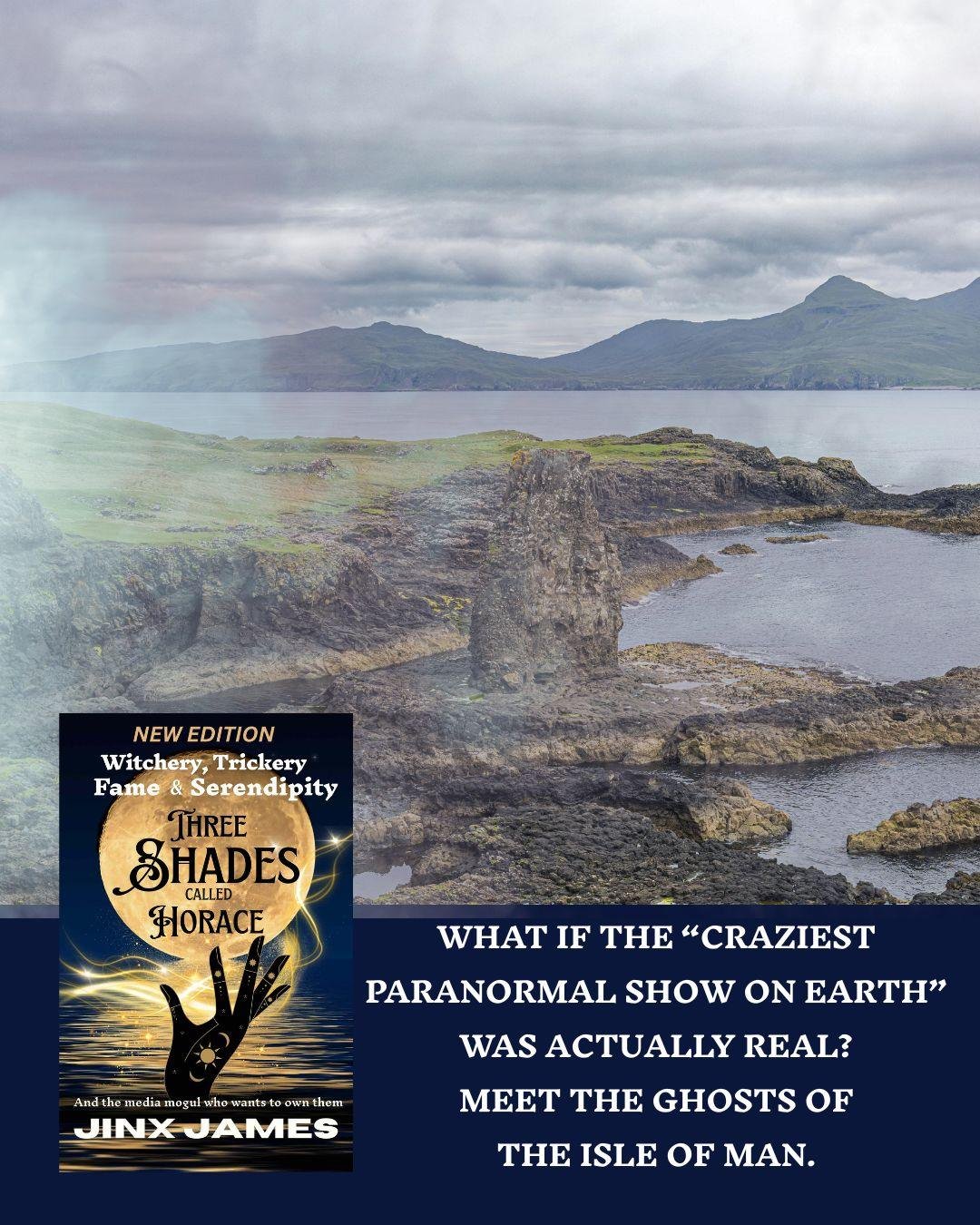
Book Details:

  Lies To Forever

by Marlene M. Bell


Category: Adult Fiction (18 +), 316 pages 
Genre: Suspense Thriller
Publisher:  Ewephoric Publishing
Release date:   March 2026
Content Rating:  PG because: There are a couple of references such as “hell” or “damn” in the dialog. No sex. Mild attraction. Mild description of dead bodies. Not too graphic. No strong language.

.

Book Description:

​First they stole her trust. Now they want her life. 

April Manning’s generous nature has always been a gift, and her greatest weakness. After being conned out of her life savings she’s left with an eviction notice and one last hope: reclaiming her old job at an architectural firm, even if it forces a showdown with head architect Hunter Ellis, her cheating ex-boyfriend.

There’s only one small hitch. The owner of the firm is dead, and the last thing April expects to find is the bloody murder weapon on her doorstep.

As the killer runs free, disturbing reminders arise from April’s troubled childhood, and suspicion flares at every turn…from the mysterious new handyman, to an estranged family member she’s tried to forget. Only one thing is certain. Death is stalking April, and she must unmask the killer before they land the fatal blow.
 
BUY THE BOOK:
Amazon
B&N
add to goodreads
.
.
INTERVIEW WITH AUTHOR MARLENE M. BELL:
.

How would you describe your style of writing to someone who has never read your work?

I like building each scene where it has a life of its own—using the protagonist’s five senses, not just her visuals, but more emphasis on smells and tastes. Adding metaphors to give the reader a sensory ride brings realism into each chapter. 

My books are easy to read with shorter sentences, utilizing words most of us use every day. My chapters always end on a cliffhanger. This assures the reader will want to turn pages to find the answers. Chapters are typically short and direct whenever possible. The Longest Chapter I’ve Written Award goes to A HUSH AT MIDNIGHT. Chapter one is 23 pages in order to introduce the history with the victim and my main character before the murder.

I write complicated mysteries to entice the reader to think about the twists in each book. 

What mindset or routine do you feel the need to set when preparing to write (in general whether you are working on a project or just free writing)?

I’m too regimented to free write. One story at a time, one idea at a time, is my motto. From my thoughts onto 4 x 6 cards to detail out each scene, finally building the cards into complete chapters. I spend a great deal of time thinking about each scene, usually from the opening line, and making notations about what events will happen in the book. To weave a complicated mystery with numerous red herrings, I’ve found this practice works the best to ensure that all potential plot holes are covered. If you’ve read my mysteries, you’ll understand why this process leaves less room for errors.

Do you take your character prep to heart? Do you nurture the growth of each character all the way through to the page? Do you people watch to help with development? Or do you build upon your character during story creation?

Prior to starting a novel, I make a fictitious background and character profile for each individual who makes an appearance in the book. Each person gets a thorough family history and detailed personality including their political beliefs, habits, where they were raised, nationality, and vocation, among other things. I get to know each character a head of time and add more details as I write. Sometimes the characters speak to me if I’ve made a mistake in my calculations of how he/she should act in their roles. I like to layer on personality traits with every appearance they make in the book, but I refer to the Character Profiles often. 

The hardest character to write is the villain, but they are my favorite to develop. Most of my characters have a frustrating side for the reader, which is part of the tension, but only one can truly be the ringleader bad guy in the end. I have to hold back tendencies to write the mustache-twisting guy or gal depicted best from old movies. My villains can be quirky yet likeable; that’s why they are harder to detect for the reader.

The tension between my series characters, Annalisse Drury and Alec Zavos is an ongoing adventure throughout four installments. My standalones, A HUSH AT MIDNIGHT AND LIES TO FOREVER show flawed female main characters who have to deal with the murder of a loved one in the first chapter. You’ll find me inside each of these women.

Do you have a character that you have been working on that you can’t wait to put to paper?

Yes! I find myself drawn to reading time travel fantasy that takes place in the 1800s or possibly the 1700s. (Before modern technology and the distractions we have in our time.) In a past life, I must have lived during this time because it calls to me. That may be why I wrote Annalisse as an antiquities valuator. History intrigues me as much as it does her. At some point, I’d like to write a time travel novel; a standalone perhaps, with the option to add series books. A woman protagonist will reside here too, since I can relate to women’s thoughts much better than getting into a man’s head.

Can you share your next creative project? If yes, can you give a few details?

My new release (March 2026) LIES TO FOREVER, is a suspense thriller that takes place in the Smoky Mountains of Tennessee. Here’s a short description of this book:  

A stalker wants her. After being scammed out of her life savings by a friend, April Manning is left with an eviction notice, a dead boss, and gunshots flying at her. When the victim’s murder weapon appears on her doorstep and childhood horrors follow her, the monster from the snowy Tennessee Appalachian woods has April in the crosshairs.

**In addition, I’m currently outlining another standalone mystery from my past as a California resident. The Northern California Coastline is the focus, and a protagonist in a bad personal relationship in need of an escape rounds out the opening chapters. (Title and book details to be divulged at a later date.)

Thank you for sharing my thoughts with your readers!

.
.
 

Meet Author Marlene M. Bell:

Marlene M. Bell shares many traits with the bold protagonists she writes. Her Annalisse series stars a New York antiquities appraiser who chases dangerous criminals in far-flung locales. The series has won eight international literary awards and an avid fan base around the world. When Marlene’s not busy plotting her next novel, she’s exploring her wooded Texas ranch with camera in hand and thirty sheep faithfully in tow. As an accomplished painter and nature photographer, she’s always hunting for the next spark of inspiration – or the next adventure calling her name.

connect with the author:  website ~ X ~ facebook ~ instagram ~ goodreads

,

GIVEAWAY

,


Enter the Giveaway:

click on picture to enter the giveaway


~~~~~

Thanks so much for visiting fuonlyknew and Good Luck!

For a list of my reviews go HERE.

To see all of my giveaways go HERE.


The Vivaldi Cipher by Gary McAvoy Banner

.

THE VIVALDI CIPHER
by Gary McAvoy


May 4 – 29, 2026 Virtual Book Tour
Synopsis:
VATICAN SECRET ARCHIVE THRILLER SERIES

  During the election of a new Pope in the mid-18th century, famed violinist Antonio Vivaldi learns of a ring of art forgers who are replacing the Vatican’s priceless treasures with expertly-painted fakes. Desperate, the composer hides a message in a special melody, hoping someone, someday, will take down the culprits . . . Nearly three hundred years later, the confession of a dying Mafia Don alerts a Venetian priest to a wealth of forged paintings in the Vatican Museum, and the key to their identities lies hidden in a puzzling piece of music. Father Michael Dominic, prefect of the Secret Archives, investigates, and is mystified when he finds a cipher in an old composition from Vivaldi. Desperate to stop this centuries-long conspiracy, he calls on fellow sleuth Hana Sinclair and Dr. Livia Gallo, a music cryptologist, to help him crack the code and learn the truth. But the Camorra, a centuries-old Italian Mafia clan, won’t stand by while some interfering priest ruins their most lucrative operation. Along with a French commando and two valiant Swiss Guards, Dominic explores the dark canals and grand palazzos of Venice to uncover the evidence he needs to stop the sinister plot. Can he unearth it in time, or will the Church’s most valuable artworks fall prey to this massive conspiracy?



.

Praise for The Vivaldi Cipher:

“McAvoy’s plot melds art, music, and ciphers into a century-spanning, edge-of-your-seat heist. Historic and modern clues meld together perfectly, and the complex workings of church and mob hierarchies combined with character relationships elevate the story. McAvoy’s prose is both clear and direct, serving the story well. Clever dialogue and unique character voices make the novel shine even brighter.” ~ The BookLife Prize “…[The Vivaldi Cipher] is gripping and hugely interesting, and the intrigue lies in the intelligent mystery of the cipher hidden in an unusual musical composition by former priest Antonio Vivaldi.” ~ MJV Literary UK “McAvoy concocts a wonderful thriller with a powerful narrative push that is like few books I have seen before. Short chapters and clipped dialogue keep the reader pushing ahead, fueled by a plot that is full of twists at every turn. I could not stop reading and found myself bingeing just to get through this book, more out of addiction to the story than anything else.” ~ Matt Pechey, Reedsy Discovery

.

The Vivaldi Cipher Trailer:

.


.

Book Details:

Genre: Suspense, Suspense Thrillers, Historical Thriller

Published by: Literati Editions Publication Date: August 16, 2021 Number of Pages: 400 ISBN: 9781954123076 (ISBN10: 1954123078) Series: Vatican Secret Archive Thrillers, Book 1 | Learn More: Amazon | Goodreads

Book Links: Amazon | Kindle | Barnes & Noble | BookShop.org | Goodreads | BookBub | Audible


Enjoy this peek inside The Vivaldi Cipher:

.

Prologue
Vatican City, Rome – February 1740
The first symptom of the poisoning began as a fever. Sitting at one of two long, white-silk-draped tables in the Sistine Chapel, along with sixty-seven of his fellow cardinal-electors, Pietro Ottoboni cast his vote for pope on the eighth day of the conclave to replace the late Pope Clement XII. Enfeebled by fever, the seventy-three-year-old Ottoboni made his way toward the front of the chapel to a small altar below Michelangelo’s majestic fresco The Last Judgment, dropped his ballot onto a brass saucer, then tipped the saucer, letting the ballot fall into the large brass urn beneath it. A few moments later, having returned to his seat, the cardinal collapsed onto the table, the high temperature having sapped his energy. Shocked, the other cardinals stood to better see what was happening to their colleague. The master of papal liturgical celebrations suspended the conclave while they moved Ottoboni to his apartment under the care of a Vatican physician. Long considered favorite among the papabili to succeed Pope Clement, Pietro Ottoboni was born in the Most Serene Republic of Venice to a rich and noble family, whose most distinguished member was his grand-uncle, Pope Alexander VIII. Ottoboni had held every important post in the Vatican during an illustrious career and, as cardinal-bishop to several churches in Italy, his annual salary exceeded fifty thousand gold scudi—the present-day equivalent of six million dollars per year. Cardinal Ottoboni had been a prolific paramour with a countless number of lovers, many of whom were married to the great patricians of Venice. In fact, the famous masks unique to Venetians were introduced not to ward off the plague, as many later believed, but to officially disguise the wearer’s identity—thus permitting anyone, noble or peasant, to do or say whatever one pleased. With this ingenious permissiveness, affari di cuore—affairs of the heart—were as common as the fleet of gondolas plying the canals of the celebrated city, without legal recourse. Having taken full advantage of this liberal device, Cardinal Ottoboni was known to have produced up to seventy children in his lifetime among his various mistresses. Though he lived well in Rome’s grand Palazzo della Cancelleria, Ottoboni’s greatest passions were music and art, and he was a generous patron to some of the most renowned masters in both fields: Arcangelo Corelli, Alessandro Scarlatti, Giuseppe Crespi, Tintoretto, Paolo Veronese—and most of all, to his close friend and protégé, the prodigious maestro di violino of Venice, Antonio Vivaldi. As he lay on his deathbed, Ottoboni summoned Vivaldi to his side. In a low, rasping voice, the cardinal confided to his friend a tale of great importance, a scandalous operation run by the notoriously corrupt Cardinal Niccolò Coscia in league with the feared secret Mafia organization known as the Camorra. In fact, he added with struggling breath, he was convinced it was Coscia, acting on orders from the Camorra, who had poisoned him to keep him from acting on what he knew. With information gleaned from one of his many spies, Ottoboni had discovered the ongoing scandal days earlier and approached Cardinal Coscia with a warning that he and his Camorra would soon be out of business, at least as far as the Vatican was concerned. Were it not for his required attendance in the papal conclave, he would have put a stop to it sooner, especially if he was elected pope, an elevation to supreme power that was expected by everyone. The following day, however, Cardinal Ottoboni succumbed to the poison, killed for a secret now known only to Antonio Vivaldi. Like most Italians, Vivaldi survived cautiously within the Camorra’s Venetian sphere of influence. The secret society’s tentacles reached into everyone’s life, and their strict enforcement of the seal of omertà—the sacred code of silence—ensured clan activities remained discreet and wholly within la familia. The family. Since the late seventeenth century, the Camorra had carved out its territories, starting in Naples and moving northward into the Lombardy and Veneto regions of Italy, encompassing its most lucrative prizes, Milan and Venice. Competing with La Cosa Nostra in Sicily and the ‘Ndrangheta of Calabria, the Camorra’s criminal enterprises included prostitution, gambling, smuggling, kidnapping, and art theft—but also the unusual niche of producing and selling fine art forgeries of the highest order. During the earlier reign of Pope Benedict XIII, who cared little for managing his vast realm of Papal States, Cardinal Niccolò Coscia oversaw all Vatican government operations, taking advantage of his authority to carry out substantial financial abuses, virtually draining the papal treasury. But his ongoing misdeeds eventually caught up with him. In 1731, he was charged with corruption, tried and convicted to ten years’ imprisonment, and excommunicated from the Church. However, still not without influence, he managed to get his heavy sentence commuted to a mere fine. He was also mysteriously reinstated as a cardinal, allowing him to take part in the papal conclave of 1740—the one during which Cardinal Ottoboni had died. * * * With Ottoboni out of the way, Cardinal Niccolò Coscia could now carry out his master plan without hindrance. In his not-so-secret role as capo of the Roman Camorra, Coscia led development of the Veneto branch of the Mafia clan, based in Venice and headquartered in his own newly acquired Palazzo Feudatario on the Grand Canal. Purchased with funds he had discreetly absconded from the Vatican treasury, Feudatario would be a most fitting place to carry out his planned forgery operation of the Vatican’s most profound works of art. Niccolò Coscia was a meticulous diarist and, owing to all the business he conducted outside the Church, he had created the first book to record the activities of his new organization, naming it Il Giornale Coscia della Camorra Veneta—The Coscia Journal of the Veneto Camorra. In it he would secretly record careful notations of all paintings by artist and title, including each work’s provenance and to whom the forgeries or originals were sold, depending on which he chose to return to the Vatican—for many were prominently displayed in public, while most were simply returned to the Vatican’s vast art storage vaults, unseen by anyone. The Coscia Journal would be passed down to each capintesta, head of the Veneto Camorra, for generations. Unfortunately for Coscia, Cardinal Ottoboni’s spies had discovered not only the Camorra’s abhorrent plan for art forgeries, but the very existence of the Coscia Journal for recording such transactions. At that point Ottoboni’s death was preordained, for no one could ever know such proof existed. * * * Antonio Vivaldi, who at age twenty-five was ordained a Roman Catholic priest, was now at a crossroads. He feared possessing knowledge of the treacherous secret passed on to him by his esteemed patron in his dying moments. Putting himself at odds with the Camorra was not just an unappealing prospect; it could end up costing him his life, depending on what he did with what he knew. But Cardinal Ottoboni had one last request of his protégé. Intent on stopping the sinful and unlawful activities of Cardinal Coscia, Ottoboni had pleaded with Vivaldi to see that Coscia was brought to justice, to pay for his felonious actions. Distressed by letting his friend and mentor die without the satisfaction of such a promise, Vivaldi agreed to do what he could. He would ensure that the authorities were informed, the Coscia Journal would be found, and the matter would be settled. After the cardinal’s stately funeral, Vivaldi waited for the right moment to fulfill his promise. But as he waited, he became more apprehensive. He was just a lowly priest, after all, and not a very good one at that. The violin was his life, and teaching it was his life’s work. Besides, who would believe him? Where was the proof? And what would the Camorra do to him if he were to expose its business? He had seen the results of their retribution—those who crossed the Mafia were dealt with harshly. Beheadings were not uncommon, and those who weren’t beheaded were drawn and quartered—alive. No, he must find a way to honor his pledge without exposing himself to such horrible consequences. An idea came to him: he would hide the messages in plain sight, in his musical compositions. Picking up a sheet of staff lined manuscript paper, Vivaldi began to assemble the first of many, his Scherzo Tiaseno in Sol. * * * Venice, Italy—Present Day
Venice, Italy—Present Day
An enormous flight of pigeons, hundreds of them, flocked overhead, diving for potato chips and bits of bread sticks tourists had enthusiastically tossed out for them, as Father Michael Dominic and Hana Sinclair made their way across the Piazza San Marco. Despite the ban on pigeon-feeding in St. Mark’s Square, little children were oblivious to the law and more amused by the flapping gray-and-white spectacle than frightened by the few gendarmerie patrolling the square, whose policing efforts to stop the feeding were futile. Venetian health experts estimate over 130,000 pigeons had roosted in the historic center—well over optimal concentrations for such a small public space—and efforts to rid the city of the determined birds had failed miserably. The damage to the marble buildings and statuary was considerable, not to mention possible pathogenic health hazards. Locals knew it was often prudent to cover one’s head with a newspaper or magazine when crossing the vast piazza, lest strollers subject themselves to the inevitable bombardment of bird droppings from above. An old hand at the practice, Father Dominic had kept pages of the newspaper he had read at breakfast for that very purpose, knowing he and Hana had to cross the piazza in order to get to Venice’s Biblioteca Marciana, the Library of Saint Mark. The director of the library had requested the Vatican’s help with a planned exhibition of manuscripts held in its stacks, and as Prefect of the Vatican Secret Archives, Michael Dominic had accepted the invitation, while also taking a week’s vacation time in the fabled city. At only thirty-one years old, his access to the Vatican’s vast number of historical manuscripts still humbled him. The Biblioteca Marciana was yet one more repository of ancient wonders that fascinated him. Lovingly named La Serenissima by Italians devoted to its “most serene” natural and historical wonders, Venice was also Michael Dominic’s favorite city in the world. He loved its vibrancy, its rich history as a major world trading port up to and through the Renaissance period and, of course, the inherent romantic nature of the people and their ancient ways. “I’m so glad you could join me, Hana,” Dominic said as they walked through the piazza. “Have you ever experienced Carnivale before?” Holding the newspaper awkwardly over her stylish wide brim straw hat, Hana replied with a contented sigh. “I was here once, years ago, but Carnivale had just ended. I’ve been meaning to be here for the real festivities for some time now, and since my editors wanted a piece on the celebration for Le Monde’s Weekend Section, I volunteered for the assignment.” She looked up at the priest and smiled. “Thanks for letting me tag along with you, Michael. I don’t mind that you have a little business to attend to. I need some time off myself and can always float around in a gondola and take notes while you’re occupied.” Dominic laughed as he removed the newspaper from over his head, having passed the worst pigeon zone. He took Hana’s paper and tossed them both in a trash receptacle alongside the library façade. “I can just see you now, laid out on a shiny black gondola, that fetching hat drawing everyone’s eye as you cruise the canals. A fashion photographer’s dream. But let’s have some fun together while we’re here as well.” “Agreed. I can get some writing done after dinner each night,” she said with a sly grin. “So, what’s in this library that you’ve been asked to weigh in on?” “I’m meeting with Paolo Manetti, the curator of the Marciana’s Cardinal Bessarion Library, a special wing containing the original founder’s collection of books and precious manuscripts from 1468. The Vatican has an original translation of Homer’s Iliad, a companion version to his Odyssey, but the Marciana has the oldest actual texts of the Iliad. Manetti has asked me to consider lending ours to the Marciana for a temporary exhibition on Homer. They also have the only autograph copy of commentary on the Odyssey from the twelfth century, so it should be a fine showcase.” Fascinated as she was by Dominic’s explanation, Hana’s eyes glazed as the warm sun took hold of her, her white cotton midi skirt fluttering in the light breeze. They had passed the tall brick Campanile and were now walking through the piazzetta between the Marciana Library and the Doge’s Palace, heading toward the entrance to the Grand Canal. It wasn’t quite noon yet, the appointed time for Dominic’s meeting, so they settled onto a stone bench near the traghetto, the gondola landing overlooking the Church of San Giorgio Maggiore on the island across the lagoon. Vaporetti, gondolas, and sleek mahogany water taxis plied the calm waters as they sat there, each in their own dreamy state of mind, an effect Venice had on every visitor. As the tower bells of the Campanile struck twelve, Dominic leaned back for a deep stretch to rouse himself, then stood and reached out for Hana’s hand to help her up. With one last glance over the lagoon, they headed toward the library.

Chapter 1

Present Day
The entrance to the Marciana Library Palace—heavy wooden doors flanked by two larger-than-life Greek marble statues—opened into the opulent vestibule, where a two-flight staircase took visitors to the upper loggias. Looking up as they walked the marble halls, Hana fixated on the ceiling, which featured twenty-one roundels, circular oil paintings by seven notable Renaissance artists commissioned in 1556. They looked as fresh today as at the time they were painted, Hana mused, overwhelmed by their unusual spherical beauty. Reaching one of the reading rooms, sunlight streamed in from the high glass ceiling, bathing the three-story room in a diffused natural light. Surrounding the reading tables on all sides were a series of Doric arches with a handsome frieze on one wall featuring rosy-faced cherubs and garlands of fruit and flowers. A slim, well-dressed man with long, black hair who looked to be in his fifties was walking toward them, a welcoming smile on his face. Dominic smiled in response as the man approached. “Padre Michael, welcome back to the Marciana!” he beamed as he extended his hand. “Paolo! What a great pleasure to see you again. This is my friend and colleague, Hana Sinclair. Hana, this is Paolo Manetti, curator of the Bessarion Library here.” The three exchanged handshakes and pleasantries. Then Manetti turned, gesturing for them to follow him. “We’ll be using my private office to view the Iliad. Better to keep tourists from flocking around us. I already have it set up.” He led them through the upper loggia and down a corridor leading to various offices, entering a corner room that overlooked the piazzetta and the lagoon. “Not only do you have a stunning library here, Signor Manetti,” Hana remarked, “but you probably have the best office in the building!” Manetti grinned shyly. “Please, call me Paolo, Miss Sinclair. And yes, I am very fortunate to have such a wondrous place to work. What you see around you is my life. Like our friend Michael here, my love for antiquities of the Old World has no bounds.” Dominic nodded in agreement, then turned to his companion. “Hana, if you’d like to better explore the library while Paolo and I are working, please feel free. We should only be a half hour or so. Take it all in; it truly is a marvelous old building filled with treasures you won’t find anywhere else.” “I’ll do that, thanks. Just come find me when you’re ready.” Hana turned and left the office, making her way back to the reading rooms and their glorious artworks and statuary. A large table in the center of Manetti’s office held several reference books, various implements for examining documents—a digital microscope, magnifying glass, blacklight, leather sandbag weights—and several large parchment manuscripts which had been laid out on it. One in particular was the chief item of interest: the only copy of the commentary on Homer’s Odyssey written entirely by the hand of the author. Putting on a pair of white gloves, Dominic handled the manuscript guardedly, gazing at the beautiful script by the hand of Eustathius of Thessalonica, the Byzantine scholar and rhetorician of the twelfth century. “This is our finest treasure, Michael, and one of the oldest in the library,” Manetti said. “It will be one of the principal features of our exhibition. But now, look at this.” With a gentle flourish, he reached across the table and pulled over two comparable manuscripts. “These are Venetus A and Venetus B, the oldest texts of Homer’s Iliad, with centuries of Greek scholia written in the margins.” As Dominic recalled, since the first century, ancient commentators known as scholiasts would insert grammatical or explanatory notations, even critical commentary, in the margins of the manuscripts of early authors. Over time, centuries in fact, successive copyists or those who owned a particular manuscript altered the scholia, and sometimes the practice expanded so much that there was no longer room for scholia in the margins, so it became necessary to produce them as separate works. No copy machines, just dedicated scribes working with Egyptian reed pens and feather quills to patiently reproduce one-of-a-kind originals. “These are truly extraordinary, Paolo,” Dominic declared, his hands shaking slightly as he held the ancient parchments. “I can certainly see why you’d want to share these in your exhibition. I can confidently say the Vatican will cooperate in any way we can. I’ll make arrangements for the original translation of Homer’s Iliad to be couriered to you when I return to Rome. I assume you’ll have appropriate security arrangements in place?” “Of course, Michael. Apart from our own security detail, the federal Carabinieri has offered to provide full protection for us. We are simply the custodians of these masterpieces, but they are part of Italy’s proud heritage and the government takes that responsibility quite seriously. “And thank you for your generous contribution, Michael,” he continued. “Your Iliad will be in excellent hands, I can assure you.” “When we spoke last week,” Dominic said, “you mentioned another piece you wanted to discuss?” Manetti turned somber. “Yes, there is something else I need to show you, and I’d like to get your opinion on it. This came to us recently from a local donor who wishes to remain publicly anonymous, and while its value is undeniable and a welcomed donation to our collection, I am not quite sure what to make of its meaning.” The curator rummaged about the other manuscripts on the table, his gloved hands repositioning each document carefully, until he found what appeared to be an autograph musical manuscript, with staff lines and bars of musical notations, placed inside a small Mylar protective sleeve. While it was in relatively good condition, given its apparent antiquity, its corners had been chipped and there were many creases across the paper, as if someone had folded it many times at some point. Its size was quite small, a half sheet of standard paper at most. “Well, this looks interesting, though I must admit I know little about musical manuscripts. Who is it by?” Dominic asked. As he peered closely at the manuscript, Hana returned from her brief tour of the library and walked up to stand silently next to the two men. She glanced at the object of their attention while Manetti continued. “This, my friend, was penned by the hand of Venice’s own maestro di violino Antonio Vivaldi. He gave it the title Scherzo Tiaseno in Sol, and it appears to be a scherzo in the truest, most literal meaning of that word—a joke! It is a fair enough piece of music, but nowhere near the level one would expect from a Baroque master like Vivaldi. If it is a joke, then the question is, why? And for whom? There must be more than meets the ear. “This is marked as page two, so there may still exist a page one somewhere. The donor was rather circumspect on the matter, but as Vivaldi was her sixth great-grand-uncle, the provenance is well established.” Manetti looked up at Dominic questioningly and shrugged. As Hana read the notes, she weighed in. “You’re right, Paolo. This isn’t anything close to what Vivaldi was known to have composed. And scherzos are normally in three, like a waltz, but this has the bar lines in the wrong place. There must be some other meaning to it.” “You read music?!” Dominic asked her, somewhat taken aback. “Of course, I studied music for years at St. Stevens School, and I play both the piano and cello,” she replied, a shy smile playing across her face. “Will wonders never cease with you?” Dominic asked, grinning mischievously. “Oh, please,” she said modestly. “We all have our secret talents. And I can hardly travel around with a cello.” Turning to the curator, she asked, “Paolo, may I have a closer look at this?” “Of course, signorina,” he said encouragingly. Hana accepted the Mylar sleeve from Dominic and took a seat by one of the windows. Reading the music, she hummed the notes, emitting a series of high, low, and mid-range sounds which produced no tune whatsoever. “Okay, this is really strange. There is nothing here that might even imply that an artist with Vivaldi’s genius was creating anything good, much less great. But why would he do that? From what I know, he wrote beautiful music feverishly, wasting not a precious second on something like this. But there must be a reason.” “I completely agree, signorina,” Manetti said, nodding. “But what are we to do with this? We must have some kind of explanation for such an artifact if we are to display it.” Hana had a thought. “Paolo, can you make a copy of this for me? I have an old friend, Dr. Livia Gallo, my former music teacher at St. Stevens, who is an expert in Vivaldi and other Baroque masters. Maybe she has some idea of what this might represent?” Manetti was delighted. “Yes! I would be happy to provide you with a copy if it helps to better understand this. You must assure me that you will not share it with anyone else except your colleague, yes? Until we understand it better, I wouldn’t want speculations to be awkward for our donor.” “Yes, of course, only Dr. Gallo will see it. For that matter, it’s small enough that I can just take a photo of it with my iPhone. Would that be acceptable?” “Better yet,” Manetti replied. “That way there are no loose copies to get lost. Oh, and please do not use the flash.” Hana returned the manuscript to the table, removed her phone from her bag, then took a full frame shot of the piece under natural light. “Paolo,” Dominic asked, “might we get an introduction to your donor, this Vivaldi descendant? Hana and I may be able to get more relevant information from her that can assist Dr. Gallo. Where does she live?” “Here in Venice, in one of the great palazzos on the Grand Canal. I don’t think the contessa would mind at all, actually. She’s quite the conversationalist.” “A contessa?!” Hana asked, surprised. “Oh yes, she comes from a very old noble line herself and married well, besides. Contessa Donatella Vivaldi Durazzo. She must be in her eighties now, a delightful woman, very generous in her philanthropy. She is one of the jewels of Venice, a wonderful patron of the arts, adored by everyone. She lives in Palazzo Grimaldi in the Dorsoduro, not far from the Guggenheim Museum. I would be pleased to make an introduction.” “Excellent! We’ll be here all week, Paolo, and it would be a treat to see one of the famed palazzos on the Grand Canal,” Dominic said excitedly. “Not to mention meeting Italian nobility.” Manetti smiled assuringly at his old friend. “We’re staying at the Ca’ Sagredo, Paolo,” Hana said. “You can reach us there, but here’s my mobile number if you need us at any time.” She wrote down her number on a slip of paper and handed it to Manetti. “Grazie, signorina. I will make the call this evening and let you know when she is available.” “Where to now?” Hana asked Dominic as they left the building, having said their goodbyes to Manetti. “I thought we’d have a bite of lunch at Quadri, then saunter over to St. Mark’s Basilica and say hello to a friend of mine from my seminary days. We’ve come all this way, and I’d hate to miss seeing him.” “Lead the way,” Hana said breezily, placing her wide-brimmed straw hat back on her head. “I’m ready for some fresh seafood, aren’t you?” “You bet. Just watch out for pigeons, though, as I’ve tossed the newspapers.”

Chapter 2

Among the many fine palazzos lining the Grand Canal is an understated, three-story ocher palace, somewhat more slender than its neighbors but nonetheless impressive. Its more observable features include a grand entrance off the gondola traghetto, with a black, scalloped awning over the brick staircase leading up from the water’s edge; several full-width balconies with ornamental balustrades at each end; heavily draped, arched picture windows overlooking the canal—and a cadre of armed security guards posted around the grounds of Palazzo Feudatario. As a glossy mahogany water taxi approached the dock, two beefy men appeared from the palazzo’s entrance to greet the sole visitor on board, a priest called to administer last rites to the dying master of the house—a man known to all of Venice as Don Lucio Gambarini, the capintesta, or head-in-chief of the Veneto Camorra. A stout man in his sixties, Don Gambarini had suffered a paralyzing stroke some weeks prior, and as his health had further declined, his death was not unexpected. In the meantime, the capintriti, heads of the twelve districts under Don Gambarini’s leadership, had assembled in the grand house, set to squabbling as to who would take over as leader of the clan when the great capintesta met his end. But that was hardly on Gambarini’s mind when Father Carlo Rinaldo entered the formal master bedroom to hear the Don’s confession and administer extreme unction, the final anointing with last rites before death. Rinaldo had never met Gambarini before, though he was aware of the Don’s reputation, one deserving of a robust confession if he were truly repentant. The large, well-appointed bedroom had many people standing around, vying for the boss’s attention should he wish to suddenly name one of them as his successor. But Gambarini would have none of it yet, demanding the bedroom be cleared except for the priest, who would hear his confession privately. As everyone ambled out of the room, giving each other dark glances, the door was closed as Rinaldo placed a violet stole around his neck, then reached into his black leather bag and withdrew a small bottle of holy water, a crucifix, and his Bible. “Don Gambarini, my name is Father Rinaldo, from St. Mark’s. Do you wish to make a confession?” “Where is my regular priest, Father Viani?” “I’m afraid he is on sabbatical, signore, and will not return for some time. He entrusted his duties to me in his absence.” Gambarini looked wide-eyed at the priest for a long while, trembling, gauging his predicament. Rinaldo found terror in the man’s eyes. Not an uncommon occurrence for one so close to death, but there was something more. Some heavy burden the man was struggling with. All the priest could do was wait for his penitent to make the first move. “Father, I do wish to make a confession,” Gambarini began, “but it is not one you are going to like.” “I make no judgments at all, signore. I am but the Lord’s servant in this matter. He alone passes judgment. But that depends on how you wish to leave this life, carrying with you the dark burden of your transgressions, or absolved of sin in His light.” Rinaldo gestured upward as he said this. Gambarini paused, glanced around the room, then looked deep into the priest’s eyes. “Before we begin, Father, I must ask of you an important favor, for my sins are so great, my penance must include some action on your part—but only after I am dead. “What I am about to tell you involves a serious crime against the Vatican itself, an offense which has been ongoing for centuries, and still takes place to this very day. I fear I will not have God’s full absolution unless this matter is revealed once and for all. And you must be the one to tell it to others, so that it will stop. Is that agreeable?” Such an unusual request completely mystified Rinaldo. Never had he been asked to play a part in a confessor’s penance. And to do so, he would have to break the sacred seal of the confessional; he was uncertain if having permission to do so by the penitent absolved him of that restraint. He would have to speak with someone about that later. He walked across the room and picked up a chair. Placing it next to Gambarini’s bed, he took a seat. He paused a moment to consider the situation. “Let me hear your confession, my son. If it is within my power, I will do my part as you ask.” *** Excerpt from The Vivaldi Cipher by Gary McAvoy. Copyright 2021 by Gary McAvoy. Reproduced with permission from Gary McAvoy. All rights reserved.


.

About Author Gary McAvoy:

.

Gary McAvoy

Gary McAvoy is an American novelist known for internationally bestselling thrillers that blend historical intrigue, religious scholarship, and modern suspense. A lifelong researcher of rare manuscripts and Church history, he draws on extensive archival study to craft narratives rooted in authentic detail. His work includes the Vatican Secret Archive Thrillers, the Magdalene Chronicles, and the Vatican Archaeology Thrillers. Before turning to fiction, McAvoy built a distinguished career as an entrepreneur, technology consultant, and collector of historical documents. He now writes full time from the Pacific Northwest, where he continues to explore the shadowed crossroads of faith, power, and history.

Catch Up With Gary McAvoy:

GaryMcAvoy.com Amazon Author Profile Goodreads – @garymcavoy BookBub – @garymcavoy Instagram – @gary_mcavoy X – @GaryMcAvoy Facebook – @GaryMcAvoyAuthor

.


Tour Participants:

.

Click through the other tour stops for can’t-miss reviews, insider interviews, exclusive guest posts, and more chances to win! Click here to view the Tour Schedule  


A Fine-Tuned Mystery & More to Win:

,

This giveaway is hosted by Partners in Crime Tours for Gary McAvoy. See the widget for entry terms and conditions. Void where prohibited.

.

THE VIVALDI CIPHER by Gary McAvoy | Gift Cards Can’t see the giveaway? Click Here!

Get More Great Reads at Partners In Crime Tours

.

~~~~~

Thanks so much for visiting fuonlyknew and Good Luck!

For a list of my reviews go HERE.

To see all of my giveaways go HERE.