Posts Tagged ‘history’


.

/


Book Details:

  Delaware Keepers / Life At The Edge Of The Sea

By Dave Tabler


Category: Adult Non-Fiction, 224 pages
Genre: History
Publisher: Dave Tabler
​Publication Date: June 1, 2026
Content Rating: G: no bad language, no sex scenes


Book Description:


Delaware Keepers is a bottom-up social history of the men and women who tended Delaware’s lighthouses from the colonial beacon at Cape Henlopen in 1769 through the automation era of the 1940s. Its central argument is a deliberate inversion of a familiar image. The popular lighthouse keeper—the bearded hermit slowly losing his sanity in storm-battered isolation—is, in Tabler’s words, “dead wrong.” Drawing on newspaper archives, government and inspection records, and family papers, the book reconstructs keeping not as a story of madness and solitude but of community, family life, civic engagement, and quiet professionalism.

The book opens on its thesis in miniature: keeper George W. Duncan celebrating his 37th wedding anniversary at the Port Penn Range Light in 1907, surrounded by forty guests and a brass band—a federal employee at the center of community life rather than its lonely edge. Delaware’s compact geography makes the case plausible: short coastline, numerous inland waterways, and stations often within walking distance of town, with even offshore posts like Fourteen Foot Bank deliberately crewed by three men to forestall the very isolation the myth romanticizes. Tabler doesn’t flatten the picture, though—remote, icebound posts like Mahon’s Light and Reedy Island could genuinely isolate, and the work carried real risk from storms, wrecks, and accidents.

​Across sixteen chapters organized into five chronological parts, the narrative traces keeping as it emerged as an occupation, matured into a respected federal career, and then vanished under automation:

  • Founding the Lights (1769–1850s) — colonial origins, John and Elizabeth Dickerson at the first Cape Henlopen beacon, and Abraham Hargis writing desperate letters to Thomas Jefferson about inadequate pay.
  • Forging a Network (1850s–1880s) — the lights through the Civil War and the professionalization of keeping into a genuine career.
  • The Golden Age of Keeping (1880s–1940s) — the profession at its height, its costs, and its public visibility.
  • The End of an Era (1940s–1970s) — automation and the disappearance of the resident keeper.
  • Preserving the Legacy (1970s–present) — how families and communities carry the memory forward.


The human thread runs throughout: Hannah Hill dragging a boat across broken ice to fetch a doctor for her ailing husband; Irvin and Janie Lynch raising eight children at Mahon’s Light; the Spencer children at Liston Range, for whom a station with no plumbing or central heat was simply home. The closing chapters turn to memory itself—how granddaughter Penny Czerwinski turns Dorothy Lynch Morris’s recollections into classroom presentations (complete with Toby, the coal-chute-riding pig), and how preservation has shifted from maintaining structures to transmitting living culture.

Beyond maritime history, the book frames larger questions: how skilled occupations earn legitimacy and respect, what happens to experienced workers when technology renders them “unnecessary,” how communities lose institutional memory when federal employees vanish from daily life, and why we mythologize obsolete professions while forgetting the people who actually performed them. It positions itself not as a technical catalog of lighthouses—those exist—but as a recovery of the keepers as real, embedded, civic human beings.

Buy the Book:
Amazon ~ Audible ~ B&N  
Broadway Books ~ BAM
add to goodreads

.

INTERVIEW WITH AUTHOR DAVE TABLER

.

Q: You’ve written six previous books on Delaware history. Why lighthouse keepers this time?

In a sense the keepers chose me. I kept meeting them in the margins while researching other books, and they never behaved the way the folklore said they should. The myth promises a solitary man in a wave-battered tower, slowly going mad from the isolation. What I kept finding instead were family men, churchgoers, and bandmates who happened to work in a lighthouse. But there was a bigger draw. Lighthouse keeping is a complete story you can hold in one book: a profession that came to Delaware in 1769, matured into a respected federal career, and then was made extinct by automation within a single generation. A skilled occupation rendered obsolete by technology is a subject with obvious echoes right now. The keepers lived through the version of it our own era is just starting to argue about, and their story shows what a community loses when a familiar profession simply vanishes from daily life.

,

Q: How did you research the book?

My training is in journalism, so the rule is primary sources first. Keeper logs and Lighthouse Board records at the National Archives, congressional testimony, family papers, cemetery records, and the archives of the U.S. Lighthouse Society all went into the file. My favorite find sits in the Founders Online database: an 1803 letter from Abraham Hargis, keeper at Cape Henlopen, written directly to President Thomas Jefferson to protest his pay, original spelling intact. He assured the president that “one active person in Deleware is worth a hundred in Pensylvania.” Hargis served thirty years and died at his post, and his salary was never raised. When a source like that survives, the historian’s job is mostly to get out of its way.

.

Q: Which keeper stayed with you after you finished writing?

The Lynch family of Mahon’s Light, on the marshy flats of the lower bay. Irvin and Janie Lynch raised eight children out there. Janie banged pots in the fog to guide lost boats to the landing, and for twenty-four years the station could be reached only by water or footpath. In 1926 Irvin was hauled before a Dover magistrate because his children’s school attendance was spotty; the judge dismissed the case after hearing what the road was like. When Kent County finally built a gravel road in 1934, Janie threw her hip boots aside and said, “Now I’ll be able to wear a woman’s clothes!” Somewhere in there is everything the book is about: hardship, humor, family, and a government job lived out in a marsh.

/

Q: If the lonely-hermit image is wrong, where did it come from?

It came from fiction, and from one genuinely horrific event: the 1801 Smalls Lighthouse tragedy off the Welsh coast, where a keeper died at his post and his surviving partner was found half mad beside the coffin. Writers took it from there. Edgar Allan Poe’s unfinished 1849 story “The Light-House” gave America a keeper unraveling on the page by his third day alone, and readers loved the haunted man in the tower ever after. Delaware’s stations mostly sat within sight of towns. The late Michael Morgan, the coastal columnist who chronicled this shoreline for decades and whom I quote in the book, put it plainly: “The loneliness of a lighthouse keeper is legendary,” he wrote, before showing that Delaware’s record tells another story. Morgan died this past December, mid-column at 82, and I like to think of Delaware Keepers as one more entry in the long argument he and Delaware’s historians have been winning against the myth.

.

Q: You came to book writing after other careers. When did you know you were a storyteller?

I didn’t decide to write. Writing found me, and it came from two directions at once. One was Hattie Rakestraw, a tobacco-voiced neighbor from my father’s boyhood in West Virginia. His parents’ kitchen door was always open to her, and she could pull tears and laughter out of the same room minutes apart. I heard her myself as a small boy. I was too young to catch what made the grown-ups roar, but old enough to sense that a plain-spoken farm woman holding a table spellbound was a kind of power. My father wrote a whole chapter about her in his memoir.

The other direction was my mother, a librarian, who kept Dickens, Eliot, and Dostoevsky within reach the way a mechanic keeps his tools. To her, novels were how a person understood the way the world actually works. Her college letters home survive, and mid-Les Misérables she complains that every book she’s been assigned shows people at their worst, then sighs, “Oh for a nice trite story where Goodness is rewarded with Happiness!” Notice who chose the word “trite.” She was in on her own joke.

Neither of my parents thought of themselves as writers. But between the woman who could turn that farmhouse kitchen electric, and the mother whose bookshelf explained the world, I grew up assuming stories were how you made sense of things. Years later I started mailing my father sketches of quirky characters I’d met in Brooklyn. “Another shaggy dog story!” he wrote back. He recognized the inheritance before I did.

.

Q: What does your writing routine look like?

I’m up at 4:30 every morning, which I’m told puts me in the company of about three percent of the country. The reason is simple: no interruptions. Nobody else in the house is up at that hour, the phone doesn’t ring, and no text is buzzing at me. Those early hours are the only ones the world hasn’t already claimed. I work to deadlines and I hit them; inspiration is welcome to join me at the desk, but the work starts either way. That discipline is how a self-published historian produces a book a year while keeping the research honest. Every named person in my books stands on a confirmed document, and that standard takes hours invested morning after morning.

;

Q: What’s next for you?

Two books are already in the pipeline. Delaware’s Forgotten Cavalry arrives January 1, 2027, built from the firsthand Civil War writings of three soldiers of Company C, First Delaware Cavalry, presented as they wrote them. And in mid-2027 comes a history of Delaware innkeeping, from colonial taverns to the corporate hotel brands of today. Different subjects, same project: telling the First State’s story through the people who did the work.

.

.


Meet Author Dave Tabler:

Ten year old Dave Tabler decided he was going to read the ‘R’ volume from the family’s World Book Encyclopedia set over summer vacation. He never made it from beginning to end. He did, however, become interested in Norman Rockwell, rare-earth elements, and Run for the Roses.

Tabler’s father encouraged him to try his hand at taking pictures with the family camera. With visions of Rockwell dancing in his head, Tabler press-ganged his younger brother into wearing a straw hat and sitting next to a stream barefoot with a homemade fishing pole in his hand. The resulting image was terrible.

Dave Tabler went on to earn degrees in art history and photojournalism despite being told he needed a ‘Plan B.’

Fresh out of college, Tabler contributed the photography for “The Illustrated History of American Civil War Relics,” which taught him how to work with museum curators, collectors, and white cotton gloves. He met a man in the Shenandoah Valley who played the musical saw, a Knoxville fellow who specialized in collecting barbed wire, and Tom Dickey, brother of the man who wrote ‘Deliverance.’

In 2006 Tabler circled back to these earlier encounters with Appalachian culture as an idea for a blog. AppalachianHistory.net today reaches 375,000 readers a year.

Dave Tabler moved to Delaware in 2010 and became smitten with its rich past. He no longer copies Norman Rockwell, but his experience working with curators and collectors came in handy when he got the urge to photograph a love letter to Delaware’s early heritage.

It turned out to be the start of something. Tabler has since written Delaware Before the Railroads, Delaware from Railways to Freeways, Delaware from Freeways to E-Ways, Delaware at Christmas, Delaware Behaving Badly, and Delaware Keepers.

connect with the author: website ~ X ~ facebook ~ pinterest ~ instagram ~ goodreads
.


~~~~~

Thanks so much for visiting fuonlyknew!

For a list of my reviews go HERE.

To see all of my giveaways go HERE.
 

The Midas Touch by Gary Grossman, Oren Aviv, & Charles Segars Banner

.

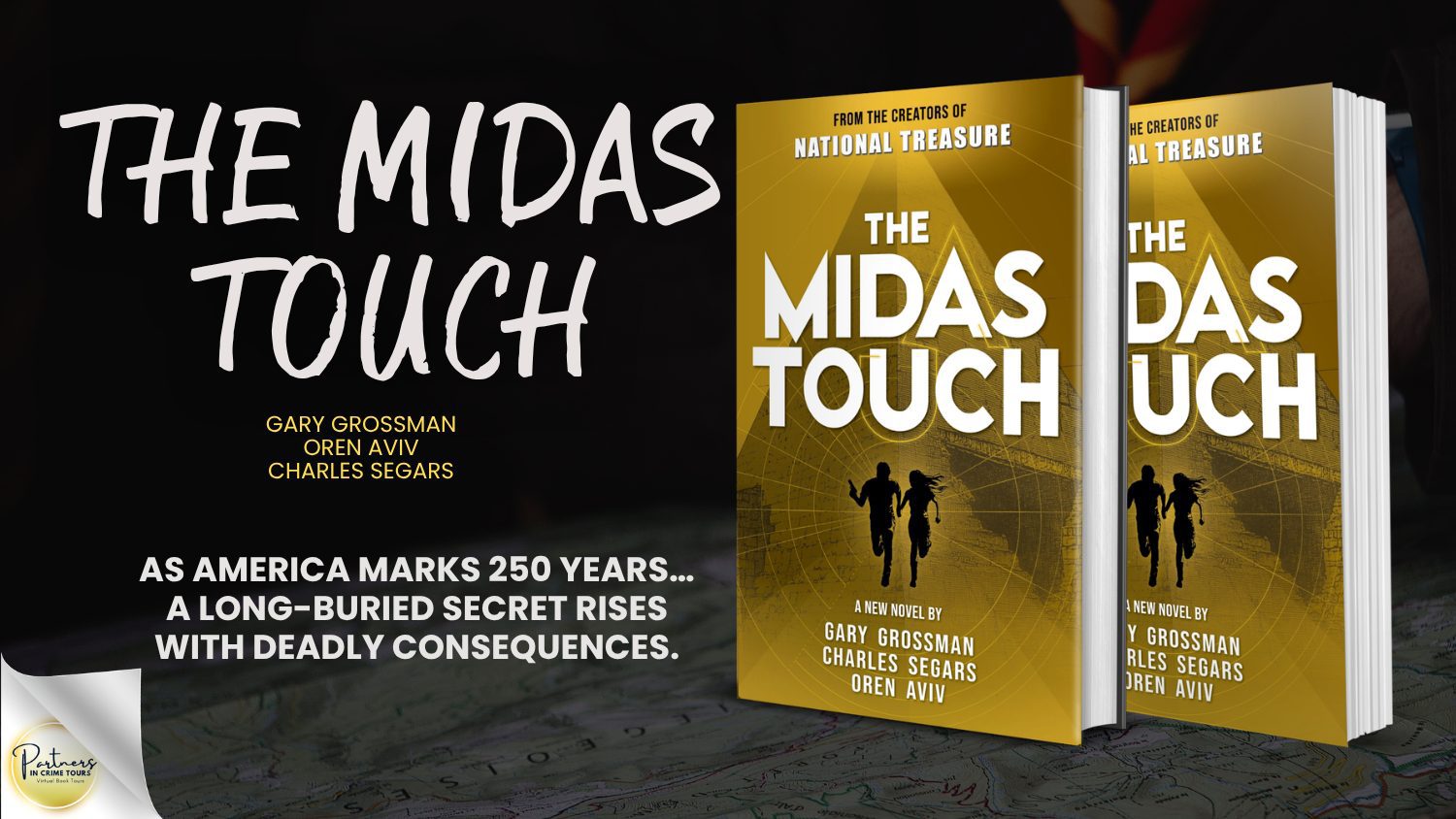
THE MIDAS TOUCH
by Gary Grossman, Oren Aviv, & Charles Segars
June 29 – July 24, 2026 Virtual Book Tour


Synopsis:
National Treasure meets Jack Ryan in THE MIDAS TOUCH

July 19, 1799. Napoleon’s armies advance into Egypt. In the steaming desert sands, his explorers unearth an astounding discovery: The Rosetta Stone. The tablet, cracked and incomplete, will eventually answer mysteries about ancient Egyptian history, culture, and science. But in the years since its partial excavation, world leaders, historians, scientists, and adventurers have speculated that the missing fragments could answer another age-old mystery.

THE MIDAS TOUCH is a globe-trotting adventure that follows CIA cryptologist/puzzle solver/savant Brady Donovan as he investigates the murder of his beloved mentor Dr. Hastings Kaufman, only to find that it leads to a search for the missing pieces of the famed Rosetta Stone and the secret it holds: The Alchemist Gold Theory – how to turn ordinary metals into gold.

Protagonist Brady Donovan partners with British archeologist Teppy Flynn and conspiracy theorist Avery Prophet. Only a heartbeat away is a diabolical Silicon Valley tech giant, D’Arcy Lauren Granier, and her henchmen.

The quest takes them through Napoleonic history and into a contemporary race through the streets of London, America’s backroads, the Caribbean, New Orleans’ French Quarter, Napoleon’s last island prison in the Atlantic, the Louisiana Bayou, and a massive, abandoned salt mine where pirate Jean Lafitte hid his treasures.

History, told in vivid flashbacks, jumps back to 1799 Egypt, and forward through the hundreds of years since, with pirates and presidents on the search for better or worse. Now Brady Donovan fights against the fast- ticking clock, relentless bad guys, and a Category 5 hurricane to where past meets present and greed and betrayal become deadly partners.

THE MIDAS TOUCH is written by international award-winning thriller writer Gary Grossman with Charles Segars and Oren Aviv, the creators of the billion-dollar National Treasure movie franchise.

.

Praise for THE MIDAS TOUCH:

.

“A perfect piece of entertainment with characters and a story that never disappoints. Poignant in places, nail-biting in others, the plot is accentuated by a take-no-prisoners attitude, similar to speeding down a slalom course with all its twists and turns. It’s quite a ride!” ~ Steve Berry New York Times best-selling author

“The Midas Touch is a thrilling ride through history and modern-day, tantalizing the reader with intrigue, action, and adventure across a labyrinth of archaeological secrets and danger.” ~ Raymond Benson, New York Times best-selling James Bond novelist

“Fans of The DaVinci Code will love The Midas Touch. Grossman, Segars, and Aviv have created an iconic character in Brady Donovan, a CIA cryptologist who trades in his pen for tradecraft to protect the world from a devastating economic weapon. Gripping prose, unforgettable settings, and non-stop excitement. A real page turner!” ~ K.J. Howe, international bestselling author of Skyjack writes

.
THE MIDAS TOUCH Trailer:

.

.
Book Details:

Genre: Suspense, Mystery, History Fiction, Globe-Hopping Intrigue

Published by: Fayetteville Mafia Press Publication Date: June 2, 2026 Number of Pages: 334 ISBN: 9781949024999 (ISBN10: 1949024997)

Book Links: Amazon | Kindle | Barnes & Noble | Goodreads | BookBub


.

Gary Grossman:

.

Gary Grossman

THE MIDAS TOUCH is written by international award-winning thriller writer Gary Grossman (OLD EARTH, the EXECUTIVE ACTIONS and RED HOTEL series) with Charles Segars and Oren Aviv, the creators and executive producers of the exciting and popular Nicholas Cage NATIONAL TREASURE movie franchise.

Catch Up With Gary Grossman:

garygrossmanbooks.com Amazon Author Profile Goodreads BookBub Instagram – @garygrossman1 X – @garygrossman1 Facebook – @AuthorGaryGrossman

.
Charles Segars:

.

Charles Segars

CHARLES SEGARS has served as a senior executive at Viacom, CBS, The Walt Disney Company, DreamWorks Pictures, and DreamWorks Animation. Segars is also known as Creator and Executive Producer of the Walt Disney Studios Motion Pictures hit movie franchise, National Treasure and National Treasure: Book of Secrets. Currently, Segars enjoys a dual role as CEO of Ovation TV, the only multi-platform program service dedicated to the Arts and as President of Segars Media. Segars is a respected global safety and security analyst. He advises a number of national security-related technology startups and is actively involved in governmental affairs.He has served as a White House Associate as an Advance Team leader for the Office of the President and Vice President of the United States of America, leading a number of secretive domestic and international trips. .

Oren Aviv:

.

Charles Segars

OREN AVIV ran Disney Studios from 2006-2010, after heading Disney Marketing for eight years. He became Disney’s first Chief Content Officer, and after leaving Disney he became CMO for 20th Century Fox Studios. In addition to executive producing a dozen films, he also co-created and was Executive Producer of Disney’s National Treasure film franchise. Aviv was named “Marketer of the Year” three separate times by Advertising Age Magazine. He created breakthrough campaigns for the studio’s NARNIA, STEP UP, Pirates of the Caribbean, and the National Treasure franchises, and launched memorable campaigns for many of Pixar’s animated hits, including Finding Nemo, Monsters, Inc., The Incredibles and Cars. He also launched blockbusters such as The Sixth Sense; Pearl Harbor; Ransom; The Rock; Signs; The Waterboy; Armageddon; Unbreakable; 101 Dalmatians; Con Air; Crimson Tide; Freaky Friday; and Father of the Bride, as well as hundreds of other films under the Disney, Touchstone and Hollywood Pictures banners. As CMO at 20th Century Fox, Aviv created the campaigns for Rise of the Planet of the Apes; X-Men: First Class; Ridley Scott’s Prometheus; The Wolverine starring Hugh Jackman; and Ang Lee’s Oscar-winning Life of Pi. As head of production at Disney, Aviv was responsible for greenlighting such hits as THE PROPOSAL starring Sandra Bullock and Ryan Reynolds; Tim Burton’s billion-dollar-grossing Alice in Wonderland; Pirates of the Caribbean: At World’s End; National Treasure: Book of Secrets; and the Amy Adams musical-comedy Enchanted.

Tour Participants:

Click through the other tour stops for can’t-miss reviews, insider interviews, exclusive guest posts, and more chances to win! Click here to view the Tour Schedule


History, Suspense, & Gift Cards – Enter To Win
This giveaway is hosted by Partners in Crime Tours for Gary Grossman, Oren Aviv, & Charles Segars. See the widget for entry terms and conditions. Void where prohibited.

. THE MIDAS TOUCH by Gary Grossman, Oren Aviv, & Charles Segars

Can’t see the giveaway? Click Here!

Get More Great Reads at Partners In Crime Tours

.

~~~~~

Thanks so much for visiting fuonlyknew and Good Luck!

For a list of my reviews go HERE.

To see all of my giveaways go HERE.


Book Details:

​ A Soul on Trial: A Marine Corps Mystery at the Turn of the Twentieth Century

By Robin R. Cutler

Category:  Adult Non-Fiction (18+),  365 pages (442 with back matter)
Genre: Literary Non-Fiction, History
Publisher: View Tree Press
Release date:  May 20, 2026
Content Rating: PG +M: The M rating is because the book is about whether or not a young man committed suicide. There is a brawl and an autopsy described in detail but minimal violence, no sex no abuse, adultery or abortion.

Book Description:

Secrets, Spirits, Scandal, and a Nation Watching
A murder mystery, ghost story and courtroom drama from the Progressive Era 

The death of a young Marine Corps lieutenant in 1907 creates a sensation when his mother, his sister, and his ghost challenge the Navy’s suicide verdict.

A Soul on Trial
is the true story of an unprecedented conflict between democratic values and military justice in the age when the modern mass media was born. It is also a tale of the power of the press a century ago, and of the lives of young officers whose private battles were often as challenging as their professional ones.  After her son died under mysterious circumstances in 1907, Rosa Brant Sutton came 3000 miles from Portland, Oregon, to challenge the Navy’s suicide finding. Inspired by her Catholic faith and several alleged postmortem visits from her beloved “Jimmie,” she embarked on a crusade to save his soul from the stigma of a mortal sin– a sin that would keep him out of heaven.

Rosa’s spiritual journey soon became  a political one that would take her through the corridors of power in Washington, D.C., to a courtroom in Annapolis, and, finally, face-to-face with Jimmie’s corpse in Arlington Cemetery. This book also explores the values of a proud and honorable Marine Corps forced into the center of public discourse by Rosa’s uninhibited pursuit of justice. The Corps’ brilliant judge advocate, Henry Leonard, already a combat hero at thirty-three, was the perfect foil for Mrs. Sutton, her renowned attorney, and America’s relentless reporters when the naval inquiry opened in Annapolis in 1909.
By then, millions of Americans had a stake in this confrontation between a patriotic mother and her own government in a military forum. Rosa’s story was irresistible to Progressive Era journalists and high-ranking military officials who joined with members of Congress in a search for verifiable truth that played out on a national stage. In order to save her son’s reputation and defend her own sanity, Rosa ultimately turned to James Cardinal Gibbons, the highest official in the American Catholic Church, and Dr. James Hervey Hyslop, America’s foremost psychical researcher. Hyslop commissioned a detailed field study of her paranormal experiences as part of his research on whether or not the dead communicate with the living. With the press corps as a catalyst, these two men helped Rosa achieve an American brand of justice, as well as redemption both for Jimmie and for herself.

​As H. Michael Gelfand wrote in the Journal of American History, A Soul on Trial explores “one of the most remarkable cases of a civilian challenging the power of the U.S. military in American history… [and it is] a testament to the power that one ordinary individual can wield when determined to seek justice.” Plus, “. . . it is narrative history at its finest.”

BUY THE BOOK:
Amazon ~ B&N ~ BAM
​add to goodreads
.
Meet Author Robin Cutler:

​Historian, filmmaker and blogger, Robin Cutler’s early life was split between Manhattan and a farm in rural Virginia. An only child, she never felt like one because of the menagerie collected by her mother, Jane Hall, a former screenwriter at MGM. Robin’s siblings included a rescued ocelot, German Shepherds, farm cats, snooty cats, and a screech owl (Sidney), who could not fly but travelled on Eastern Airlines in a modified Nantucket basket.
​

Robin decided she wanted to be a historian in the ninth grade. Highlights of her career include working for the National Endowment for Humanities, co-producing an Emmy-nominated dramatic series for PBS, collaborating with several Native American tribes to chronicle their histories and culture on film and video, and publishing three nonfiction books. 
She discovered the extraordinary story told in A Soul on Trial in family papers. She was astonished that Rosa Sutton’s effort to learn the truth about her oldest son’s death created a national sensation between 1907 and 1910. Although Rosa was convinced Jimmie’s ghost came to her several times, he has never visited Robin. Rosa was Robin’s great grandmother.

For much more see https://robinrcutler.com/a-soul-on-trial/ 

connect with the author: website ~ X ~ facebook ~ goodreads


~~~~~

Thanks so much for visiting fuonlyknew!

For a list of my reviews go HERE.

To see all of my giveaways go HERE.

Welcome to The Kid’s Korner.

I decided to do this feature as I have so many great children’s books to share. From picture books, to books for beginning readers, to middle graders, I have plenty of fun ones.

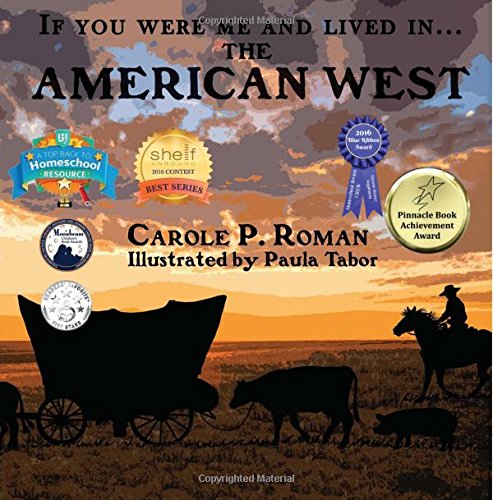
Today I’m sharing a fun adventure book in the If You Were Me And Lived In…  series by Carole P. Roman.

~~~~~

If You Were Me And Lived In…

The American West

by Carole P. Roman

c8df8-add2bto2bgoodreads2bblack

Genre: Education / Adventure / Children’s Book

Grade Level: 3 – 9

 My Review

Learn how it was to join the Wagon Train of 1843. What was it like to load everything you own into one wagon and travel west across the country, braving the elements and hidden dangers? What would you do for food and clothing? What did you do for shelter once you arrived at your chosen destination? Life is different, with many new customs, and there’s much to be done to settle into your new life.

There’s so many interesting details shared about settling in the Old West. Many I never even thought about before. With beautiful illustrations by Paula Tabor, and informative discussions on such things as building homes, clothing, names of the times and daily living, Carol captures the image of the American West.

At the end of the book, the author shares about famous people from these times and includes a glossary of words that explain meaning and pronunciations.

Young readers will find this to be a fascinating and fun trip back in time to see how it was done in the American West.

5  Stars

~~~~~

Synopsis

Join Carole P. Roman and travel through time to visit the most interesting civilizations throughout history in her exciting new series.

Learn what kind of food you might eat on the Oregon Trail, the clothes you wore in in the American West, what your name could be in the 19th century, and what children did for fun once their many chores were done.

If You Were Me and Lived in…does for history what her other award-winning series did for culture.

So get on-board this time-travel machine and discover the world through the eyes of a young person just like you.

Amazon / B&N

~~~~~

Thanks so much for visiting fuonlyknew!

For a list of my reviews go HERE.

For a list of free eBooks updated daily go HERE

To see all of my giveaways go HERE