Posts Tagged ‘non-fiction’


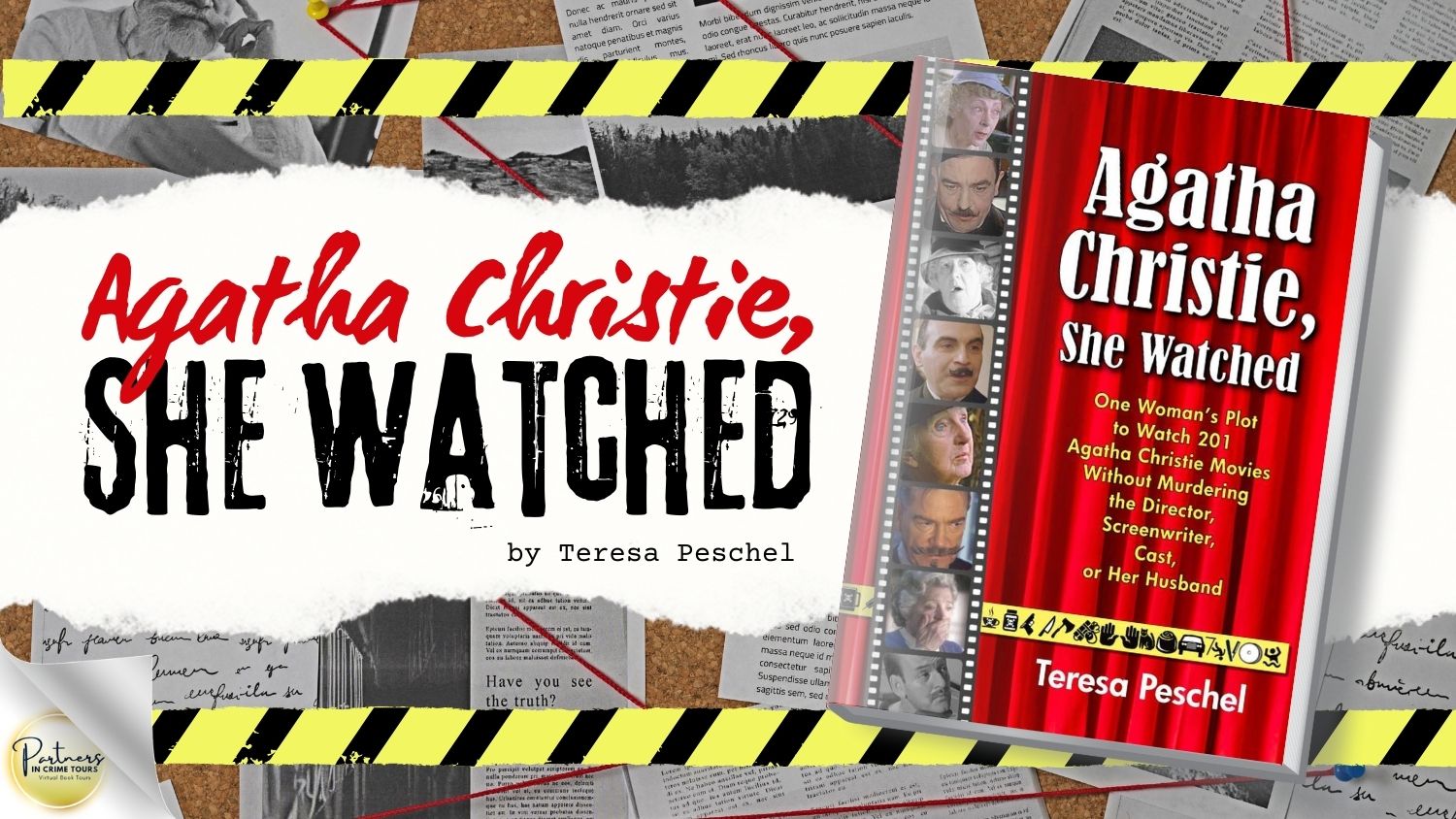
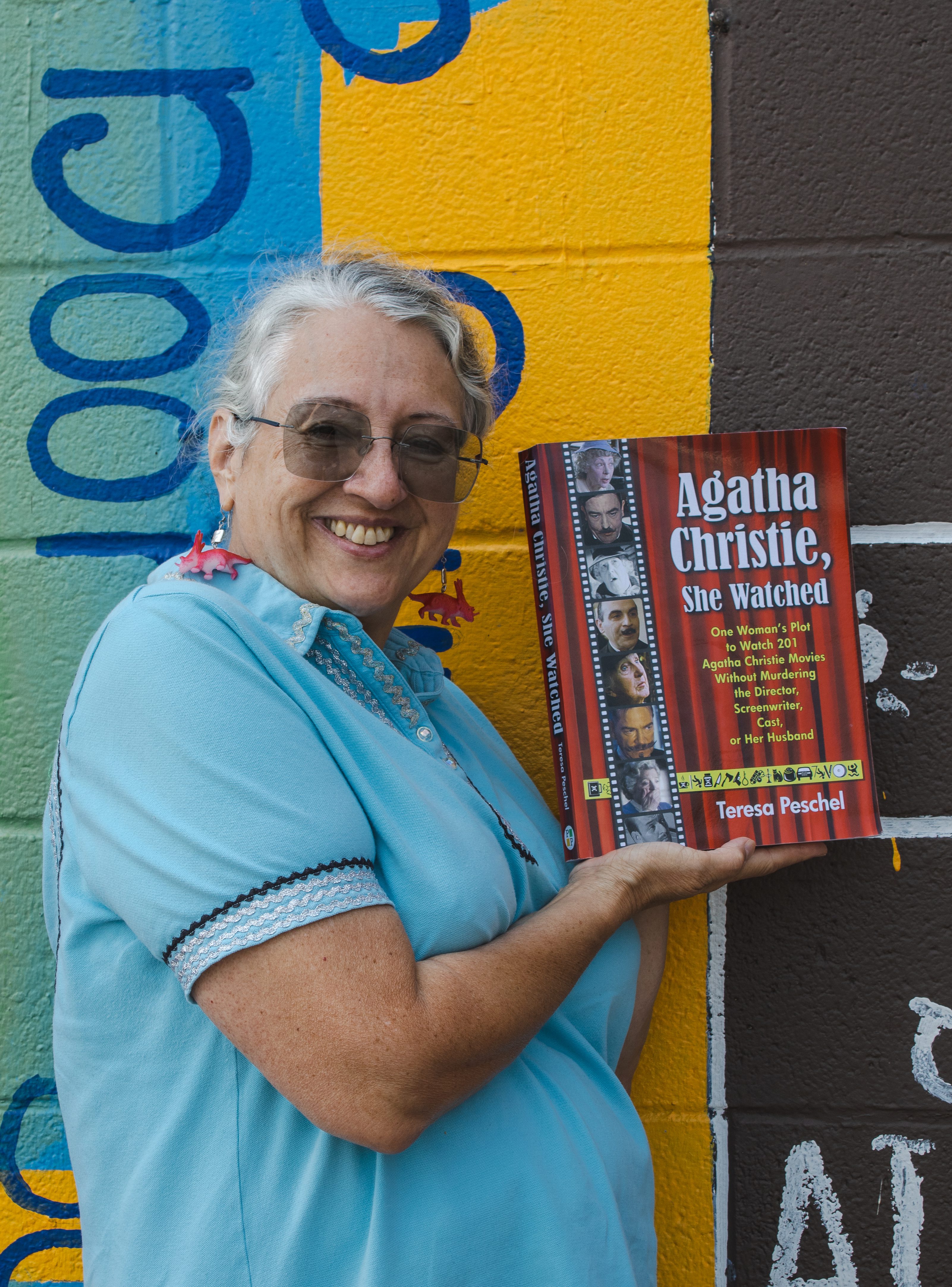
Agatha Christie, She Watched by Teresa Peschel Banner

.
AGATHA CHRISTIE, SHE WATCHED
by Teresa Peschel
April 6 – May 15, 2026 Virtual Book Tour


Synopsis:
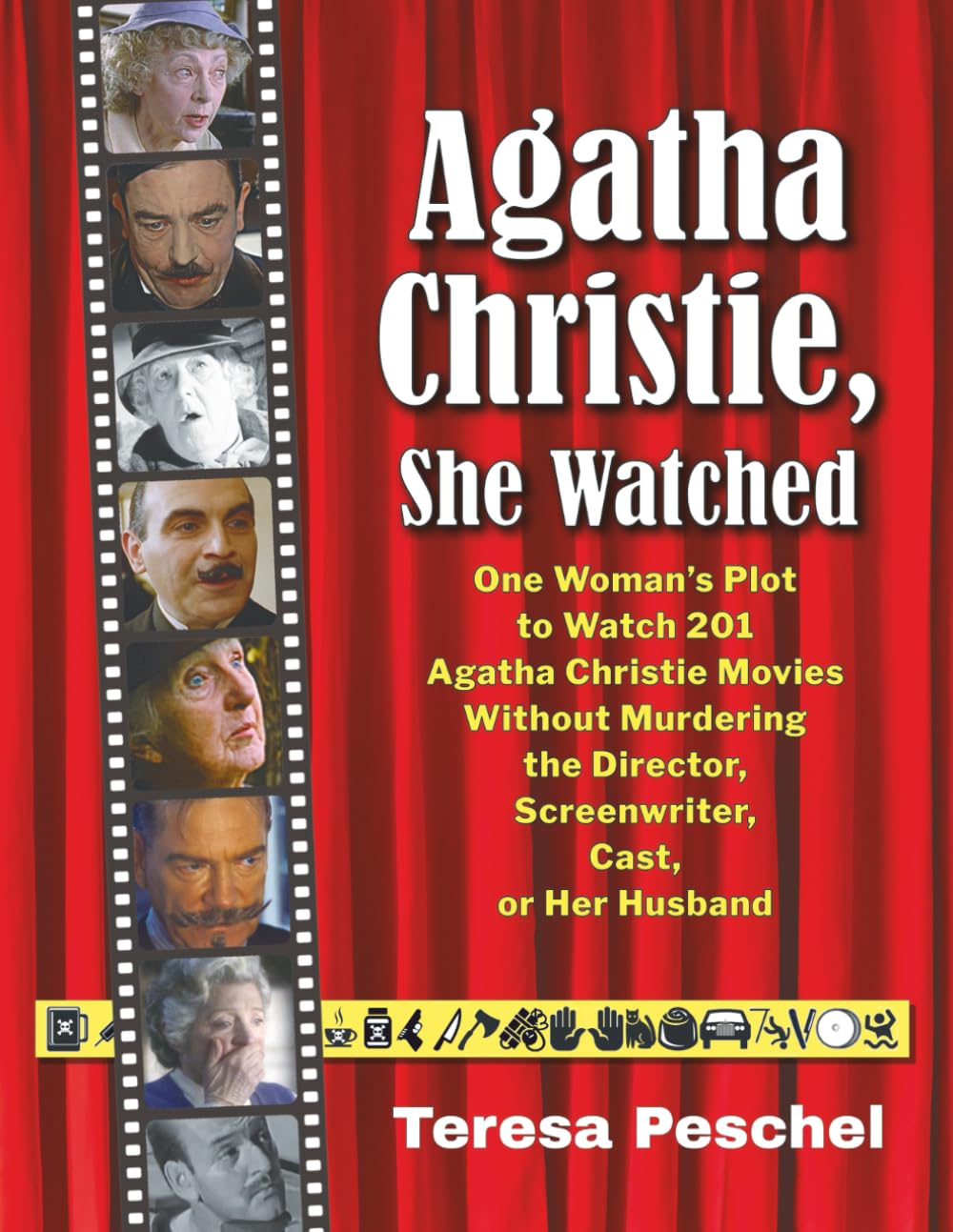
One Woman’s Plot to Watch 201 Christie Adaptations Without Murdering the Director, Screenwriter, Cast, or Her Husband

  Care to match wits with Hercule Poirot? Share tea and gossip with Miss Marple? Chase spies with Tommy and Tuppence? “Agatha Christie, She Watched” will introduce you to must-see movies (and must-avoid) dogs that prove Agatha’s genius depicting the hopeful and dark sides of human nature. These movies will tantalize you, mystify you, and make you laugh at the folly of humanity. Teresa Peschel watched and reviewed 201 adaptations, from the German silent movie “Adventures, Inc.” (1929) to “See How They Run” and “Why Didn’t They Ask Evans” (2022). Each film was rated for fidelity to the original material and its overall quality. Each review takes up two pages and comes with six cast photos, list of major actors, and known film locations. Foreign movies with English subtitles from India, France, Russia, and Japan are included. We include eight movies in which the fictional Agatha Christie solves murder mysteries, debates Poirot, battles a space wasp (in Doctor Who), and plots to kill her husband’s mistress.

“Agatha Christie, She Watched” is the only comprehensive collection of reviews about Christie adaptations. Use it to find the movies made from the novels you love, fill in your movie collection or host an Agatha Christie festival of your own.

.

Praise for Agatha Christie, She Watched:

“From the German silent movie Adventures, Inc. (1929) to Why Didn’t They Ask Evans? (2022), she covers all of your favourites (including the One True Poirot) and some you may never have heard of! The level of detail and vast array of images is incredible.” ~ Labours of Hercule podcast

Book Details:

Genre: Movie & Video Reference, Movie & Video Guides & Reviews, Non-Fiction

Published by: Peschel Press Publication Date: April 7, 2023 Number of Pages: 436 pages, Paperback ISBN: 9781950347391 (ISBN10: 1950347397)

Book Links: Amazon | KindleUnlimited | Barnes & Noble | BookShop.org | Goodreads | BookBub | Peschel Press

.

Enjoy this peek inside:

.

Introduction

I’ve always been a fan of Agatha Christie, but not an obsessive one. I didn’t read and reread the novels. I didn’t go looking for obscure short stories. I didn’t read (and still haven’t) her Mary Westmacott novels. I treated her like most people did: She wrote good mysteries, and if they were handy, I read them.

Then Bill began the Complete, Annotated project by publishing Dorothy L. Sayers’ Whose Body?, followed by Agatha’s The Mysterious Affair at Styles. Over the years, as he annotated the next five of Agatha’s early novels, I read them carefully for possible footnotes. As I did, I paid more attention to her writing, her deft plotting, her sly sense of humor, and her ability to describe a character with a few sentences.

As I became more familiar with her novels, I realized that she’s underrated, probably because she was categorized as a genre writer. Some even consider her works cozies. Clearly, they never read Appointment with Death (1938), And Then There Were None (1939), or Endless Night (1967). I suspect that her Mary Westmacotts — which are described as romances — are anything but. The publishing world applies labels to make it easier for bookshops to shelve their books in the store, not because they’re accurate. In July 2020, as the world began opening up from the Covid-19 shutdowns, I was at the library, looking for a DVD to borrow. I spotted Crooked House (2017). I liked the novel, so I thought, “Why not?” Crooked House was the second Agatha Christie film adaptation I had seen. Sir Kenneth Branagh’s Murder on the Orient Express (2017) was the first. We needed fodder for the website (peschelpress.com) and I’d already been reviewing books, so I wrote a review of Crooked House. This reminded me that Bill was working on an annotated edition of The Secret of Chimneys. Was there a movie version? A review for the book would be nice. There was. It was an episode in a box set from ITV’s Marple. Oookaaaay. Having become overly familiar with Chimneys, I knew Agatha wrote it years before Miss Marple was a twinkle in her eye. But we watched it anyway. It was terrible. Bill wrote his review for The Complete, Annotated Secret of Chimneys, and I wrote mine for the website. Since the library’s Marple DVD set included three more episodes, we watched them and I reviewed them for the website. That’s when Bill said the fateful words that brought us here: “Let’s watch more Agatha films. You write the reviews. I’ll post them on the website, and we’ll publish them as a book.” So here we are nearly three years later. We had no idea how big the Agatha project would become or how many films have been made for cinema and TV. Bill and I have watched more than 200 adaptations. This includes all the English-language ones we could find beginning with Adventures, Inc. (a 1929 silent movie), and many of the foreign versions too. For those, we were limited by availability and whether or not they had English subtitles. It’s criminal neglect that some of the finest Agatha Christie film adaptations in the world are from Japan, yet they’re unavailable in the West. To my knowledge, we are the only people who’ve watched all the films. I’m definitely the only person who’s written and posted reviews for all those forgotten TV shows and kinescopes. Along the way, I became much, much more familiar with Agatha’s writing as I had to read the novels and short stories to compare them to the films. She was cutting edge from the beginning. She invented what we call The Poirot, the practice of bringing together the suspects, explaining the clues, and fingering the criminal. It was a trope born of necessity, when her first attempt — Poirot testifying at the trial — didn’t fly with her publisher. She began experimenting with narrative structure in 1924 with The Man in the Brown Suit. That novel has two narrators, one of them unreliable. Brown Suit is also a romantic thriller disguised as a mystery. Read the passage where Anne Beddingfeld administers to a mysterious, half-naked, sexy stranger’s wounds. This scene could be ripped from any romance novel of today (the sweet kind, not the spicy which would include far more detail). As a side note, the 1989 TV movie is very true to the text despite being turned into a contemporary. Agatha was an innovative writer throughout her career. Her The Seven Dials Mystery (1929) is a mash-up of P. G. Wodehouse and John Buchan thrillers. Partners in Crime (1929) is a loose cycle of 16 short stories starring Tommy and Tuppence. Each short story is also a parody of a famous mystery writer, including herself! And unlike Miss Marple and Hercule Poirot, Tommy and Tuppence aged in real time, from the young, eager lovers in The Secret Adversary (1922) to retired grandparents in Postern of Fate (1973). And what’s And Then There Were None (1939), in which 10 characters are dispatched in an entertaining manner for their sins, but a PG-rated slasher flick? As a sign of its influence, the basic plot has been lifted, the serial numbers filed off, and rewritten in dozens more novels and movies. The A.B.C. Murders (1936) is a prototypical serial killer novel. Agatha’s innovations could fill a book and go a long way to explaining why she’s still read today. The other reason is more subtle. Whatever you can say about the quality of the adaptations (like The Secret of Chimneys, bleah), they keep Agatha in the public eye. Never underestimate the importance of TV shows and movies on an author’s reputation. For each person who reads, 100 people go to the movies, and a 1,000 people watch TV. Every time an Agatha Christie film is shown, people who’ve never heard of her learn she exists. Some of them search out her books and discover how good her writing is. When a writer dies, they can vanish under the constant tsunami of books being written and published daily. Dorothy L. Sayers is a prime example. Sayers wrote at the same time as Agatha. She’s highly regarded and her books are great. But her estate, unlike Agatha’s, shows no interest in licensing her stories and novels for TV or movies. Say the phrase: “Murder at Downton Abbey,” then ask why her literary estate isn’t capitalizing on Lord Peter Wimsey, detective in the peerage and a duke’s brother. The Agatha Christie estate does not want her writing to suffer that fate, so they license her short stories and novels. Some adaptations are excellent; some are dreadful. For a few, the only commonality between novel and film is the name. Most range in between but all have something to offer, even if it’s only great period clothes, quality acting, or English Country House Porn. Linenfold paneling! Crenelated ceilings! Parquet floors as elaborate as the finest Persian carpet! Excuse me while I stop and fan myself. Watching 200+ Agatha adaptations also taught me plenty about filmmaking, pacing, and soundtracks. I can now, sometimes, recognize an actor from another adaptation. I’ve enjoyed seeing how one novel can be interpreted multiple ways, resulting in wildly different films. The Pale Horse (1961) is a good example. The three films (including Miss Marple in one!) are recognizably the same story, yet they’ve nothing to do with each other. The emphasis is different, the characters different, the tone is different. I’ve watched 13 different Poirots (including an anime version). Seven different Marples (including an anime version). Multiple Tommy and Tuppences. Each actor or actress brings something new to the character. The foreign films demonstrate how universal she is. She wrote about dysfunctional families, mapped the class divide, noticed the lengths we go to for status and security, and found reasons for murder ranging from money to passion to safety. Ironically, foreign filmmakers respect Agatha more than she is at home. Appointment with Death (1938) has been filmed three times, but the Japanese version is the only one that captures the novel’s cruelty and horror. The two English language versions fail, one moderately and one spectacularly. Of the four versions of The Mirror Crack’d From Side to Side (1962), only the Japanese version gives a voice to Margo Bence, one of Agatha’s most abused secondary characters. The other three versions ignore her because to face Margo Bence’s pain would mean admitting that the film business cares nothing for children unless they can be sold to make money. We did not watch every single foreign TV episode even when they were readily available. There just wasn’t enough time. The best we could do was see enough to convey the flavor of a given series. If you want to see them, enjoy yourself! They provide very different views of Agatha and can be rewarding. The novel that’s been adapted the most is And Then There Were None (1939). We saw ten versions, ranging from a blurry kinescope to slick studio productions with an all-star cast, so it merits its own chapter. Some versions hew to the stage play with its radically rewritten ending. Others stick to the novel, nihilism intact. Some combine the stage play and the novel, so Vera Claythorne learns who the puppet master was, begs for her life, and receives rough justice. One final warning before you go: spoilers abound, so beware! Unlike Agatha, I don’t play fair with my reviews and hide whodunnit. Where I play fair is in telling you what I thought of them. I liked films that critics panned, and I disliked films others loved. I say why. I go down sidetracks. I enjoyed myself and I hope you will too. So won’t you join me for an Agatha Christie Movie Marathon? You’ve got hundreds of hours of viewing pleasure ahead of you. Just remember to never accept a cup of tea you didn’t make, or take trips to lonely islands (or châteaus, or country houses) with strangers.
How to use this book
The films are organized by the starring detective. Miss Marple comes first, followed by Poirot, and Tommy and Tuppence. Next, a chapter is devoted exclusively to And Then There Were None, followed by the rest of the adaptations, and the final chapter is movies in which Agatha herself is the star. Each chapter opens with a photo gallery showing the actors and actresses who played her detectives and characters. There’s also an index, which is more important than it appears. Seems logical, yes? Except that some adaptations removed Agatha’s chosen detective, turning the novel into a police procedural. When that happens, the movie is not included in the detective’s chapter. It’s included in “The Rest of the Christies”. Many of the foreign adaptations fall into this category. Other adaptations (cough, ITV’s Marple, cough) insert a detective who didn’t exist in the novel. That’s why many standalone novels appear in the Miss Marple chapter. She’s now the star of The Sittaford Mystery, Murder Is Easy, The Pale Horse, and others. She also appears in a Tommy and Tuppence novel, By the Pricking of My Thumbs. Similarly, Margaret Rutherford snatched two Poirot novels and made them her own, so they appear in the Miss Marple chapter. The chapters dedicated to And Then There Were None and the movies not part of a detective series are self- evident. “Agatha the Star,” however, deserves an explanation. In addition to her stories, Agatha’s life has become fodder for Hollywood. This includes the dreadful Vanessa Redgrave/Dustin Hoffman biopic Agatha (1979), a documentary that quotes from her and her work, a Doctor Who episode, and three movies that show Agatha’s exciting life investigating mysteries in a parallel universe. It focuses on Agatha, not her writing. Any relationship to Agatha’s real life should be considered coincidental. Even the documentary in this chapter is not entirely reliable. Within each chapter, the films are organized chronologically. As you move forward in time, you’ll see changes in how a character was depicted and movie-making styles. Adventures, Inc. (1929) sets the stage. It’s the earliest Agatha film and the scriptwriter, Jane Bess, played fast and loose with the text. She led the way for hack screenwriters everywhere to rewrite Agatha’s prose. Each review gets two pages. We chose a banner image and six photos of important cast members. I rate films by fidelity to text (or life in “Agatha the Star,” and either the play or the novel in And Then There Were None) and by the quality of the movie overall. The two ratings are separate, but they complement each other and give you a clearer understanding of what to expect. The cast lists place detectives and police at the top. Everyone else follows in rough order of importance. We group families together to make it easier to work out relationships. Our cast lists are not comprehensive but the main characters are there. Also note that for those foreign films which don’t name their characters from the novel, we provide that information. This was omitted when they rewrote them so much (such as Unknown (1965), the Indian version of And Then There Were None) that it would not be helpful. At the end of the list come the film locations, or (in a couple episodes) a song list. Internet Movie Database and Agatha Christie Wiki provided most of the locations, but Bill added to that from other sources (see the bibliography). Knowing the film locations means you, dear reader, can visit the same castle as Poirot or Miss Marple. Subtitles matter to me. We always looked for versions with subtitles as so many actors mumble or the sound quality is bad. If I can’t understand the dialog, I miss important points. Not every DVD was released with subtitles. Fortunately, some of the older films like the Joan Hickson Miss Marples are being cleaned up for streaming. They get subtitles. But they aren’t being released as new DVDs so, no subtitles. If you can watch a streamed version, no problem. If you must use your TV and DVD player, you’re out of luck. We had to have subtitles for the foreign films. We couldn’t see some films we wanted to (we especially regret passing up the Japanese Murder on the Orient Express) because they either weren’t available with subtitles or they weren’t available at all. The index will help you find a specific film. This isn’t just because some novels got Miss Marple inserted, putting them into the Miss Marple chapter. Agatha’s novels were often released under different names. For example, the novel Lord Edgware Dies (1933) was released in the U.S. as Thirteen At Dinner. It’s been filmed three times, twice as Lord Edgware Dies and once as Thirteen At Dinner. But they’re all based on the same novel and the index connects them. I list all the names, with a note as to which film it applies to. Or, as with Margaret Rutherford, the film’s name doesn’t correspond to any edition of the novel but I tell you what to look for. The bibliography provides further reading and shows where some of my information came from. Enjoy the book. We enjoyed watching the movies, podcasting about many of them, and writing the reviews. We want it to be used, encouraging you to watch Agatha Christie on the screen, always different but always her. How the movies are rated Each movie is given two ratings. Fidelity of text is exactly what it sounds. How close is the film to the original text? Sometimes, only the names match. Other films are so faithful, they’re lifeless. Quality of movie is about the movie itself. Did everything together work as a film? Often, a very good movie isn’t faithful to the text at all (see Miss Marple in Ordeal By Innocence (2007)). If something jars about the movie, I’ll indicate it here. The rating icons demonstrate Agatha’s many, many ways of killing. Blunt objects, poisoned cocktails, garrotes, knives, guns, stranglers, being pushed down a flight of stairs. They usually reflect the first murder in the film. A few films, such as And Then There Were None, get five different symbols to reflect all the ways those nasty people got iced.
How to find the movies
We watched the vast majority of the films on DVD on our TV set, the one our neighbors were throwing away. You’re correct that we count our pennies. That’s why we use our public library. If yours is like ours, it contains a surprisingly large collection of Agatha Christie films. All you have to do is get a library card to borrow them. You may, like us, have access to more than one library. It’s worth learning what’s available in your area. We belong to our local library (the Hershey Public Library) and to our county library (the much larger Dauphin County Public Library). They often carry different titles so I always check both before moving on to the next step. Your library is bigger than your municipality, your county, or even your state. Ask for the interlibrary loan librarian. For us, it’s Denise Philips. Denise got us all kinds of DVDs from libraries across the country. This service is usually free, as libraries are tax-supported. Ask and you may be very pleased. The interlibrary loan may take a few weeks for the requested movie to arrive, but it nearly always will. If Denise could not get us a title, Bill would search eBay and Amazon. We bought a universal DVD player so we could play DVDs from Europe. There were obscure kinescopes that were on YouTube, so we watched them on the computer. There are streaming services, including Amazon which gave us access to Britbox. Dailymotion let us watch the Japanese films. We don’t recommend skeevy pirate sites. They’re illegal, don’t pay royalties to the creators, and whatever you get will be loaded with viruses and malware and the film may be incomplete or damaged.
*** A review ***

The Sittaford Mystery (2006)

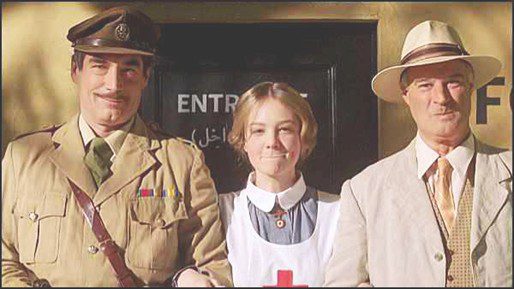
Epic expansion of Trevelyan’s life leaves little room for a coherent mystery for Miss Marple to sort out Fidelity to text: 1 pharaoh’s curse The novel was eviscerated. The murder, séance, escaped prisoner, and a few names remain. Everything else, including the murderer, were altered beyond recognition. Miss Marple resented being shoved in; she stayed defiantly offstage for long stretches. Quality of movie: 1½ pharaoh’s curses The scriptwriter shoved ten pounds of plot into a five-pound running length and the result is incoherence with snow. The Review Queue up Sir Mix-a-Lot and “Baby Got Back” and recite along with me: Oh. My. God. Look at that plot! You’ll have to sit through this episode twice (at least) to understand what’s going on. This film is 93 minutes long, not long enough for all the disparate plot threads to be woven in a cohesive fashion. The film needed a minimum of another twenty minutes running time to do it justice. But since ITV didn’t do that, you, dear viewer, will be left asking what just happened? Rewind, dammit! That’s what we did. Repeatedly. Yet there were many moments when I still can’t tell you what was going on. The trouble starts with forcing Miss Marple into a property that was never written for her. This can work: see ITV’s By the Pricking of My Thumbs, a Tommy and Tuppence novel. Not here. In fact, Miss Marple disappeared for long stretches of the film, doing heaven only knows what in Sittaford House while sitting out the blizzard. Maybe she was questioning the staff (we only see one servant in the mansion but there must be more), knitting, and speed-reading Captain Trevelyan’s memoirs. She certainly wasn’t at the Three Crowns Inn, inspecting the body and questioning the guests, even though most of the action takes place there. An entirely new plot is shoehorned in, vastly expanding Captain Trevelyan’s character and backstory. Suddenly, he’s a war hero (WWI), a suspected war profiteer (WWII), an Olympic skater in between (I think; the dialog was incomprehensible at many key points), a major candidate to be the next prime minister (Winston Churchill (!) has a scene with Captain Trevelyan), and he’s a noted archeologist having discovered a major tomb in Egypt back in 1927 that made his fortune! Compared with Capt. Trevelyan, Indiana Jones was a lazy amateur. But all this rewriting was necessary to give Timothy Dalton scenery to chew to earn his paycheck. In the novel, Captain Trevelyan exists to be swiftly murdered. He doesn’t even get one line. In the movie — since he’s Timothy Dalton — when he’s not emoting in front of us, he’s the topic of conversation by the other characters. Which I can understand. It’s Timothy Dalton, and my goodness does he look yummy. Some men age very well and he belongs to that lucky cohort. He’s also got to be expensive so the producers made sure to get their money’s worth. Pity they didn’t spend some of their money on a better script or more film stock. But he didn’t age that well. I had a hard time believing that virginal, lovely, dewy, eighteen-year-old Violet Willets (Carey Mulligan) fell madly in love with a man old enough to be her grandfather. I know why he did, and it’s not just because Violet resembles the woman he callously abandoned twenty-five years prior in Egypt. Violet is delicious, naïve, and believes every word he says and what man doesn’t want that? As for Violet, she didn’t come across as a gold-digger, which is the usual reason sweet 18-year-olds marry men old enough to be their grandfather. Or maybe she was one and the tacked-on ending where Violet runs off to Argentina with Emily Trefusis proves it. Violet certainly wasn’t broken up about her husband being murdered on their wedding night. If anything, she seemed relieved. She got it all. The Trevelyan name, the inheritance, two tickets to Buenos Aires, and she didn’t have to sacrifice her sweet toothsome body to some old man, even if he was Timothy Dalton. The Egyptian subplot was of major importance yet it didn’t make any sense. There was the paranormal aspect too, with a ghostly maiden showing up in Captain Trevelyan’s visions. Was there a curse on the gold scorpion? Was he going crazy? We’re never told. The ghost follows a different movie’s script when it appears and vanishes. This script also doesn’t tell us how an Egyptian servant can show up in isolated Sittaford in 1949 and get hired on, no questions asked. I understand that the servant problem was bad enough that the upper crust didn’t ask as many questions as they could. But here? Really? We know Captain Trevelyan did potentially bad things in Egypt. Yet he wasn’t suspicious when this mysterious Egyptian showed up at his door? He’d been having weird dreams about his past. He’s got a burgeoning political career which means close scrutiny of his private life. He’s supposed to be a smart man. Add in the even more incoherent subplot about the escaped prisoner from Dartmoor prison. None of that made sense; not the purchase of the inn a year prior to the events of the story, not the backstory of how the star-crossed lovers met, not how the prisoner escaped from Dartmoor prison and found his way across the moors to be reunited with his paramour and cousin and their eventual escape to freedom. There’s also the American war profiteer who helped Captain Trevelyan make a fortune manufacturing substandard munitions that killed more American sailors than the enemy. The American war profiteer’s personal aide-de-camp and quack doctor made even less sense. Why did the war profiteer need him around, other than as a dogsbody? There was mumbled dialog that sounded like they were both in the mafia, but it was unclear. We also meet the incompetent government clerk who’s looking into Captain Trevelyan’s background to ensure nothing questionable is revealed to the press, thus discrediting the party. He’s not doing a very good job if Captain Trevelyan was a known associate of American war profiteers and he doesn’t know. Then there’s Charles Burnaby. In the novel, he’s boy-reporter Charles Enderby. The name change was the first step in his complete reworking of motives and backstory. Yet we get no foreshadowing of his dramatic personal life or of his connections to the Trevelyan family. We get almost nothing of James Pearson’s connection to Captain Trevelyan either. We get even less of a reason for Emily Trefusis to be engaged to James Pearson, boy alcoholic, other than that old standby: He’ll inherit big when Captain Trevelyan dies. Maybe that’s why Emily runs off to Argentina with Violet. She gets the money and the girl and doesn’t have to marry the boy alcoholic. I could rant on, but you get the picture: This movie was a mess, barely suitable for Timothy Dalton fans. ITV could have saved the cost of his salary and paid for a better script. Or, they could have capitalized on Timothy Dalton and added another twenty minutes of movie, explaining all the subplots and how they connected. General Information Based on: The Sittaford Mystery (U.S. title: The Murder at Hazelmoor; novel, 1931) Run time: 1 hr., 40 min. Subtitles: No Writer: Stephen Churchett Director: Paul Unwin Cast Geraldine McEwan as Miss Marple Timothy Dalton as Clive Trevelyan Mel Smith as John Enderby Jeffery Kissoon as Ahmed Ghali Laurence Fox as James Pearson Zoe Telford as Emily Trefusis James Murray as Charles Burnaby Rita Tushingham as Miss Elizabeth Percehouse Michael Brandon as Martin Zimmerman Paul Kaye as Dr. Ambrose Burt Patricia Hodge as Mrs. Evadne Willett Carey Mulligan as Violet Willett Matthew Kelly as Donald Garfield James Wilby as Stanley Kirkwood Robert Hardy as Winston Churchill Film Locations The Flower Pot Pub, Henley-on-Thames, Oxfordshire (pub exterior) Dorney Court, Dorney, Buckinghamshire (Sittaford House interiors) *** Excerpt from Agatha Christie, She Watched by Teresa Peschel. Copyright 2023 by Teresa Peschel. Reproduced with permission from Teresa Peschel. All rights reserved.



.
About Author Teresa Peschel:

.

Teresa Peschel

Teresa Peschel never planned to become a writer, nor did she plan to become an expert on film versions of Agatha Christie stories. Then, as a supportive wife, Teresa read and edited Bill’s annotations to Agatha’s first six novels. A desire to promote the books led to writing movie reviews for the Peschel Press website, which led to Bill suggesting they could publish a collection quickly. Two and a half years later, Agatha Christie, She Watched was born. This book got Teresa — and Bill as her supportive husband — an invitation to speak at the 2024 Agatha Christie festival in England. Like Agatha Christie, Teresa reinvented herself and because of Agatha Christie, she’s become a better writer.

Catch Up With Teresa Peschel:

PeschelPress.com Amazon Author Profile Goodreads BookBub – @peschel Instagram – @peschel_press YouTube – @peschelpress9911 X – @PeschelPress Facebook – @PeschelPress

Tour Participants:

Click through the other tour stops for can’t-miss reviews, insider interviews, exclusive guest posts, and more chances to win! Click here to view the Tour Schedule



A Mysterious Little Giveaway
This giveaway is hosted by Partners in Crime Tours for Teresa Peschel. See the widget for entry terms and conditions. Void where prohibited.

. AGATHA CHRISTIE, SHE WATCHED by Teresa Peschel | Can’t see the giveaway? Click Here!

Get More Great Reads at Partners In Crime Tours


,~~~~~

Thanks so much for visiting fuonlyknew and Good Luck!

For a list of my reviews go HERE.

To see all of my giveaways go HERE.


Book Details:

  Delaware at Christmas / The First State in a Merry State

by Dave Tabler

Category: Adult Non-Fiction, 134 pages
Genre: Christmas
Publisher: Dave Tabler
Publication Date: July 1, 2025
Content Rating: G. Family friendly throughout. No sex, violence or foul language.​

Book Description:

Explore the rich tapestry of holiday traditions that have shaped the First State’s festive season across the centuries. From colonial customs to modern-day celebrations, “Delaware at Christmas” unwraps the fascinating stories behind the state’s most cherished Yuletide practices.

Discover how Delaware’s diverse communities have contributed to its unique holiday landscape:

Uncover the origins of iconic traditions like the Wilmington mummer’s parade and beach town “Christmas in July” festivities

Learn about the evolution of holiday decorations, from simple colonial adornments to elaborate Victorian displays

Explore the influence of immigrant communities, including Polish, Italian, and Hispanic holiday customs

Delve into forgotten practices like the holly wreath industry that once thrived in southern Delaware

Examine how wartime and economic shifts shaped Christmas observances throughout the state’s history

Filled with captivating anecdotes, historical photographs, and little-known facts, this book offers a comprehensive look at how Delawareans have celebrated the holiday season from the 17th century to the present day. Whether you’re a history buff, a holiday enthusiast, or simply curious about Delaware’s cultural heritage, this meticulously researched volume provides a joyous journey through time.

“Delaware at Christmas” is an essential addition to any First State bookshelf, offering:

In-depth exploration of religious and secular holiday traditions

Profiles of notable Delawareans who influenced Christmas customs

Insights into how national trends and local innovations shaped Delaware’s experiences

A treasure trove of holiday memories from generations of Delaware families

Unwrap the magic of Delaware’s Christmas past and present with this definitive guide to the state’s holiday history. Whether you’re a lifelong resident or a curious visitor, “Delaware at Christmas” promises to enrich your understanding and appreciation of the First State’s joyous spirit. Buy “Delaware at Christmas” today and embark on a joyful exploration of holiday traditions in the heart of the Mid-Atlantic!

Buy the Book:
Amazon ~ B&N 
add to goodreads
.
Author Gues tPost
.

One of the things that struck me in Delaware at Christmas is how many traditions took shape in settings beyond the family hearth—whether in factories, canneries, churches, or whole towns coming together for house tours and parades. What do you think those public and workplace traditions reveal about the way Delawareans have tried to balance private celebration with community identity?

This gets at something really important about Delaware’s character. Delawareans have consistently found ways to make Christmas both deeply personal and genuinely communal.

Take the holly wreath industry – families worked in their own homes making wreaths, but it was part of a larger economic network that connected rural Sussex County to cities like New York and Philadelphia. The Christmas Seal campaign started with Emily Bissell’s personal connection to tuberculosis through her cousin, but she deliberately took it to the post offices, making it a public health effort that anyone could join for just a penny.

The immigrant communities show this balance particularly well. Polish families preserved their intimate Wigilia suppers at home, but they also created public spaces like the oplatek and kolędy events at St. Hedwig’s Church where the broader Wilmington community could experience these traditions. The Italian Feast of Seven Fishes remained a private family affair, but Italian restaurant owners shared elements of it publicly.

Even the mumming tradition, before it was banned, was about taking private revelry into public spaces – going door to door, performing in streets. When authorities shut that down, Delawareans eventually channeled that energy into Halloween parades and later the satirical Hummers Parade in Middletown.

What strikes me is that Delawareans didn’t see private and public celebration as competing forces. They seemed to understand that traditions needed both intimate family moments and broader community expression to really thrive. The Christmas house tours are perfect examples – private homes opened to strengthen community bonds while raising money for local causes.

Rather than reflecting a single community approach, these patterns suggest that across Delaware’s diverse populations, many groups – though certainly not all – found ways to extend their holiday traditions beyond the family circle when circumstances and inclinations aligned.

So often these traditions carried a sense of ingenuity—whether it was soaking a Yule log to make a holiday last longer, or turning IBM punch cards into wreaths. Why do you think creativity and adaptation play such a recurring role in Delaware’s Christmas story?

The examples in the book do show repeated instances of creative adaptation, though they stem from different motivations. The soaked Yule log that former slave Jeremiah “Old Jerry” Deputy described came from necessity – enslaved people got a holiday only “as long as the log lasted,” so they found ways to make it burn longer. That’s survival ingenuity under constrained circumstances.

The IBM punch card wreaths represent a different kind of creativity – mid-century Americans domesticating new computer technology by turning office waste into familiar holiday decorations. Companies like DuPont were generating millions of these cards, creating abundant raw material for crafters.

Harold Follett’s “ThunderStreak” toy shows another kind of innovation – a Wilmington teacher who turned his college experiments with amphibious air boats into a patented design that Ideal Toy Corporation marketed nationally. He adapted cutting-edge hydrofoil technology into something children could enjoy.

Some creativity emerged from practical necessity. When German immigrants couldn’t afford whole Christmas trees, families would use single decorated branches instead. The mistletoe harvesters developed increasingly sophisticated climbing techniques, moving from dangerous hickory switches to telephone lineman-style “creepers” with spikes.

Religious communities adapted traditions to new circumstances. The Moravian lovefeast found new life in Delaware’s Methodist and Presbyterian churches, with some congregations adding brass quartets to honor the original trombone traditions. Orthodox Christians maintained their Julian calendar celebrations while gradually incorporating bilingual services for American-born generations.

Rather than reflecting some inherent Delaware trait, these innovations seem to emerge from the intersection of available resources, economic pressures, and the universal human tendency to make traditions work within whatever constraints people face.

Some customs in the book seem to resist change—like Amish families deliberately keeping Christmas unadorned, or Irish Catholic households insisting on lighting the Christmas candle year after year. How do you see that tension between preserving older ways and adapting new ones shaping Delaware’s holiday history?

That tension plays out differently across Delaware’s various communities, and the book shows it’s not simply a matter of “old” versus “new.” Some groups maintained strict boundaries around change for theological reasons, while others selectively preserved certain elements while adapting others.

The Amish example you mention reflects a deliberate religious stance – they viewed elaborate Christmas decorations as worldly distractions from the holiday’s spiritual meaning. But even they weren’t completely static. The book notes they observed “Old Christmas” on January 6th rather than December 25th, and some families who owned shops catering to non-Amish customers did adopt modest decorations.

The Irish Catholic candle tradition represents a different kind of preservation – families like the Mulherns maintained the practice of lighting candles in windows, though they adapted it for safety by moving the candle from the doorway to the dining room table. They kept the symbolic meaning while adjusting the practical details.

What’s striking is how some communities used preservation as a form of resistance or identity maintenance. The Quakers completely rejected Christmas celebrations as potentially heretical, viewing them as Catholic excesses, and this stance persisted even as other Protestant denominations gradually embraced the holiday. French Huguenots maintained their preference for giving lasting rather than consumable gifts, a practice that distinguished them from their English and Dutch neighbors who typically gave food and drink.

The book also shows how external pressures could force tradition to either bend or break. Christmas Savings Clubs thrived for decades but virtually disappeared by 2006 when credit cards, inflation, and digital banking made them obsolete. The eggnog tradition shifted from being viewed as medicine “for the sick” to becoming a festive indulgence, showing how the same practice could survive by completely changing its cultural meaning.

The question wasn’t whether to change, but what was essential to preserve and what could be modified without losing core meaning.

In Delaware at Christmas you draw heavily on newspapers, oral histories, and even folklore bulletins. How did working with those kinds of sources shape the way you told the story? Did you find yourself writing more as a cultural historian, or sometimes almost as a folklorist trying to capture how people remembered their Christmases?

Those sources really shaped both the content and the tone of the book in ways that sometimes pulled in different directions. Newspaper accounts gave me the official version – when papers covered outdoor Christmas lighting competitions or reported on handbell choir performances, I was getting the public face of these traditions, often filtered through editors who wanted to present positive community stories.

But the oral histories revealed something quite different. When Hetty Francke talked about maintaining authentic Dutch Sinterklaas celebrations in Arden, I was hearing personal memory and lived experience. These voices often contradicted or complicated the newspaper narratives.

The folklore bulletins, like Ruthanna Hindes’ 1952 piece on Old Christmas beliefs, sat somewhere in between – they were scholarly attempts to document what people actually believed and practiced, not what institutions wanted them to believe. Hindes writing about cattle kneeling at midnight was capturing genuine folk belief, even if she approached it academically.

Working with these different source types meant constantly weighing official accounts against personal recollections. When newspapers covered Christmas card etiquette rules, I had to ask whether that reflected how people actually behaved or just how etiquette columnists thought they should behave.

The most revealing moments came when sources contradicted each other. A 1901 newspaper article about Old Christmas painted this romanticized picture of rural Sussex County, complete with problematic “Lost Cause” imagery. But Hindes’ later academic treatment of the same customs was much more objective, focused on documenting beliefs without the nostalgic embellishment.

I found myself shifting between roles depending on the material – being a cultural historian when analyzing the decline of sleigh bell usage, but becoming more of a folklorist when trying to understand why people believed mistletoe had magical properties or maintained wassail toasting rituals.

Let’s end with the present moment. After immersing yourself in centuries of Delaware’s Christmas traditions—sacred and secular, preserved and adapted—what do you hope readers will carry forward into their own holidays? In other words, when someone finishes Delaware at Christmas and then looks around their own table or community gathering, what perspective do you hope lingers with them?

I hope readers come away with an appreciation for how traditions work – not as museum pieces to be preserved unchanged, but as living practices that communities actively shape to meet their needs. “Delaware at Christmas” shows that the most enduring traditions weren’t those that remained rigid, but those that found ways to adapt while keeping their essential meaning intact.

What strikes me most is how many of these customs emerged from people solving immediate problems – families needing seasonal income, communities wanting to include newcomers, individuals trying to maintain identity while fitting into new circumstances. The traditions that lasted weren’t necessarily the most elaborate or well-funded, but those that served real human needs for connection, meaning, and belonging.

When readers look around their own holiday gatherings, I hope they see both the weight of inherited customs and their own agency in shaping what comes next. Every family dinner, every decoration choice, every way of including or adapting traditions for changing circumstances – these are all part of the same ongoing process the book documents.

I’d want them to feel less pressure about doing things “correctly” and more curiosity about why certain practices matter to them. What needs do your holiday traditions serve? How might they evolve to better include new family members, changing circumstances, or community growth? The people in “Delaware at Christmas” weren’t necessarily trying to preserve Delaware Christmas traditions – they were just trying to create meaningful celebrations for their families and communities.

The traditions we have now are the result of countless small decisions made by ordinary people. Readers today are making those same kinds of decisions, whether they realize it or not. That’s both the responsibility and the opportunity of being part of this continuing story.

.
.

Meet Author Dave Tabler:

Ten year old Dave Tabler decided he was going to read the ‘R’ volume from the family’s World Book Encyclopedia set over summer vacation. He never made it from beginning to end. He did, however, become interested in Norman Rockwell, rare-earth elements, and Run for the Roses.

Tabler’s father encouraged him to try his hand at taking pictures with the family camera. With visions of Rockwell dancing in his head, Tabler press-ganged his younger brother into wearing a straw hat and sitting next to a stream barefoot with a homemade fishing pole in his hand. The resulting image was terrible.

Dave Tabler went on to earn degrees in art history and photojournalism despite being told he needed a ‘Plan B.’

Fresh out of college, Tabler contributed the photography for “The Illustrated History of American Civil War Relics,” which taught him how to work with museum curators, collectors, and white cotton gloves. He met a man in the Shenandoah Valley who played the musical saw, a Knoxville fellow who specialized in collecting barbed wire, and Tom Dickey, brother of the man who wrote ‘Deliverance.’

In 2006 Tabler circled back to these earlier encounters with Appalachian culture as an idea for a blog. AppalachianHistory.net today reaches 375,000 readers a year.

Dave Tabler moved to Delaware in 2010 and became smitten with its rich past. He no longer copies Norman Rockwell, but his experience working with curators and collectors came in handy when he got the urge to photograph a love letter to Delaware’s early heritage. This may be the start of something.​

connect with the author: website ~ facebook ~ pinterest ~ instagram ~ goodreads


.
Giveaway contest ribbon promo label prize. Vector giveaway banner badge design template
.


DELAWARE AT CHRISTMAS Book Review Tour Giveaway


~~~~~

Thanks so much for visiting fuonlyknew and Good Luck!

For a list of my reviews go HERE.

To see all of my giveaways go HERE.


.

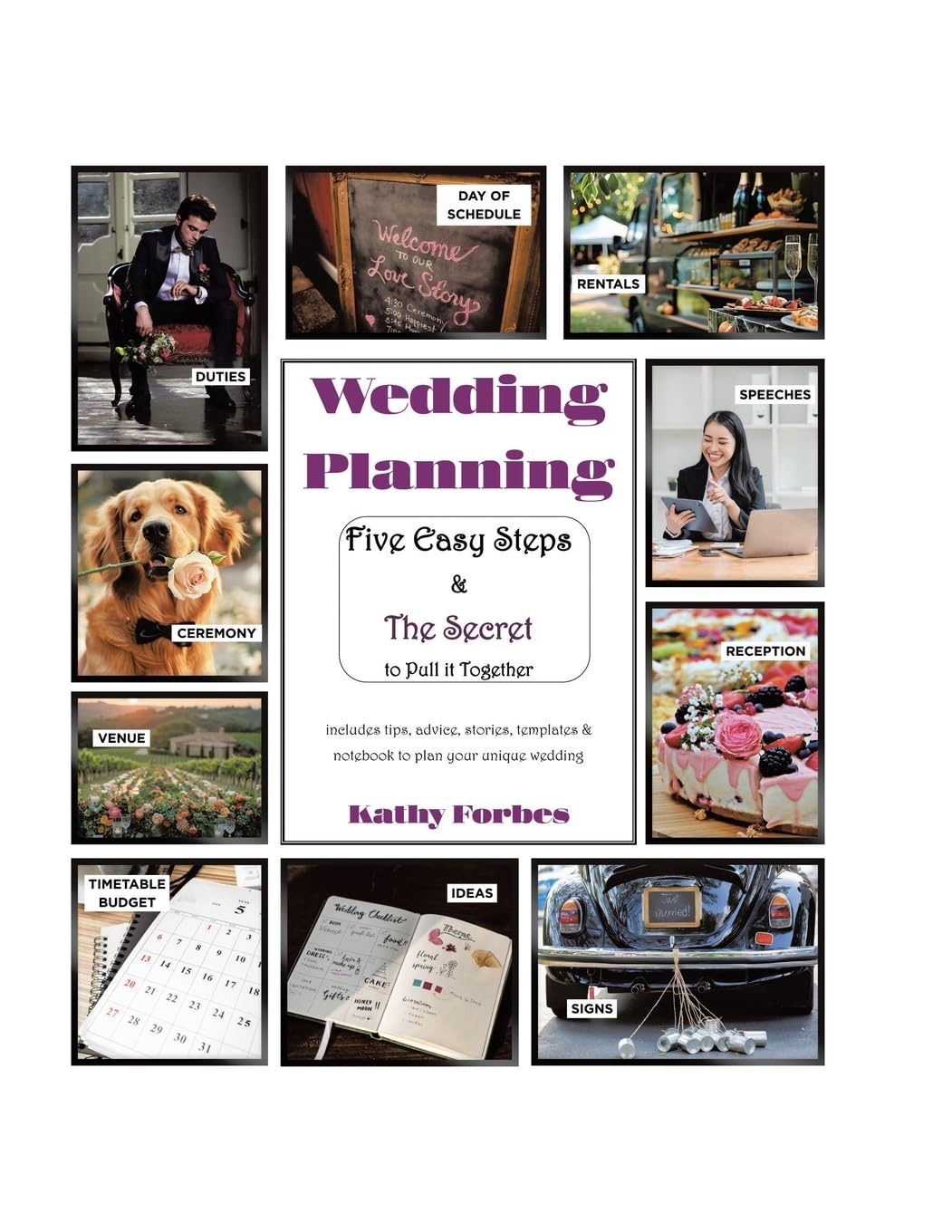
Welcome to my stop on the virtual book tour for Wedding Planning organized by Goddess Fish Promotions.

Author Kathy Forbes will be awarding a $10 Amazon or B&N Gift Card to a randomly drawn winner. Don’t forget to enter!

And you can click on the tour banner to see the other stops on the tour.

Wedding Planning

By Kathy Forbes


Genre: Nonfiction

Synopsis

This book has everything you need to know to plan your perfect unique wedding.

This is not your typical wedding planning book. Chapter titles alone will tell you what needs to be done, and the subtitles break it down further. The book includes tips, advice, stories, templates, and notebook to keep track of everything.

All the other books, magazine articles, Instagram and Pinterest timeline posts state on the “day of” to have a good breakfast. They don’t mention the people that take care of all the duties and tasks throughout the day so you can be VIP guests at your own wedding.

The five easy steps and how they relate to each other is the foundation of this book, which will make sure you have an educational, memorable, stressless, wonderful experience throughout the whole process:

1) Timeline
2) Budget
3) “Day of” schedule
4) Duties and tasks
5) Lists and assignments

The secret is having a planned schedule that catches everything, and a specific person in charge on the “day of” that pulls it off while you enjoy with the guests. Let me show you how to perfect your wedding planning experience.

Waiting to your wedding day is just too late to realize the importance of this thought process and having a specific/special go-to-person working the “day of” on your behalf.

You will enjoy the days up to the wedding as much as the day itself, as this book helps make it all come true.

.

Enjoy this peek inside:

Wedding Planning 101

This book has everything you need to know to plan your perfect unique wedding.

This is not your typical wedding planning book. Chapter titles alone will tell you what needs to be done, and the subtitles break it down further. The book includes tips, advice, stories, templates, and a notebook to keep track of everything.

All the other books, magazine articles, Instagram and Pinterest timeline posts state on the “day of” to have a good breakfast. They don’t mention the people that take care of all the duties and tasks throughout the day so you can be VIP guests at your own wedding.

There is more to planning a perfect “day of” than you think – believe me.

So, you can enjoy the days up to as much as the “day of”, this book will help.

The Reality is: 3 things are kept – your spouse, the ring, and your photographs. All the rest is but a fading memory over time. You most likely have read the saying “don’t sweat the small stuff” or as I suggest, we rewrite it for wedding planning to state “plan for the small stuff details and you won’t sweat”.

I have been married since 1973 – the oops, challenges and happenings – they all happened at our wedding and at least one of them happens at every wedding. Some things never change. This book will help you Plan for them, Minimize them and Smile through them.

This wedding planning book will help you to succeed in putting on a memorable, unique, and stress free wedding. Forge onward through these pages to discover the secret to learning how to pull it all together by just following the easy 5 steps.

Included is the industry insider stuff such as what the vendors and suppliers would like you to do, ask them and the reason why it is important. Through this direction you will acquire the knowledge of what questions to ask your vendors and suppliers. All you must do is fill in the blanks on the easy to complete templates supplied for all the steps.

As I said earlier, this is not your typical wedding planning book filled with wedding dress styles, centerpiece designs and how to walk down the aisle at the ceremony. Everyone has access to that in books, internet, and visuals on Pinterest. This book has the real stuff you need to know. It is a gift you give yourself to be happy and successful in the whole exciting process of your wedding planning.

This book shares real stories (to make a point, relate to real people and tips to make it easy) and of course professional advice.

.

About Author Kathy Forbes:

I knew that our youngest daughter was going to be engaged soon, so I enrolled at BCIT and got my wedding and event planning credentials in 2005. I changed careers from corporate sales analyst to something that puts meaning and joy into my life every day. In no time I put it to good use: one daughter married in 2006 and the other in 2007. I retired in 2020 but continued to expand my world. I paint and am a miniature hobbyist—both produce a connection with a memory that I want to preserve and share. I wrote this book as a memory for me, and as an educational reference book to educate you all. My goal is to make planning a wedding a wonderful experience.

My life’s motto is: be interested and interesting.

Websites: Kathy Forbes / A New Paige Event 

Goodreads

Buy Link: Amazon

~~~~~

Giveaway contest ribbon promo label prize. Vector giveaway banner badge design template

.

a Rafflecopter giveaway

~~~~~

Thanks so much for visiting fuonlyknew and Good Luck!

For a list of my reviews go HERE.

To see all of my giveaways go HERE.


.

Whether you
experienced foster care or adoption or neither,

this story will encourage you
to keep believing that good will find you.

.

.

Faded Red Beads: From
an Orphanage to a Disrupted Adoption.

A Story of Courage,
Resiliency and Faith.

by Monica Hargrave

Genre: Nonfiction Inspirational Biography

.

As I began to head upstairs to my bedroom, my adopted father
abruptly asked, “Where have you been?” I responded with, “What
do you mean? I called you at 3:15 p.m. and told you I had a game this
evening.” He said, “No, you did not. I did not talk to you
today!”

I stood there, frozen, thinking, you’re crazy as hell. Mr. O’Neal proceeded to
tell me what my future was going to be, and I didn’t agree with anything he
said. “You will not participate in sports; you will come directly home
from school, cook dinner, clean the house, etc.” As he yelled, I began
plotting my next move. When I tuned in, he said, “You will have no outside
interaction with anyone.” I recall thinking, This is my last day in this
hellhole. It didn’t matter where I ended up, I knew anything had to be better
than this. I wasn’t living at all. His home felt like prison, and I was ready
to be free. This wasn’t about me trying to sneak around and see boys. It was
about a robbed childhood. I didn’t have many answers, but I knew living with
Mr. O’Neal was suffocating. He wasn’t equipped to be an adoptive parent. The
system failed. Providing a roof wasn’t enough.

This story is written to inspire individuals. To move when you don’t have all
the answers about what lies ahead, but you know if you stay where you are, you
will die. To trust your gut and to not copy anyone’s life, you are an original.
It just so happens this story is about a little girl’s journey from an
orphanage to a failed adoption to charting her path forward. Whether you
experienced foster care or adoption or neither, this story will encourage you
to keep believing that good will find you.

Amazon * Apple * B&N * Kobo * Bookbub * Goodreads

.

.

I stood there, frozen, thinking, you’re crazy as hell. Mr. O’Neal proceeded to tell me what my future was going to be, and I didn’t agree with anything he said. “You will not participate in sports; you will come directly home from school, cook dinner, clean the house, etc.” As he yelled, I began plotting my next move. When I tuned in, he said, “You will have no outside interaction with anyone.” I recall thinking, This is my last day in this hellhole. It didn’t matter where I ended up, I knew anything had to be better than this. I wasn’t living at all. His home felt like prison, and I was ready to be free. This wasn’t about me trying to sneak around and see boys. It was about a robbed childhood. I didn’t have many answers, but I knew living with Mr. O’Neal was suffocating. He wasn’t equipped to be an adoptive parent. The system failed. Providing a roof wasn’t enough.

.

When Monica was born, the doctors said, “If she makes
it overnight, she will survive.” Monica spent approximately nine years in
foster care and then ran away from her adoptive family. She strives to empower
women to actively address whatever is holding them back from leading fulfilled
lives. You get one life. Live it. Monica completed her undergraduate studies at
Niagara University and has a masters degree in health administration from
Central Michigan University and a masters in human resources development from
Villanova University. She completed Emory University’s executive coaching
program and coaches women who are unfulfilled in their careers. Monica loves
trying vegan recipes, animals, exercising, and reading James Patterson novels.
She has three furry friends.

Website * Facebook *Instagram * Goodreads

,


Follow the tour HERE for special content and a $20 giveaway!

.

a Rafflecopter giveaway

.

.

~~~~~

Thanks so much for visiting fuonlyknew and Good Luck!

For a list of my reviews go HERE.

To see all of my giveaways go HERE.


.
I am so excited that FUNGI ARE…
MORE THAN MUSHROOMS by Alisha Gabriel & Vivien Sárkány is available now and
that I get to share the news!
.

If you haven’t yet heard about this
wonderful book, be sure to check out all the details below.

.

This blitz also includes a giveaway
for  finished copies FUNGI ARE… MORE
THAN MUSHROOMS courtesy of Tielmour Press &
Rockstar Book Tours. So if
you’d like a chance to win, check out the giveaway info below.


FUNGI ARE… MORE THAN MUSHROOMS

Author: Alisha Gabriel (Author) & Vivien Sárkány (Illustrator)


Pub. Date: March 15, 2025

Publisher: Tielmour Press

Formats: Hardcover, Paperback, eBook

Pages: 36

.

Find it: GoodreadsAmazon, B&N, BAM, Indigo, Powell’s, Bookshop, Blackwell’s, Tielmour Press 


Learn about the hidden world of fungi in this beautifully
earthy non-fiction picture book!

.

 From single-celled, microscopic yeasts to massive mushrooms,
fungi are essential to life on our planet yet often overlooked.

Discover how spores disperse, fungi grow, animals find food,
bees heal themselves, and trees communicate, all thanks to this fascinating
kingdom. With straightforward, lyrical explanations, readers will gain insight
into how fungi impact our planet and the interconnectedness of nature.


ILLUSTRATIONS:

.

.


 .


About Author Alisha Gabriel:


Alisha Gabriel is an award-winning children’s book author who
loves speaking at schools and libraries! Her middle grade book Funky Fungi: 30
Activities for Exploring Molds, Mushrooms, Lichens, and More won the 2023
AAAS/Subaru SB&F Book Prize for Excellence in Science Books. When she’s not
teaching, you might find Alisha curled up on the couch with a book, fiddling
around in her craft room, or chasing ideas down rabbit holes.

Sign up for
Alisha’s newsletter!
(scroll down)

Website | Twitter (X) | Instagram | Pinterest | Goodreads | Amazon


About Vivien
Sárkány:

Vivien
Sárkány, an animation graduate from Moholy-Nagy University in Budapest, studied
cultural studies on scholarship in Java at the Indonesian Institute of the
Arts, Surakarta. She spent eight years in Indonesia exploring her passion for
visual arts before returning to Hungary. Now focused on illustration, Vivien
brings stories to life, crafting worlds and characters. Inspired by all living
things, she tries to capture the beautiful little moments of life in her art.

Website | Instagram


Giveaway contest ribbon promo label prize. Vector giveaway banner badge design template

.


a Rafflecopter giveaway

~~~~~

Thanks so much for visiting fuonlyknew and Good Luck!

For a list of my reviews go HERE.

For a list of free eBooks updated daily go HERE

To see all of my giveaways go HERE.


.

Welcome to my stop on thye  virtual book tour for The Art Of Online Dating organized by Goddess Fish Promotions.

Author Fleur Lamot will be awarding a $10 Amazon or B&N Gift Card to a randomly drawn winner. Don’t forget to enter!

And you can click on the tour banner to see the other stops on the tour.

The Art Of Online Dating

By Fleur Lamot


Genre: Non-fiction

Synopsis

A step-by-step guide to navigating dating and finding love on the World Wide Web, written by someone with firsthand experience on the topic, and who has also tested the theory on a number of case studies and through research. Authored from a female perspective, directed to a female audience, although potentially an eye opening and helpful read for a male reader too.

This book is not about making you a better person, nor is it a self help book. It is about changing your mindset when embarking on singledom and internet dating to not fear it, by equipping you with the understanding of people’s actions and motives.

Throughout the book you will be guided in setting up your online profile, picking your match, the all important art and the do’s and don’ts through every step of courting someone, all the way to going forward with your ultimate love match!

Reading this book will bring you confidence and or at least clarity. It will make you think about your past experiences and open your eyes to see where they may have gone wrong, and more importantly to ensure the same mistakes don’t happen to you on future experiences.

.

Enjoy this peek inside:

Long gone are the days of meeting a potential partner in a bar or at a music festival or at parties. You might be lucky enough to do so, but as time goes on and you get older, or as you and your potentials rely more on technology to meet someone, or as you lose the skills to do so by becoming accustomed to technology, the chances are getting thinner. There will be fewer parties with fewer single people, or there will be more awkward interactions at these parties, or your friends will grow old and become tired of attending music festivals and going to bars. Also, let’s face it: as we get older, the music at venues become too loud and we simply just want to have a good conversation, good food, and good wine which brings on more occasions like dinner events and dinner parties. These are the least likely type of events to meet someone, unless you are lucky enough to be set up by a mutual friend.

So, you might find yourself single and at a loss. Maybe it simply might be that all your friends are in relationships and you have no one to go out with. This is where online dating comes into play. Online dating has such a bad stigma, but if you look at it at another way, whilst your friends are becoming old and boring or are in relationships and/or just don’t want to go out anymore for whatever reason, you have an infinite number of potential new people to meet and play with who are in the exact same boat as you.

.

About Author Fleur Lamot:

I successfully found love online using historical principles, understanding people’s motives and actions, listening to the right people, as well as trusting my own instincts. I am now married and a mother. I am a business woman with a very successful business, built from extensive networking and relationship management experience. I have received professional mentoring and coaching, which has helped me achieve all of this.

INSTAGRAM / AMAZON

~~~~~

Giveaway contest ribbon promo label prize. Vector giveaway banner badge design template

a Rafflecopter giveaway

~~~~~

Thanks so much for visiting fuonlyknew and Good Luck!

For a list of my reviews go HERE.

For a list of free eBooks updated daily go HERE

To see all of my giveaways go HERE.


.

Picture A Garden by Linda Hornberg
CategoryMiddle-Grade Non-Fiction (Ages 8-12), 160 pages
GenreChildren’s Non-Fiction.
Publisher: Peanut Butter Publishing
Publication Date: January 28, 2025.
Content Rating: G: Topics only include gardening and being outdoors. ​

Book Description:

What springs to mind when you hear the word GARDEN? Would it surprise you to learn that the world just outside your door is overflowing with art, science, humor, drama, intrigue, and colorful personalities? Nature has you surrounded. It’s time to come out with your hands gloved and your feet galoshed, ready to sow some spinach, pick a peony, mulch a maple, root a rose, graft a grape, stake a spruce, water a walnut, and hug a hemlock.

Set down your screens and take up your trowel.

Adventure awaits!

The stories inside this book are nearly all true. I have never actually seen a chorus line of worms decked out in feather boas, but I can guarantee that there are plenty of real-life larvae out there merrily chewing up the scenery. You can turn orange from eating too many carrots, and there really is a tiny plant island called a liverwart–although there probably are no tiny castaways living on it. Welcome to gardening for smarties. Never stop thinking, wondering, and digging, and you’ll never be bored. Have fun.​

BUY THE BOOK:
AMAZON ~ B&N
add to goodreads
.

MY REVIEW

I don’t read near as many non-fiction books as I do fiction. When I do, it’s usually memoirs or such. That said, I was wowed by Picture A Garden.

I have a green thumb. I love feeling the soil between my fingers. The smell and feel of the plants and trees I tenderly care for. I’m always doing my due diligence. Learning what makes my flora grow. What they need to thrive or how to help them when they aren’t. This book not only taught me a lot, it also charmed me.

Linda used her own handwriting, filling the pages with fun details. And every page was filled colorful drawings. I loved that. She also made me laugh with the little stories she shared.

 I read some of this with my son. His middle grade years are well behind him. And this is targeted for that age group. He mentioned how much he enjoyed reading it with me but probably wouldn’t have enjoyed it as much when he was younger. There is a lot of detail and we agreed. It would have been better read as a family or by someone a bit older. That’s the only hitch with this wonderful book.

Picture A Garden has a permanent place on my book shelf. I want it in easy reach. Spring is coming and the time to get my hands dirty is almost here.

5 STARS

.
.

Meet Author Linda Robin Hornberg:

Linda Robin Hornberg grew up in New York, drawing endless paper dolls and adventure comics with her sisters, Brenda and Heidi. She also enjoyed collecting shiny mimosa seeds in little bottles, nibbling parsley from Mom’s tomato patch, sword fighting with Iris leaves and flipping cicadas back onto their feet. Her incessant doodling landed her at the Hartford Art School. She received her BFA in Printmaking from the School of the Art Institute of Chicago. Further formal studies led to classes in children’s illustration and certification in landscape horticulture.

Linda is a permanent transplant to Seattle, where she remains an enthusiastic gardener, insatiable reader, unapologetic punster, and incurable cat lady. Please do not offer her your strays.

connect with the author:  website ~ facebook instagram goodreads


Tour Schedule:
Feb 10 – Locks, Hooks and Books – book review / giveaway
Feb 10 – @acourtofspinesnpages * – book review / giveaway
Feb 10 – @bearyintobooks * – book review / giveaway
Feb 10 – @thebookishren * – book review / giveaway
Feb 10 – @my_fair_fiction * – book review / giveaway
Feb 10 – @bookarlo * – book review / giveaway
Feb 11 – A Mama’s Corner of the World – book review / giveaway
Feb 11 – @this.human.reads * – book review / giveaway
Feb 12 – @Myfictionalmusings – book review
Feb 12 – Sandra’s Book Club – book review
Feb 12 – @jilljemmett * – book review / giveaway
Feb 13 – Deborah-Zenha Adams – book spotlight / guest post / giveaway
Feb 13 – Gina Rae Mitchell – book review / guest post / giveaway
Feb 14 – Paws.Read.Repeat – book review / giveaway
Feb 14 – @bookwale_sharmaji * – book review / giveaway
Feb 14 – @onceuponafrida * – book review / giveaway
Feb 14 – @bookscape__ * – book review / giveaway
Feb 17 – @onceuponamaltesereader * – book review / giveaway
Feb 17 – Liese’s Blog – book spotlight
Feb 18 – Books With a Chance – book review / guest post / giveaway
Feb 18 – Country Mamas With Kids * – book review / giveaway
Feb 19 – @michellegodardricher * – book review / giveaway
Feb 19 – @regallywritten – book review / giveaway
Feb 20 – icefairy’s Treasure Chest – book review / giveaway
Feb 20 – @thebookishdreamers * – book review / giveaway
Feb 20 – FUONLYKNEW – book review / guest post / giveaway
Feb 21 – Books R Us – book spotlight / guest post / giveaway
Feb 21 – @speedreadstagram * – book review / giveaway
Feb 24 – @junebug_reads – book review
Feb 24 – @sparetimer866/ – book review / giveaway
Feb 25 – China Sorrows – book review / giveaway
Feb 25 – @onemorechap * – book review / giveaway
Feb 26 – Kim’s Book Reviews and Writing Aha’s – book review / guest post / giveaway
Feb 26 – @kiv_coffeeandpages * – book review / giveaway
Feb 27 – @Leannebookstagram – book review
Feb 27 – Happily Managing a Household of Boys – book review 
Feb 28 – Library Lady’s Kid Lit – book review / author interview / giveaway
Mar 1 – @nissa_the.bookworm * – book review / giveaway
Mar 2 – The Bibliophilic World – book review / giveaway
Mar 3 – Frugal Freelancer – book spotlight / author interview / giveaway
Mar 4 – Cover Lover Book Review – book review / giveaway
Mar 5 – @readsandmusic * – book review
Mar 6 – @lizzies.reading.recs * – book review / giveaway
Mar 7 – @bookishengineerblog – book review
Mar 7 – @adeela_books * – book review
Mar 7 – Faith and Books – book review / giveaway
.
Giveaway contest ribbon promo label prize. Vector giveaway banner badge design template
.


PICTURE A GARDEN by Linda Hornberg Book Tour Giveaway


~~~~~

Thanks so much for visiting fuonlyknew and Good Luck!

For a list of my reviews go HERE.

For a list of free eBooks updated daily go HERE

To see all of my giveaways go HERE.

Welcome to my stop on the virtual book tour for Our Global Crisis organized by Goddess Fish Promotions.

Author Brian D. McLean will be awarding a $10 Amazon or B&N Gift Card to a randomly drawn winner. Don’t forget to enter!

And you can click on the tour banner to see the other stops on the tour.

Our Global Crisis

by Brian McLean

.

Genre: Non-Fiction / Climate Change

Synopsis

Modern society has reached a critical juncture in its existence. Like past civilizations ours has reached a point where its future is far from certain, with its decline, or even collapse, being distinct possibilities.

The Incas, the Mayans, the Romans, the Rapanui, and many others, had seemingly successful societies, yet collapsed when faced with challenges that threatened their continued existence.

Are we to suffer the same fate? What could possibly cause our downfall?

Climate change and environmental issues? Perhaps. It is now almost a certainty that these events are destined to inflict catastrophic damage to our global society. Our coastal cities and island nations, as well as our global economy and agricultural output, will be irreparably damaged. Many of Earth’s species, as well as the lives of many millions of people, will be displaced or lost forever.

Such a fate may still be averted, but that opportunity has largely passed. Even if we are able to correct the climatic and environmental issues threatening our society, we must still recognize and address the ultimate source of our problems. For if we fail, a far worse fate potentially awaits us.

Our Global Crisis is an eye opening look at the common weakness shared by societies and civilizations both past and present. But analysis of the problem alone will not solve the global crisis we now face. Thus, the final chapter is dedicated to the simple, yet critical solutions, necessary for our very survival.


Enjoy this peek inside:

Humans stand at the pinnacle of evolutionary success. Highly intelligent and curious, with the capacity to reason, it is within our nature to be caring and compassionate. Capable of modifying our environment, we have created an interconnected global society of such magnitude and complexity that it stands apart from all others that have come before it. Yet our society has reached a critical stage in its development. Like past civilizations, ours has reached the point where it is most susceptible to failure.

We face this critical point in our continued existence due to shortcomings in our nature. For although we are the product of countless millennia of evolutionary improvements, we are nevertheless an imperfect species.

Our imperfections have contributed to our setbacks on many occasions. Civilizations and complex societies, including, the Incas, the Mayans, the Romans, the inhabitants of Rapa Nui (Easter Island), and others, all suffered significant setbacks, or collapse, seemingly at the height of their existence. Our global community too, now faces its own challenges.

The question we must ask ourselves is: Do we have the desire and the willingness to change, not only our society, but the very nature of who we are? Changes that will allow us to thrive and adapt to realities we face as we enter the Anthropocene era. The answer?

Perhaps.

About Author Brian McLean:

Brian McLean, ART, is a former Medical Laboratory Technologist and Information Systems Specialist. Drawn by his passion for the outdoors, he shifted from a successful career to spend nearly two decades working for a family run orchard business. A passionate conservationist and environmentalist, Brian is also a keen observer of human nature and humanity’s interaction with the biosphere. Based on those observations, he has been meticulously compiling and crafting Our Global Crisis over the last 22 years. Currently, he is working to restore riparian and temperate forest ecosystems affected by clearcut forestry practices, and when he needs to decompress, he spends time under the stars delving into his other passion, astrophotography.

Author Links: Website / Amazon / Facebook / Instagram / Goodreads

.

~~~~~

Giveaway contest ribbon promo label prize. Vector giveaway banner badge design template

a Rafflecopter giveaway

~~~~~

Thanks so much for visiting fuonlyknew and Good Luck!

For a list of my reviews go HERE.

For a list of free eBooks updated daily go HERE

To see all of my giveaways go HERE.

,

,


Join us for this tour from Mar 11 to Mar 29, 2024!

Book Details:

​Book Title:  The Secrets Of The Hidden Workforce by Lisa Toth
Category:  Adult Non-Fiction (18+),  142 pages
GenreNonfiction Occupational
Publisher:  Yorkshire Publishing
Release date:  March, 2024
Content Rating:  PG. Suitable for all adults 17+

Book Description:

Radio show host, Lisa Toth shares how she created a staffing agency for the developmentally disabled population. Over the years, Toth has helped thousands of individuals with disabilities find work that Is not only a good fit for their strengths, but also work they find fulfilling. Readers will enjoy this collection of inspiring stories, as well as the honest candor with which Lisa shares the lessons she learned along the way. She and her clients have faced daunting obstacles and challenges that would make many give up. It’s the challenges that make the successes extra sweet for all of them.

BUY THE BOOK:
Rise Staffing

Amazon ~ B&N
,

Welcome to Laura @ FUONLYKNEW, Lisa Toth!


  • Where did you get the inspiration for your stories? 

The inspiration for my stories came directly from my lived experiences and the lived experiences of the people I work with. They came from the many hats I’ve worn in my career working to help people with intellectual and developmental disabilities live, work, and become thriving citizens within their communities. What I do, serving this community in this way is my life’s art and passion.


  • In your book you create a small guide-like explanation on how an entity could create a path for someone with a disability to get a job, what inspired you to come up with this idea? 

Not everyone has access to or the opportunity to receive services from a vocational agency like Rise Staffing. This guide can serve as a blueprint for a family to help their loved one who lives with a disability find a job and build positive habits for the workforce, or for someone who has the same life art and passion as I do the steps for them to take in building a career in this field. This also came naturally for me to develop because I share stories behind the steps through different interviews on my Radio show and podcast, The Hidden Workforce. Breaking everything down and explaining how employers can be more inclusive is one of my specialties.


  • Did you have a special place where you would write? 

I did most of my writing in a brown recliner in the living room of my beautiful home. I like to call my home “The Unicorn Resort” because just as a unicorn is a one-of-a-kind creature, my home is one-of-a-kind as well. It was everything my family and I dreamt it would be and more. I have worked hard my whole life in the field of serving people with different abilities— so to be able to sit in the space that came from decades of hard work from me and my family, as I’m putting the stories that shaped me and the people I work with to paper, it was a very special full-circle moment for me.


  • Was there a story in your book that was difficult for you to write about? 

One story that was emotionally difficult for me to revisit and write about was about one of the patients I served early in my career, Violet. I would be lying if I said I didn’t shed tears when writing about her story and experiences. It was also my encounters and working with her that shaped the direct care worker I was then and the leader in this field that I grew to be. I also knew though difficult to share, people needed to read and know her story. Her story and many others like her’s happened and still happen to this day, so I believe it’s important to shed light on that to prevent the same mistakes from happening again in the present. The section about sexuality also comes to mind. This is unfortunately a very taboo topic in the world of people who live with intellectual and developmental disabilities, but it’s very important to discuss. I made sure to write this section respectfully while also maintaining integrity within the truth. I also had a certified professional who specializes in this field of focus, Judy Myers, contribute to this section as well.

  • Do you have a favorite story in your book? 

That is always such a tough question. Every story is so special and important to me for different reasons and in different ways. My story isn’t a novel that explores someone else’s experiences and truths— they explore my experiences and truths as well as the world of people who live with disabilities’ experiences and truths, which although can be scary/vulnerable to bring forth, was also very liberating to share.


A part of my book, not so much a story but it means a lot to me, is the forward my dear friend and mentor for over three decades, John Depaula wrote for me. What he wrote highlights the dedication and passion we have for our work and a friendship that has lasted since the late 1980s. From the beginning of my journey to what my career is today has entailed tremendous amounts of hard work and relentless advocacy. John’s forward represents a special sentiment to me, and I’m honored he wrote it.


  • What are the secrets of the hidden workforce? 

You’ll have to read it all to capture the whole truth of this answer. But the secrets unveil themselves as readers encounter people within the hidden workforce— to be clear, people who live with disabilities— and witness the stereotypes they break and the glass ceilings they shatter as they accomplish achievements some of us could only dream of accomplishing. They do it overcoming obstacles and barriers we could only imagine having to face on a daily basis which makes them even more remarkable than they already innately are.


If you don’t have the chance to meet people in this community in person, you are introduced to many in my book, which is a great place to start. This also further emphasizes that it’s ok to be different and do things differently than others. Sometimes, the way things are done differently is the better way. There are many secrets within the hidden workforce— the most important being our workforce of ready workers who live with different abilities— but there are many truths that come to the surface as we explore these secrets as well. We learn lessons like we don’t have to be afraid to interact with someone who lives with a different ability, we simply need respect and patience as we learn to communicate with each other. You don’t need a special tool or degree to help a person who lives with a disability at work or in the community, you just need to be willing to step up to the plate and advocate. It’s ok to ask questions when you don’t understand because it’s better to ask questions than to act on assumptions. The hidden workforce surrounds and affects all of us. My book discusses all of it and activates a greater conversation on how we can all be more inclusive.


  • Do you have a next project in mind? 

Many exciting projects are in the works! My Staffing agency, Rise Staffing, is joining forces with my Radio Show and Podcast, The Hidden Workforce, to develop a not-for-profit vocational training program for our customers interested in the field of radio and reporting. We understand that many have technical and creative skills they would like to use to work in the field of radio and broadcasting or to start their own show or podcast, and we want to help provide training opportunities for them to accomplish this. We are also expanding our show and podcast to YouTube as well as employing more remote reporters who live with different abilities to share their stories, voices, and capabilities.


  • What advice would you give someone new to the field you have served in for over three decades? 

First and foremost, you have to be in this field for the right reasons.


This is a job that happens in people’s homes, work, and personal spaces so it can become routine, familiar, and familial. Remember, in everything you are doing to stay professional and that you are there to provide a therapeutic training service that will help your client succeed throughout their life. You can’t be in this field for any self-indulging, self-serving ulterior motive— if this isn’t your passion or calling it will be a very difficult career to maintain. Sometimes, people choose a career in this field to feel good about themselves or to enjoy feeling appreciated, but a majority of the time you will be challenged in all you do to go above and beyond after you have already gone the extra mile for your client without any sort of acknowledgment or outcome. Pace yourself and set boundaries. There will be times you go the extra mile and then some for your client who won’t respond with appreciation for those extra efforts. It is very often that these experiences change the dynamic of this work for the vocational staff, and they leave the field with a bad experience. Do the work to teach the person how to do what they can, don’t do it for them, teach them and watch them grow and flourish. As much as I advise on boundaries and precautions to protect yourself— I also want to emphasize that when you’ve been in this field as long as I have, you will have your share of tribulations, but you will have just as many if not more wonderful experiences and victories. This is a field unlike any other. It’s special, and when you see what these incredible people can do and when their dream comes true, it is truly a feeling unlike any other! Don’t give up, you can do it.

.
Meet the Author:

Lisa Toth, CEO Owner at Rise Staffing is passionate about employment. Her favorite thing is matching people with great employers! In addition to this workToth is the host of the successful radio show “The Hidden Workforce,” a show about the positive impact people with different abilities bring to the workforce. 

connect with the author: website facebook 


.
.
.
Giveaway contest ribbon promo label prize. Vector giveaway banner badge design template
.

The Secrets of the Hidden Workforce Book Tour Giveaway


~~~~~

Thanks so much for visiting fuonlyknew and Good Luck!

For a list of my reviews go HERE.

For a list of free eBooks updated daily go HERE

To see all of my giveaways go HERE.


Book Details:

Undomesticated Women, Anecdotal Evidence from the Road by Anna Blake
Category:  Adult Non-Fiction (18+),  325 pages
Genre: Travel Memoir
Publisher:  Prairie Moon Press
Release date:  Oct  2023
Content Rating:  PG. oblique mention of dysfunctional family, no sex, drugs, etc

Book Description:

Welcome to our year of living compactly. My dog, Mister, and I took to the road pulling our A-frame trailer, the Rollin’ Rancho. I’m a traveling horse trainer/clinician, who became a non-essential worker during the COVID-19 lockdown. Then, in 2022, we bounced back. We were nomads looking for horse training adventure and liver treats. Work paid for the trip; it was part clinic tour, part travelogue, part squirrel hunt. But mostly an unapologetic celebration of sunsets, horses, RV parks, roadkill, diverse landscapes, and undomesticated women.

It’s a book made of made of adjectives and nouns, blue skies and tornado watches, resorts and reservations, open roads to the horizon, and one-lane dead-ends. We emerge from the truck in a cloud of dog hair and sunflower shells, like disoriented and scruffy rock stars in a GPS haze, not entirely lost or found.

This book isn’t about training, although there are horses in it. It’s a follow-up of Stable Relation, my first book, but my life changed in ways I would never have guessed, so don’t expect the usual sequel. Undomesticated Women is a travel memoir, a peek behind the curtains of what my job is like. I wanted to see this beautiful country, do some time travel, and explore thoughts and memories now that I’ve become a gray mare.

​Mister would tell you it’s his memoir about being tasked with the unreasonable job of guarding me against a wild range of dangers. Like eating dinner late.

BUY THE BOOK:
Amazon B&N ~ BAM
Bookshop.org
add to goodreads
.

MY REVIEW

I’ve recently read some memoirs and enjoyed them and was curious about Undomesticated Women. The title intrigued me and the idea of a woman of my age traveling the country with only her dog as a companion sure had me curious how it went. And a horse whisperer to boot. I’m sure she probably doesn’t tag herself as one, but that’s what came to mind when I read about some of her experiences with the noble animals.

I was hooked right off the bat. From how the germ of an idea blossomed into a possibility and then to reality, right down to what kind of travel camper to choose, I didn’t want to miss a thing. The details of doing some practice camping on different places on her farm to see how Mister, her canine companion, would deal with the cramped quarters and being separated from the other dogs and The Dude Rancher, her husband, to how she’d cram everything she need for the long trip into the nooks and crannies, all of it was interesting… and entertaining.

I’m a horse lover. Was one of those young girls that had the statues on all my shelves, along with all those great books like The Black Stallion, Black Beauty and Little Black, A Pony, and posters hung in every available place. The author had me laughing and crying as she related her journey of cross country clinics with owners and trainers and their horses. Kind of reminded me of the show Heartland, which I love.

Anna Blake is such a great storyteller. Yes, a storyteller. This may not be a work of fiction, but all great storytellers leave you hanging on each sentence, wanting more and more. And that’s how it was with her book. If she can entertain me this much with her memoir, it makes me wonder where her imagination could take me in a work of fiction. I’d read it!

5 STARS

.
.
Guest Post
.

My Dog, The Author

After the COVID lockdown was over, I was eager to get back on the road and do my job live again. I’m a horse trainer who’d been sitting in an office chair, giving lessons in Zoom meetings. Now I wanted to see the country again. My dog, Mister, and I took to the road pulling our A-frame trailer, the Rollin’ Rancho. We were nomads traveling 14,000 miles, across 30 states, and seeing both oceans.

Driving days were long and to stay awake, I listened to audiobooks, nibbled sunflower seeds, and took my dog’s advice on when to stop for a walk. Mister was my self-care specialist. He walked me to keep my hips loose. He called me to dinner after a long workday. And he was an emotional anchor for me because no matter what other people think about me, Mister always thinks my only job is to be with him. He makes things that simple.

Writing is part of every day for me. I’ve been blogging since 2010, along with publishing books, writing poetry, and even screenplays. It’s my habit to use words to sort out my thoughts. At home, I usually write early in the morning before the chaos begins. When traveling, I’m oddly comfortable writing in an airport bar.

When I was training locally, I always kept a notebook with me to scribble down thoughts as I drove from farm to farm. In preparing for this long-distance road trip, I added some technology to keep us safer, including a cell phone holder on the dash and a voice-to-text app. At first, it was just for notes and ideas that I wanted to remember. One day, I dictated part of an essay and then felt guilty. I had already betrayed my paper tablet. Was I betraying my laptop now?

The app didn’t work that well, not speaking horse like I do. It would have to become bilingual. Once I downloaded the file, the number of corrections was bewildering. If I hadn’t edited it that night, I wouldn’t be able to recognize what I was talking about a day later. But with technology changing so fast, I’m always afraid if I don’t keep up, I’ll have to hire somebody’s kid to do my banking.

The next day, I tried again. It was a quiet afternoon on the back roads in North Carolina. I wanted to write about the last stop, so I thought out my sentences and slowly enunciated every word. Mister was in the passenger seat, strapped into his safety bed. Like most dogs, he sees me at my worst and keeps my secrets.

I paused in my dictation and thought for a long moment. The microphone was waiting. Mister sat up and let out one bark. The screen added the word “what.” Our eyes met, and he didn’t look away. Was Mister going to write a tell-all book of his own?

.
.
 

Meet Author Anna Blake:


I’m an animal advocate, award-winning author, solo RV traveler, old-school feminist, dog companion, unabashed lover of sunsets, and professional horse trainer/clinician. I’m sixty-nine years old. I’ve done just about everything and done it well. No longer auditioning.

My books include:
Stable Relation, A memoir of one woman’s spirited journey home.
Relaxed & Forward: Relationship advice from your horse.
Barn Dance, Nickers, brays, bleats, howls, and quacks: Tales from the herd.
Horse Prayers, Poems from the prairie.
Going Steady, More relationship advice from your horse.
Horse. Woman. Poems from our lives.
Undomesticated Women: Anecdotal Evidence from the Road

I was born in Cavalier County, North Dakota, in 1954, the youngest daughter in a farm family. Now I live at Infinity Farm, on the flat, windy, treeless prairie of Colorado with a herd of reprobates, raconteurs, and our moral compass, Edgar Rice Burro. Previously, I was a self-employed goldsmith, showing one-of-a-kind artwork in galleries from coast to coast. My Denver studio and gallery was shared with generations of good dogs.

Early writing included a few screenplays, one of which was produced independently, and articles for several periodicals. Every Friday since 2010, I have posted an unconventional and popular blog about life on the farm and horse training. My unique perspective combines Calming Signals and Affirmative Training for a special method of understanding, training, and respecting animals.

connect with the author: website facebook facebook instagram ~  goodreads 

Tour Schedule:
.
Giveaway contest ribbon promo label prize. Vector giveaway banner badge design template
.

Undomesticated Women, Anecdotal Evidence from the Road Book Tour Giveaway


~~~~~

Thanks so much for visiting fuonlyknew and Good Luck!

For a list of my reviews go HERE.

For a list of free eBooks updated daily go HERE

To see all of my giveaways go HERE.