Posts Tagged ‘interview’

.

.

.


Book Details:

  BEST IN MURDER (A Mac Faraday Mystery #15)

By Lauren Carr

Category:  Adult Fiction (18 +)
Genre:  Mystery
Publisher:  Acorn Book Services
Release date:   Oct 13, 2026
Content Rating:  PG-13 (Lauren Carr’s books are murder mysteries, so there are murders involved. Occasionally, a murder will happen on stage. There is sexual content, but always behind closed doors. Some mild swearing (a hell or a damn few and far between). No F-bombs!

“Pedigreed dogs, rich owners, cutthroat competition, enormous egos, several murders, a stolen diamond dog collar, a missing Irish Wolfhound show dog, a disgruntled cop, and a criminally inclined biker with a vicious poodle all come together in this tale. As each new element dropped in my lap, I was pulled in further until it was impossible to put the book down. I consumed it.” – Marilyn R. Wilson, Book Reviewer and Author

Book Description:

One Collar. Two Dead. Total Chaos.
When a priceless platinum-and-diamond collar vanishes at the Mid-Atlantic Classic Kennel Club Invitational—Best in Show at the Spencer Inn, it looks like the ultimate high-society theft. But when two women connected to the glittering event are murdered in quick succession, the case explodes into something far more deadly.
Mac Faraday and his troublemaking German Shepherd, Gnarly, dive headfirst into the glamorous, cutthroat world of championship dog shows. Amidst perfectly groomed champions worth small fortunes, ruthless competitors, and million-dollar egos, the trail leads to a missing Irish Wolfhound whose value goes well beyond his blue-blood pedigree.
As tensions rise between Spencer PD and the county sheriff’s office, Mac’s team races to untangle a web of greed, betrayal, and long-buried secrets—all while the elegant resort descends into delightful canine chaos. With show dogs of every shape and size turning the Spencer Inn into their personal playground, Gnarly does what he does best: stir up trouble and sniff out the truth.
Fast-paced, laugh-out-loud funny, and packed with four-legged mischief, Best in Murder proves that in the high-stakes world of Best in Show, the biggest prizes come with the deadliest risks.

Buy the Book:
Amazon
BookBub
add to goodreads
.
.

MY REVIEW

I’ve read all of Lauren’s books. Every series. And it felt like Christmas when I got my hands on Best In Murder. I was going to be back with the gang. All of my beloved characters, human and otherwise.

When I read the synopsis I knew it was not going to be easy to figure out who the villain or villains would be. The Faraday household is large and bringing in all of the dog owners and staff made for a huge list of suspects. The canine show world is ultra competitive and shenanigans were sure to occur. An expensive jewel dog collar vanishes and soon after two women are found dead, things get serious.

Just like in her other books, Lauren drops you right in middle of things. It was nonstop reading after that. And when Mac and Gnarly are on the case, it becomes complete, delightful chaos. Imagine it. Gnarly, Mac’s german shepherd, is lord of the castle. He’s an expert at stirring up mischief and looking innocent himself. Now, all of his four legged friends are with him and so many new dogs running every which way wreaking havoc. I was invested in solving the theft and murders. But, I must confess, the animals and what they got up too stole the show more me.

Those of you new to Lauren’s books will quickly realize there is a large cast of characters in her books. That’s a lot to keep track of. Never fear. At the beginning of her books she provides a list of names and who they are, including the animals. I read it to refresh my memory. When I spy a name I’d not seen in a while my excitement increases, knowing I’ll get an update on what they’ve been up to. I saw a new one that made me chuckle. Tank. It’s not the name that tickled me so much as who it belonged to….. a toy poodle.

One question that I keep asking myself after finishing each book is, why hasn’t anyone made these into a television series or some movies. I’d be first to watch!

5 STARS

.
,
Interview with Author Lauren Carr:
.
  1. Pitch Best in Murder to someone who has never heard of Mac Faraday.

Retired homicide detective inherits a fortune and a German shepherd with a résumé. Years later, Best in Show comes to his resort town. A priceless collar vanishes, a champion wolfhound vanishes, people start dying, and the dog treats the hotel like he owns the stock. You can start here. You will not be lost. You may be covered in hair.

  1. Why a kennel-club invitational instead of another lakeside wedding or town festival?

Because a reader asked for more Gnarly, and I am petty enough to grant wishes at scale. A dog show gives you money, ego, animals, and an audience that is already judging everyone. It is a mystery writer’s buffet. Also, the Spencer Inn needed a new kind of disaster. Weddings we have done.

  1. Mac still thinks like a cop. Does wealth ever make that harder to write?

Only if I let him get comfortable. Money buys the manor and the bad coffee at the Inn. It does not buy him patience. He notices what other people skip. That is the same man who walked into Spencer in book one. The bank account changed. The habit did not.

  1. David’s promotion disappointed a few early readers. What do you want them to know?

He is not moving to another series. He is not being written out so I can import a new chief with a quirky hat. Acting sheriff opens cases beyond the town line, which Mac will exploit immediately. Spencer stays home base. Think of it as Jessica Fletcher buying a bigger suitcase, not selling the house.

  1. How much of Gnarly is the real pack on your mountain?

The morals, the side-eye, and the belief that furniture is a suggestion. The war record and the mayoral campaign are fiction, though if one of mine could fill out paperwork, I would not put it past them. I do not write their thoughts. I write what it is like to live with a creature who is sure he is management.

  1. You also run iRead Book Tours and Acorn Book Services. How does that change the way you launch a book?

It makes me polite to tour hosts, because I know what is in their inbox. It also makes me ruthless about copy. If a post cannot be pasted without a translator, it is not a post. Best in Murder is going out the way I ask my authors to go out: clean files, honest ARCs, and no begging in all caps.

  1. Any scene in this book that made you laugh while you were supposed to be writing something grim?

Several, and I am not giving them away. I will say the Inn was not designed as a kennel, the staff knows it, and Gnarly does not care. If you need a visual, picture Best in Show colliding with a biker rally and then ask why I still have friends.

  1. What is off-limits in a Lauren Carr mystery?

Writing from the dog’s head. Cliffhangers that are just unfinished books. Mean-spirited gore for decoration. And making the regulars talk like they are recapping a wiki for the new kids. They can say hello. They cannot give a TED Talk.

  1. October 13 is close. What are you doing besides refreshing the Amazon page?

Walking dogs. Fixing one more sentence I swore I would not touch. Thanking the reviewers who already said they consumed the book and then could not explain the laughing to their mothers. That is a good problem. I recommend it.

  1. Last word to the readers who have been here since It’s Murder, My Son.

Thank you for staying long enough that Gnarly needed a bigger stage. Best in Murder is for you, and for the person you loan it to who has never met Mac. Tell them the dog does not sit. Then tell them to sit down anyway.

.
BONUS! BONUS! BONUS!
.
Pre-order Best in Murder now and receive the exclusive bonus novelette Who Framed Michelangelo? — a complete Mac Faraday mystery featuring Gnarly and a very special Goldendoodle!
,
.

.

One Locked Cottage. One Framed Dog. Two Four-Legged Detectives on the Case.

When beloved local Frieda Selleck is found mauled to death in her locked cottage, all evidence points to her gentle, arthritic Goldendoodle service dog, Michelangelo. But Mac Faraday refuses to believe the obvious. With help from his irrepressible German Shepherd, Gnarly, Mac must prove the loyal service dog was framed for murder.
​
Just days before the glamorous Mid-Atlantic Classic Kennel Club Invitational descends on the Spencer Inn, Frieda—a sharp-eyed woman with a reputation for “psychic” visions—had handed Mac a sealed envelope containing clues to her own killer. Now, with doors locked from the inside, no signs of forced entry, and a hidden wall safe emptied of cash and gold, Mac and Gnarly race against time to uncover the truth.

Joined by an unlikely four-legged partner in Michelangelo, the canine detective squad follows a trail of family secrets, phony smiles, suspicious alibis, and a desperate climb down a steep wooded hillside. As the pieces fall into place, Mac discovers that even the shiniest “golden child” can hide a dark heart.

A fast-paced, twist-filled cozy mystery packed with humor, heart, and plenty of doggy mischief. Perfect for fans of the Mac Faraday series!

“Who Framed Michelangelo?” is an exclusive prequel short story set at the Spencer Inn the week before the events of Best in Murder (Mac Faraday Mystery #15, coming October 13, 2026).

.

Meet Author Lauren Carr:

​Lauren Carr is the author of over thirty acclaimed mystery novels, with more than half a million copies sold worldwide. Her fast-paced series—the Mac Faraday Mysteries, Chris Matheson Cold Case Mysteries, and more—blend twists, suspense, humor, and unforgettable characters (including clever German shepherds!).

It’s Murder, My Son organically hit #1 in Mystery on Amazon, and her books consistently rank in the Top 20 Police Procedurals in the US and international markets.

A popular speaker and publishing consultant, Lauren lives on a mountain in Harpers Ferry, WV, with her husband and three spoiled rotten German shepherds.

connect with the author: website ~ facebook ~ instagram ~ X/twitter ~ pinterest ~ goodreads

.

~~~~~

Thanks so much for visiting fuonlyknew!

For a list of my reviews go HERE.

To see all of my giveaways go HERE.



.

Three ghosts.

One psychic.

Zero patience for corporate
greed.

A hilarious, fast-paced romp through the supernatural
underbelly of the Isle of Man!

.


.

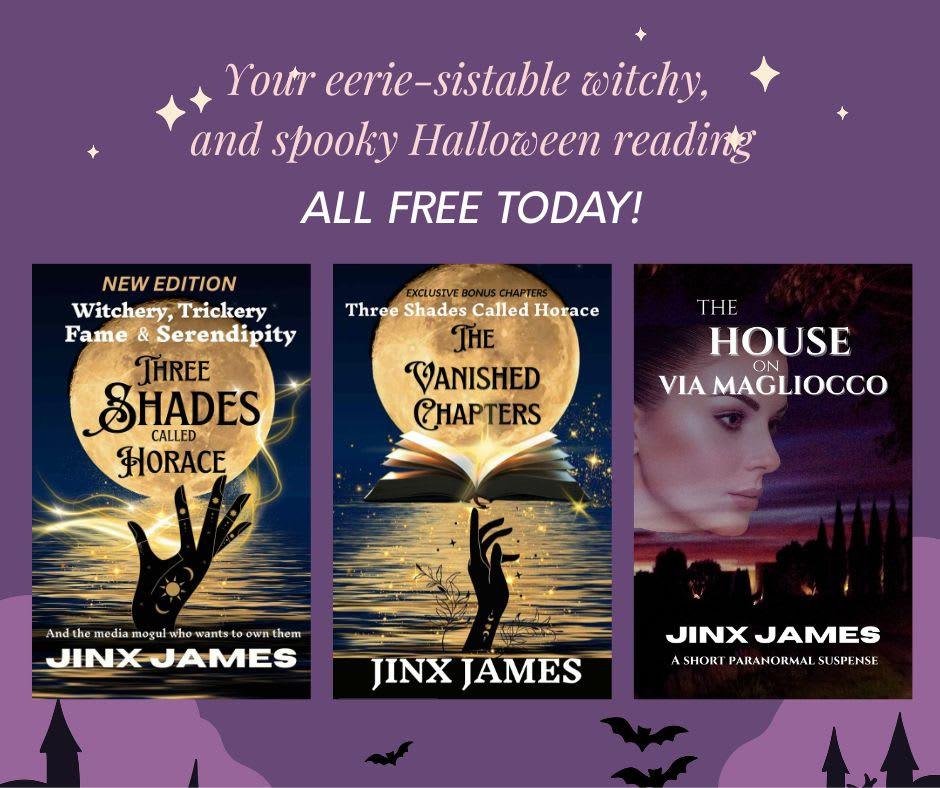
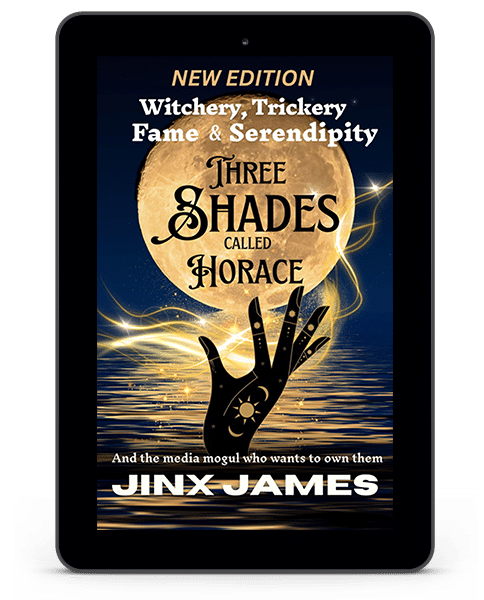
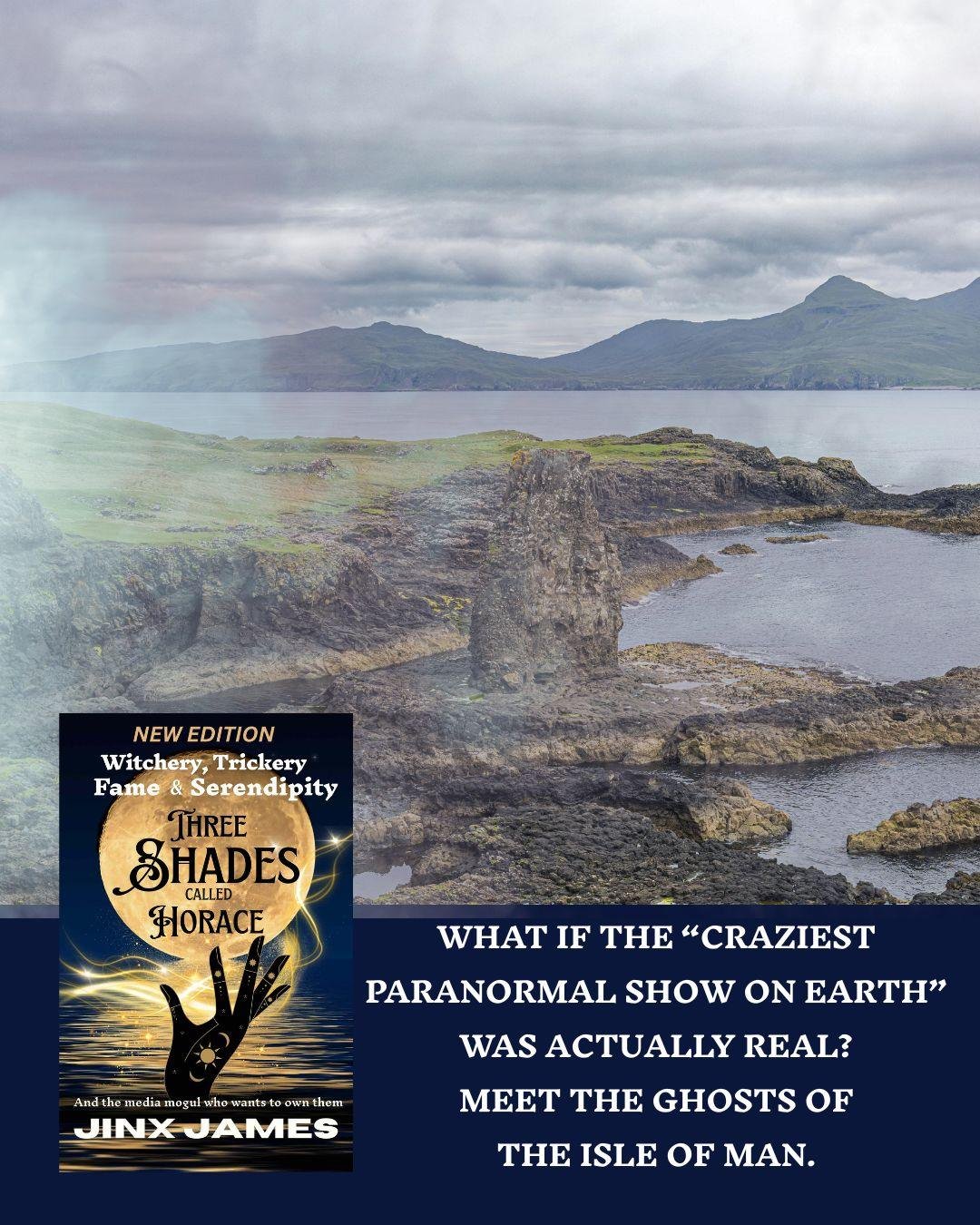
Three Shades Called Horace

Witchery, Trickery, Love & Serendipity

by Jinx James

Genre: Humorous Paranormal Thriller

“delightfully
twisted…offbeat supernatural romp”
Amazon Review ★★★★★

“A unique and hilarious story with a lot of twists and awesome revenge.
I loved the ending!”
Amazon Review ★★★★★

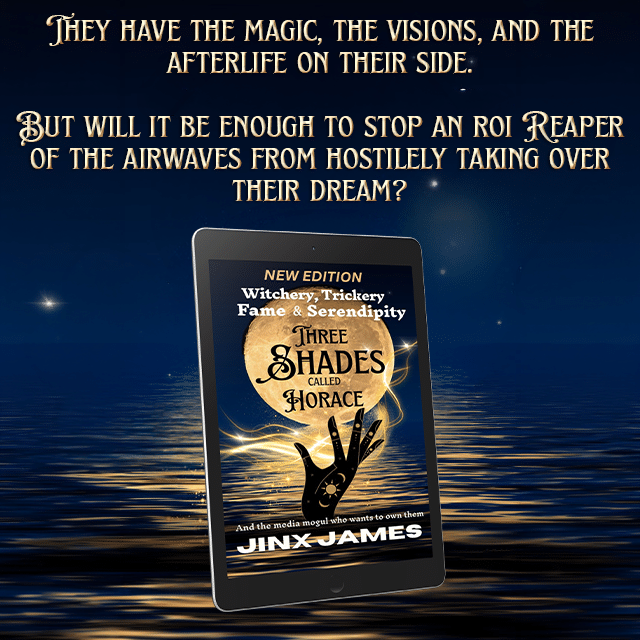
They have the magic, the visions, and
the afterlife on their side. But will it be enough to stop an ROI Reaper of the
airwaves from hostilely taking over their dream?

Their “Super
Moon Show” is the viral hit of the year. Too bad the stars are all dead.

Pansy Peonie is a
psychic with a problem. Actually, three problems, and they’re all called
Horace. As the host of the world’s craziest paranormal livestream, she spends
her nights herding her team of opinionated ghosts and her days trying to keep
her witch mother from accidentally summoning something worse.

But when you’re
the top-rated supernatural show on the internet, you don’t just attract
spirits—you attract sharks.

Enter Rollo
Mansell: a ruthless media mogul who doesn’t care about the afterlife unless he
can monetise it. He wants the show. He wants the ghosts. And he’s not above
using a little corporate necromancy to get what he wants.

Now, Pansy is
caught in a high-stakes tug-of-war between the living and the dead. To save her
show—and her skin—she’ll have to outmanoeuvre a billionaire, survive a voodoo
conspiracy, and figure out if Rollo’s assistant, Max, is actually on her side.

Featuring a new
cover and a tighter, more suspenseful edit, this revised edition of Three Shades Called Horace will
keep you on the edge of your seat, while laughing uncontrollably.

If you love
fast-paced paranormal suspense with sharp wit, mysterious secrets, and un

forgettable
characters, dive into the newly polished edition of Three Shades Called Horace ]

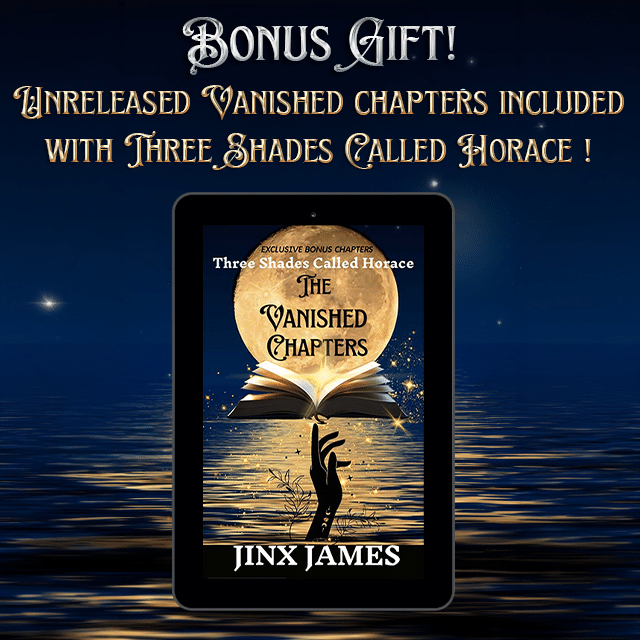
**Celebrate the relaunch and get it FREE until Oct 3rd!!**

Amazon * Books2Read * Bookbub
* Goodreads


.
.
.
.
.
.

    Over on the
ever-lovely Isle of Man, it’s turned out to be the most sensational evening.
The Three Shades, Horace Flaccus, Horace Walpole and Horace Silver are already
there, hovering in the twilight, when PP and Fenella finally arrive on Pansy’s
motorbike. They’re late as usual, but The Three Shades don’t seem to
mind. After all, they do have all the time in the world, don’t they?

The team is
getting together at dusk, at an ancient place where they like to meet when the
weather’s nice. It’s in the middle of the most beautiful circle of prehistoric
standing stones on the island’s southwest. This mystical place is situated on a
remote hillside, one side of which looks across to the mountains and the other
down towards the sea.

Hearing the
vroom of a hot, racing motorbike heading up the hill towards them, the three
ghosts turn their heads expectantly. Pansy, aka PP, parks behind the largest of
the enormous stones.

She appears
first, walking briskly towards the Three Shades, unbuckling, lifting her helmet
off and shaking out her hair. Behind her, Fenella, her older, White witch
partner, picks her way over the rough ground.

‘We just have
to tell all you Horaces straight away!’ says Pansy, getting excited now.
‘Barrett says the ratings for the last show were amazing!’ she gushes, adding,
‘he even told us they were “Earth-shattering!” she grins.

‘Er, would it
be possible for you to explain to us what exactly that means, Ma’am?’ asks the
ever-polite Walpole.

 ‘What it
means, gentlemen,’ says PP, grinning, ‘is that not only are we already getting
a huge worldwide audience, but it’s growing bigger and bigger with every show!’

‘And after the
last one,’ Fenella butts in excitedly, ‘we’ve had so many people trying to sign
up that Barrett has been overwhelmed. His computers and the social media
department can’t cope. He’s having to put on more people every day to handle
it!’

‘Yes, but, um,
what precisely does all of this mean, Ms Pansy?’ asks Flaccus.

‘Look, I’m
sure we explained it to you before, Horace. Don’t you remember? The
viewers of our Supermoon show all over the world are also a part of the
show, right? They’re active participants with their “Cozmics”, says
Pansy.

‘Well, yes, my
dear, you certainly did,’ said Flaccus, with that lovely smile of his. ‘But I’m
afraid that was the part I could never quite understand,’ confesses the Roman
Horace. ‘I’m so sorry,’ he adds, looking seriously embarrassed now.

‘Not to worry
at all, Horace,’ says Pansy gently. Flaccus has always been her favourite, even
though she always enjoys teasing him.

‘Did you know
that on the next show,’ she says, ‘the Supermoon is going to be the
closest it’s been to the Earth for sixty-nine years! Yes! And that
means that if we can add the viewers’ Cozmics together with all of that extra
Moon energy,’ she tells them excitedly, making a fingers-crossed sign.

At that point,
Pansy pauses, grins, and says, ‘Well, just try to imagine the power
involved!’

‘The technical
guys even think we might have enough energy,’ says Fenella, ‘to maybe bring you
back in full colour… and all of you at the same time!’

‘All of us in
colour…  and at the same time?’
says Horace Walpole, getting really excited himself now.

‘Are you sure?’
says Horace Silver, ‘In full colour?’

‘Absolutely!’
says the by-now almost gushing Fenella! ‘Bye-bye to all that fuzzy black and
white stuff, eh?’

They can all
feel the excitement rippling the air between them. The psychic, the witch, and
the three Horaces gathered in the magic circle of prehistoric standing stones.

‘It’s called “collective
mental focus”,
’ says PP. ‘And that means that if it all works out, you
three guys will materialise as psychic energy through me!’

‘And that’d be
sooo cool, baby! Right?’ smiles jazzman Horace Silver.

Fenella grins
again and nods; ‘But, how about this? If we can get enough Cozmics from the global
audience, all three of you Shades may even seem to fully come back to life for
a while!’

This time, all
three of them just stand there, totally gobsmacked!

‘Now, nobody
is certain exactly what will happen,’ says Fel, ‘but whaddya reckon,
gentlemen? Let’s give it a go, eh?’ she gushes.

By now, they’re
all totally in love with the idea… and it shows.

‘I’m afraid I
still don’t quite understand it,’ Flaccus says to her, almost flapping his toga
with excitement, ‘but wouldn’t it be wonderful if it did actually happen?
Especially for me after two thousand years in the shade!’

‘Hey, you
could even really “Seize the day!” says Pansy!


* * *

“It is
charming to totter into vogue.”

Horace Walpole

1717-1797

 ⚛︎ ⚛︎ ⚛

.


.
.
.

Q: Your new edition of your novel, Three Shades Called Horace, is set on the mystical Isle of Man, but you live in Tasmania. How does living “at the edge of the known world” influence your writing?

A: There’s a distinct atmospheric magic to living on a rugged island like Tasmania. When you are surrounded by untamed wilderness and the vast ocean, the line between reality and the supernatural feels a little thinner. Even though Three Shades Called Horace takes place on the opposite side of the globe on the Isle of Man, that sense of island isolation and mystical fog felt entirely familiar to me. It allows me to lean into both the eerie dread and the dark comedy of being stranded with things that go bump in the night.

Q: Three Shades Called Horace blends paranormal thrills with corporate satire and sharp comedy. What inspired you to mash up these genres?

A: I’ve always believed that the terrifying and the ridiculous go hand in hand. Think about it—if a real ghost showed up on live television today, a media mogul wouldn’t run away screaming; they’d try to monetize it and make it go viral! I wanted to explore that corporate absurdity. Giving a psychic medium a hit TV show featuring three hilariously opinionated, ghosts felt like the perfect canvas to poke fun at modern media culture while still delivering a high-stakes, fast-paced thriller.

Q: Where do you get your inspiration for your ghosts and supernatural elements? Are any of them based on real experiences?

A: Absolutely! I actually spent about a year living in a haunted house in a place called Pratt’s Bottom, in Kent, England. The house was built on top of an old Roman burial ground, and sometimes the energy there got incredibly heavy and bad. But we also had a resident house ghost we called Fred.

Fred was a bit of a character—he actually took a massive liking to my partner, who is Irish. We later found out that before Fred passed away, he had a wonderful Irish nurse, so he clearly retained a fondness for the Irish accent and presence even in the afterlife! Living with that mix of heavy, ancient history and a quirky house ghost with personal preferences is exactly what inspired the tone of Three Shades Called Horace. I love exploring how the paranormal can be simultaneously unsettling, historic, and yet completely normal, in a funny kind of way.

How did you choose the three ghost characters who play such a big role in Three Shades Called Horace?

I chose Horace Walpole, who is the first to appear to Pansy, because I enjoyed his novel Otranto, the first-ever gothic novel to be published, and his 18th century gothic revival house was the inspiration for the look-alike house that the ghosts inhabit on The Isle of Man.

I also enjoy reading the classics, Socrates, Suetonius, and other ancient great men of letters. Poet and satirist Horace Flaccus is up there with the best of them, plus he had a wicked sense of humour.

Horace Silver is one of my all-time favourite jazz musicians and composers. When I read his autobiography “Let’s Get to the Nitty Gritty”

I discovered his family originated in Cape Verde (another island story) and that he had a keen interest in spiritualism. So, another personal choice to complete the trio. Sadly, he died in 2014

Q: Tell us a bit about your free reader magnet short story, and how it connects to your main release.

A: The free short story follows a top fashion model named Silvia who accepts a mysterious assignment at a secluded mansion, only to find her passion for dance twisting into a feverish supernatural obsession. While Three Shades Called Horace leans heavily into dark humour and corporate satire, this short story explores pure gothic suspense and atmospheric tension. I wanted to give readers a bite-sized, high-stakes introduction to how I handle supernatural threats before throwing them into the comedic rollercoaster of the main novel.

.
.

.

**FREEBIE ALERT!!**

To celebrate the relaunch of Three Shades Called Horace,
the author is having an exclusive giveaway of the supernatural short story The
House on Via Magliocco!

.

.

The House On Via Magliocco

by Jinx James

Genre: Supernatural Dark Fantasy

To be beautiful
forever. Would you turn down that offer?

A mesmerizing one-hour dark fantasy short read.

Silvia is a top fashion model who lives for the spotlight,
but the camera’s love is fleeting. When she’s offered a mysterious assignment
at the secluded House on Via Magliocco, it feels like the ultimate canvas for
her creativity and passion for dance.

But inspiration quickly twists into a feverish obsession.

As the mansion’s haunting music bleeds from her dreams into
her waking life, Silvia realizes she hasn’t just accepted a job—she has stepped
into a beautiful trap. The house demands a performance, the wealthy owner
demands perfection, and the price of eternal beauty might just be her soul.

Get this exclusive
supernatural short story delivered directly to your inbox.


Get it FREE Here!

.

,
.
.
.

Bestselling dark humor fiction author Jinx James was born in
the UK and lives in Australia. He has worked in music and advertising, and has
always been fascinated by charisma, satire, and what makes people laugh He used
to write comedy sketches for a well-known Australian TV and film star, but that
was after he was in the music game, as a performer. Later came writing and
producing music for advertising, and for big events like the Sydney Olympics.
All that time he was trying his hand at writing fiction, mostly humorous.
Eventually it became his new way of living while having fun. He writes under
two author names. As Jinx James his dark humor draws on his life in show
business. As dog lover Kit James, his Mutt to Megastar series features Elliott,
a rescue dog who becomes a TV star.

Website * Website * Bookbub * Amazon * Goodreads

.

Follow the tour HERE for special content and a giveaway!

.


Enter the Three Shades Called Horace Giveaway Here

.

~~~~~

Thanks so much for visiting fuonlyknew and Good Luck!

For a list of my reviews go HERE.

To see all of my giveaways go HERE.


.

/


Book Details:

  Delaware Keepers / Life At The Edge Of The Sea

By Dave Tabler


Category: Adult Non-Fiction, 224 pages
Genre: History
Publisher: Dave Tabler
​Publication Date: June 1, 2026
Content Rating: G: no bad language, no sex scenes


Book Description:


Delaware Keepers is a bottom-up social history of the men and women who tended Delaware’s lighthouses from the colonial beacon at Cape Henlopen in 1769 through the automation era of the 1940s. Its central argument is a deliberate inversion of a familiar image. The popular lighthouse keeper—the bearded hermit slowly losing his sanity in storm-battered isolation—is, in Tabler’s words, “dead wrong.” Drawing on newspaper archives, government and inspection records, and family papers, the book reconstructs keeping not as a story of madness and solitude but of community, family life, civic engagement, and quiet professionalism.

The book opens on its thesis in miniature: keeper George W. Duncan celebrating his 37th wedding anniversary at the Port Penn Range Light in 1907, surrounded by forty guests and a brass band—a federal employee at the center of community life rather than its lonely edge. Delaware’s compact geography makes the case plausible: short coastline, numerous inland waterways, and stations often within walking distance of town, with even offshore posts like Fourteen Foot Bank deliberately crewed by three men to forestall the very isolation the myth romanticizes. Tabler doesn’t flatten the picture, though—remote, icebound posts like Mahon’s Light and Reedy Island could genuinely isolate, and the work carried real risk from storms, wrecks, and accidents.

​Across sixteen chapters organized into five chronological parts, the narrative traces keeping as it emerged as an occupation, matured into a respected federal career, and then vanished under automation:

  • Founding the Lights (1769–1850s) — colonial origins, John and Elizabeth Dickerson at the first Cape Henlopen beacon, and Abraham Hargis writing desperate letters to Thomas Jefferson about inadequate pay.
  • Forging a Network (1850s–1880s) — the lights through the Civil War and the professionalization of keeping into a genuine career.
  • The Golden Age of Keeping (1880s–1940s) — the profession at its height, its costs, and its public visibility.
  • The End of an Era (1940s–1970s) — automation and the disappearance of the resident keeper.
  • Preserving the Legacy (1970s–present) — how families and communities carry the memory forward.


The human thread runs throughout: Hannah Hill dragging a boat across broken ice to fetch a doctor for her ailing husband; Irvin and Janie Lynch raising eight children at Mahon’s Light; the Spencer children at Liston Range, for whom a station with no plumbing or central heat was simply home. The closing chapters turn to memory itself—how granddaughter Penny Czerwinski turns Dorothy Lynch Morris’s recollections into classroom presentations (complete with Toby, the coal-chute-riding pig), and how preservation has shifted from maintaining structures to transmitting living culture.

Beyond maritime history, the book frames larger questions: how skilled occupations earn legitimacy and respect, what happens to experienced workers when technology renders them “unnecessary,” how communities lose institutional memory when federal employees vanish from daily life, and why we mythologize obsolete professions while forgetting the people who actually performed them. It positions itself not as a technical catalog of lighthouses—those exist—but as a recovery of the keepers as real, embedded, civic human beings.

Buy the Book:
Amazon ~ Audible ~ B&N  
Broadway Books ~ BAM
add to goodreads

.

INTERVIEW WITH AUTHOR DAVE TABLER

.

Q: You’ve written six previous books on Delaware history. Why lighthouse keepers this time?

In a sense the keepers chose me. I kept meeting them in the margins while researching other books, and they never behaved the way the folklore said they should. The myth promises a solitary man in a wave-battered tower, slowly going mad from the isolation. What I kept finding instead were family men, churchgoers, and bandmates who happened to work in a lighthouse. But there was a bigger draw. Lighthouse keeping is a complete story you can hold in one book: a profession that came to Delaware in 1769, matured into a respected federal career, and then was made extinct by automation within a single generation. A skilled occupation rendered obsolete by technology is a subject with obvious echoes right now. The keepers lived through the version of it our own era is just starting to argue about, and their story shows what a community loses when a familiar profession simply vanishes from daily life.

,

Q: How did you research the book?

My training is in journalism, so the rule is primary sources first. Keeper logs and Lighthouse Board records at the National Archives, congressional testimony, family papers, cemetery records, and the archives of the U.S. Lighthouse Society all went into the file. My favorite find sits in the Founders Online database: an 1803 letter from Abraham Hargis, keeper at Cape Henlopen, written directly to President Thomas Jefferson to protest his pay, original spelling intact. He assured the president that “one active person in Deleware is worth a hundred in Pensylvania.” Hargis served thirty years and died at his post, and his salary was never raised. When a source like that survives, the historian’s job is mostly to get out of its way.

.

Q: Which keeper stayed with you after you finished writing?

The Lynch family of Mahon’s Light, on the marshy flats of the lower bay. Irvin and Janie Lynch raised eight children out there. Janie banged pots in the fog to guide lost boats to the landing, and for twenty-four years the station could be reached only by water or footpath. In 1926 Irvin was hauled before a Dover magistrate because his children’s school attendance was spotty; the judge dismissed the case after hearing what the road was like. When Kent County finally built a gravel road in 1934, Janie threw her hip boots aside and said, “Now I’ll be able to wear a woman’s clothes!” Somewhere in there is everything the book is about: hardship, humor, family, and a government job lived out in a marsh.

/

Q: If the lonely-hermit image is wrong, where did it come from?

It came from fiction, and from one genuinely horrific event: the 1801 Smalls Lighthouse tragedy off the Welsh coast, where a keeper died at his post and his surviving partner was found half mad beside the coffin. Writers took it from there. Edgar Allan Poe’s unfinished 1849 story “The Light-House” gave America a keeper unraveling on the page by his third day alone, and readers loved the haunted man in the tower ever after. Delaware’s stations mostly sat within sight of towns. The late Michael Morgan, the coastal columnist who chronicled this shoreline for decades and whom I quote in the book, put it plainly: “The loneliness of a lighthouse keeper is legendary,” he wrote, before showing that Delaware’s record tells another story. Morgan died this past December, mid-column at 82, and I like to think of Delaware Keepers as one more entry in the long argument he and Delaware’s historians have been winning against the myth.

.

Q: You came to book writing after other careers. When did you know you were a storyteller?

I didn’t decide to write. Writing found me, and it came from two directions at once. One was Hattie Rakestraw, a tobacco-voiced neighbor from my father’s boyhood in West Virginia. His parents’ kitchen door was always open to her, and she could pull tears and laughter out of the same room minutes apart. I heard her myself as a small boy. I was too young to catch what made the grown-ups roar, but old enough to sense that a plain-spoken farm woman holding a table spellbound was a kind of power. My father wrote a whole chapter about her in his memoir.

The other direction was my mother, a librarian, who kept Dickens, Eliot, and Dostoevsky within reach the way a mechanic keeps his tools. To her, novels were how a person understood the way the world actually works. Her college letters home survive, and mid-Les Misérables she complains that every book she’s been assigned shows people at their worst, then sighs, “Oh for a nice trite story where Goodness is rewarded with Happiness!” Notice who chose the word “trite.” She was in on her own joke.

Neither of my parents thought of themselves as writers. But between the woman who could turn that farmhouse kitchen electric, and the mother whose bookshelf explained the world, I grew up assuming stories were how you made sense of things. Years later I started mailing my father sketches of quirky characters I’d met in Brooklyn. “Another shaggy dog story!” he wrote back. He recognized the inheritance before I did.

.

Q: What does your writing routine look like?

I’m up at 4:30 every morning, which I’m told puts me in the company of about three percent of the country. The reason is simple: no interruptions. Nobody else in the house is up at that hour, the phone doesn’t ring, and no text is buzzing at me. Those early hours are the only ones the world hasn’t already claimed. I work to deadlines and I hit them; inspiration is welcome to join me at the desk, but the work starts either way. That discipline is how a self-published historian produces a book a year while keeping the research honest. Every named person in my books stands on a confirmed document, and that standard takes hours invested morning after morning.

;

Q: What’s next for you?

Two books are already in the pipeline. Delaware’s Forgotten Cavalry arrives January 1, 2027, built from the firsthand Civil War writings of three soldiers of Company C, First Delaware Cavalry, presented as they wrote them. And in mid-2027 comes a history of Delaware innkeeping, from colonial taverns to the corporate hotel brands of today. Different subjects, same project: telling the First State’s story through the people who did the work.

.

.


Meet Author Dave Tabler:

Ten year old Dave Tabler decided he was going to read the ‘R’ volume from the family’s World Book Encyclopedia set over summer vacation. He never made it from beginning to end. He did, however, become interested in Norman Rockwell, rare-earth elements, and Run for the Roses.

Tabler’s father encouraged him to try his hand at taking pictures with the family camera. With visions of Rockwell dancing in his head, Tabler press-ganged his younger brother into wearing a straw hat and sitting next to a stream barefoot with a homemade fishing pole in his hand. The resulting image was terrible.

Dave Tabler went on to earn degrees in art history and photojournalism despite being told he needed a ‘Plan B.’

Fresh out of college, Tabler contributed the photography for “The Illustrated History of American Civil War Relics,” which taught him how to work with museum curators, collectors, and white cotton gloves. He met a man in the Shenandoah Valley who played the musical saw, a Knoxville fellow who specialized in collecting barbed wire, and Tom Dickey, brother of the man who wrote ‘Deliverance.’

In 2006 Tabler circled back to these earlier encounters with Appalachian culture as an idea for a blog. AppalachianHistory.net today reaches 375,000 readers a year.

Dave Tabler moved to Delaware in 2010 and became smitten with its rich past. He no longer copies Norman Rockwell, but his experience working with curators and collectors came in handy when he got the urge to photograph a love letter to Delaware’s early heritage.

It turned out to be the start of something. Tabler has since written Delaware Before the Railroads, Delaware from Railways to Freeways, Delaware from Freeways to E-Ways, Delaware at Christmas, Delaware Behaving Badly, and Delaware Keepers.

connect with the author: website ~ X ~ facebook ~ pinterest ~ instagram ~ goodreads
.


~~~~~

Thanks so much for visiting fuonlyknew!

For a list of my reviews go HERE.

To see all of my giveaways go HERE.
 

.
.


Book Details:

​ Choppiness on High Seas

By Arvind Wadhera


Category:  Adult Fiction (18 +),  296 pages
Genre: Literary Fiction
Publisher:  Troubadour UK
Release date:  October 2024
Content Rating: PG -13 + M rating for: There is contextual sex, violence and abuse.

.


Book Description:

​Being born into poverty and hardship in 1930s London, Matthew’s life was one of relentless struggle. One inadvertent act in defence of his mother would haunt his conscience forever.

Matthew’s journey takes him from the poverty of a cold stone granary to the opulence of Mayfair and Kensington Palace Gardens, where he starts a family of his own. Despite working his way to the top of the business world, he remains an outsider to London’s elite. He then realises that that same elite has an ugly underbelly. High society was a hot bed of depravity.

Will he correct society’s wrongs? Will the man who never succumbed to expectations be able to challenge his own destiny or will he simply accept the futility of it all?
 
Buy the Book:
Amazon ~ Amazon.UK
B&N 
add to goodreads
.
Interview With Author Arvind Wadhera:
.

How did you do research for your book?

I researched the book as I wrote. I decided that I would start the main character’s life in abject poverty in 1930s London and then I researched as and when the story developed. I had to do quite a bit of research on the shipping industry, which was not known to me at all.  Plus, I had to do research on Cancer and the potential post treatment hazards that can be fatal.


Which was the hardest character to write?

The hardest character, by far, was Matthew Stephens. Developing a three dimensional emotionally conflicted tycoon, husband, son and father needed many rewrites.


There are many books out there about rags to riches. What makes yours different?

I have tried to keep the narrative simple, while delving into inner victories and defeats of a human being. I was not looking to entertain or titillate but to just relate a human story without idolising the main character. There are many authors who deal with the human condition, but I wanted to do it in a manner that reflects my own value set, beliefs and spirituality.


Your book is set in (name place). Have you ever been there?

Th main part of the book is in London, where I spent my adult life and formative years until I moved to the continent.


What is your next project?

I am working on a family story where the female protagonist, a well to do English family lady, makes an unusual compromise but eventually lives to regret it; she then looks for a purpose by travelling to India. Although I have Indian roots, I am having to research quite a bit on the area where she begins her journey. I intend it to be a complex story reflecting different levels of existence.


What genre do you write and why?

I write the only genre I read, literary fiction. I believe that my language skills are well suited to write in a sustained, deliberative manner while weaving the story.

.
.
 

Meet Author Arvind Wadhera:

Arvind is French and British with roots in India. He lives and works in Brussels.

Arvind has three adult children, who all live away from Belgium. He reads literary fiction and was motivated to write after reading three key books: The Portrait of Dorian Gray, Thérèse Raquin, 1984 and East of Eden. He is fascinated by the co-existence of good and evil. In his first book, Emma’s Equilibrium, he relates the story of an Olympic winner who suffers hurt along the way. Choppiness on High Seas charts the life of Matthew from his ignominious birth to his passing away in peace after having become one of the weathiest persons in the world.

Arvind loves languages and can speak French, Spanish, Dutch, German, Italian, Hindi, Punjabi and Gujarati. He is a stroke survivor and rides, jogs and does yoga.

He is a strong believer in the duality of fortune and misfortune. He is deeply spiritual.

Arvind finds writing challenging and frustrating and editing particularly painful. He, however, believes that writing can be therapeutic and gratifying.

connect with the author: website ~  X ~ instagram ~ goodreads


~~~~~

Thanks so much for visiting fuonlyknew!

For a list of my reviews go HERE.

To see all of my giveaways go HERE.

 

.

The family he
didn’t know he wanted might be the only thing worth dying for.

.

.

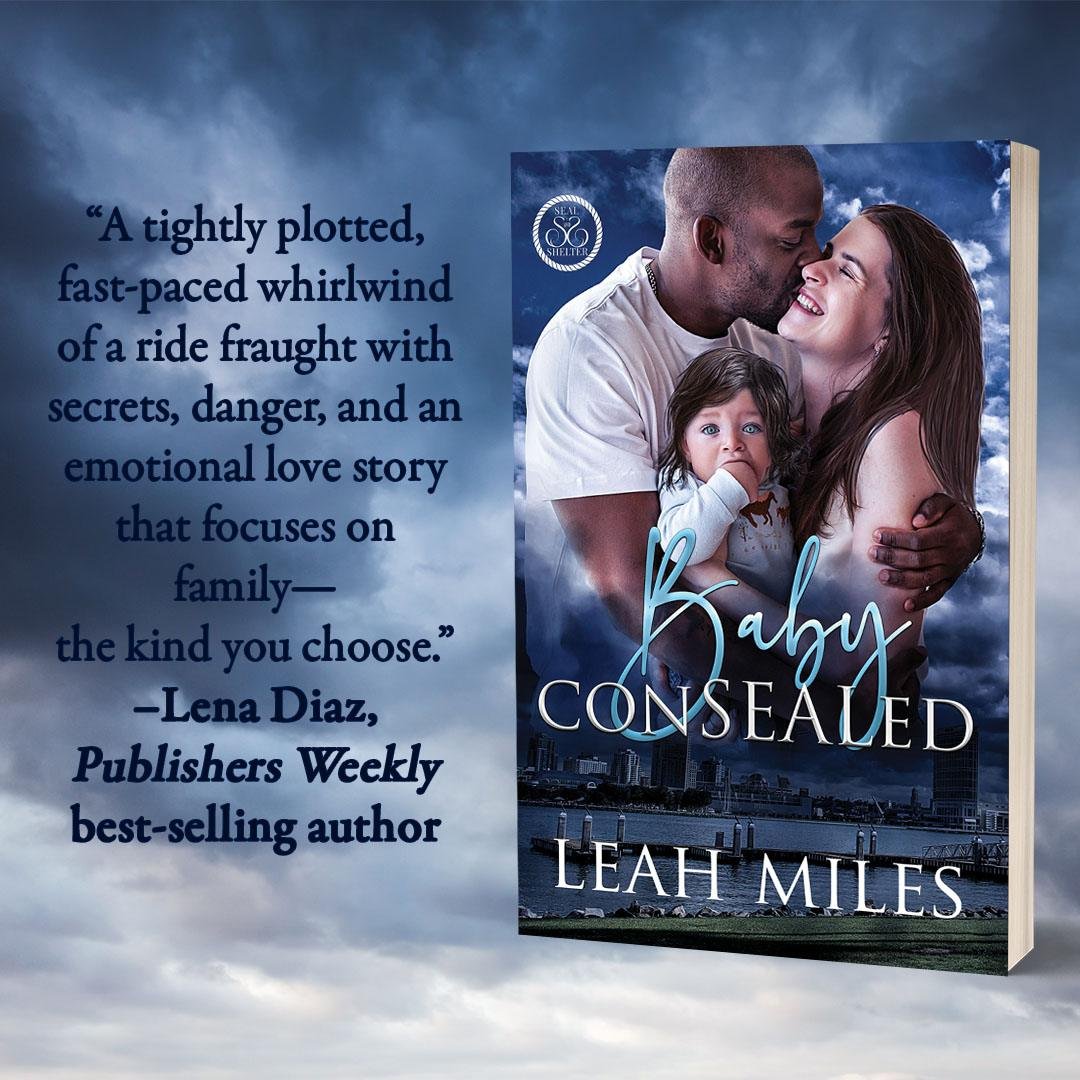
Baby ConSEALed

SEAL & Shelter Book 1

by Leah Miles

Genre: Romantic Suspense

Baby ConSEALed won
the 2024 Georgia Romance Writers’ “Maggie Award”!

Rissa Parker struggles to support herself and her daughter
by working overnights as a home health nurse. After witnessing her employer’s
murder, she has no choice but to grab her two-year-old and run toward the one
person strong enough to protect them, the Navy SEAL who fathered her child
during a one-night stand.

Navy SEAL Bernard “Burn” Cruz is a straight arrow,
approaching work and play in equal parts. He doesn’t regret much in life,
except for one woman he’s never forgotten. Nearly three years after their
initial encounter, she shows up in San Diego at the bar his team likes to
frequent, and he believes Forever might have knocked on his door. Until a child
cries, and all hell breaks loose.

As bullets fly and bodies drop, Rissa must outrun a killer
whose connection to her past threatens to destroy any chance at a future with
the father of her child, and Burn discovers the family he didn’t know he wanted
might be the only thing worth dying for.

Baby ConSEALed, an award-winning contemporary
romantic suspense novel, is fast-paced, steamy and suspenseful. Pick up your
copy today!


“A tightly
plotted, fast-paced whirlwind of a ride fraught with secrets, danger, and an
emotional love story that focuses on family—the kind you choose.” —Lena Diaz,
Publishers Weekly best-selling author


“With a
to-die-for hero, sizzling tension, and edge-of-your-seat suspense, this romance
delivers all the feels in an unforgettable, heart-pounding read!” – Charlee Allden,
Goodreads Review


“A fast-paced,
slow-burn romantic suspense where danger, secrets, and second chances collide….
 With
bullets flying and hearts on the line, Leah Miles delivers high stakes and
emotional impact in equal measure.” – Cam Torrens, Goodreads Review

**NEW RELEASE – GET IT NOW!!**

Amazon * Bookbub * Goodreads

.

.
.
.
.

Burn slung Scoot’s arm over his shoulder and supported him
around the waist. He jerked his chin at Pan. “Head out.”

Rifle up and ready, Pan led as they exited the demolished
building. Outside, Mack leaned against the remains of a wall, his med kit open
on the ground and his leg wrapped in an inflated splint.

Relief punched Burn in the gut. “You good?”

Mack spoke through clenched teeth. “Negative, Chief. My leg is
shit.”

“Hang tight. We’ll get you out of here,” Burn said.

This shouldn’t have happened. The meet with the informant had
been pure clockwork. An easy five-man mission. Styles on the perimeter, Mack
out front, and Pan on overwatch. He and Scoot had been the only ones inside to
parlay with a man purported to know the American they’d spent the last several
weeks hunting. The slippery bastard was selling truckloads of American weapons
to insurgents.

His team had been tasked with finding the American and erasing
him from the planet. This fuck-up was on Burn. He’d been so certain they’d get
him this time he’d rushed the intel.

“Time to leave, Chief,” Pan blurted, his head still on a swivel.
“We stay here any longer, and the neighbors will get the party invitation.”

Burn dipped his chin in agreement, regretting his decision to
split the eight-man SEAL team. He’d like to have his other three guys here
right now, but they were in the helo, waiting to rendezvous at the evac point. If
the neighbors dropped in before his team vamoosed, they were toast. “Where’s
Styles with our ride?”

“Thirty seconds.”

“I’ve got Scoot. See if Mack needs anything.”

The ancient cargo van screeched to a halt in front of them, and
Styles yelled out the open window. “Need a ride, Chief?”

“Fuck yeah,” Burn snarled, half-lifting Scoot onto the middle
bench seat before helping Pan settle Mack on the back row. Then Burn slid into
the front passenger side while agile, five-foot-nine Pan scrambled over the
back seat to cover their rear.

Styles hit the gas, spinning the tires as they shot down the
narrow street. Burn glanced over his shoulder, and despite their injuries, Scoot
and Mack were weapons ready, eyes peeled for pursuers at the side windows. He
was damn proud of his team.

.

,
.Ba
  1. What comes first, the plot or the characters?

When I began this journey in earnest, I wrote down the stories in my head without planning or an outline, but it was difficult to maintain a consistent story thread. I learned that for me, the best stories begin with figuring out what my characters want and need. After I do that, the story practically writes itself.

Q: What changes between drafts?

I write in layers, so my initial draft is a little messy and filled with notations. After the first draft is done, I do a very rough outline and make sure the threads are all coming together.

After that, I make 2 or 3 passes, adding details and emotions that I skimmed over in the initial draft. I’m my own worst critic.

Q: Do you use writing software?

I love DabbleWriter. It helps me organize chapters and scenes and lets me easily work on multiple books at once. With the outline and plotting tools, I’m able to keep the series details straight and store photos that remind me of my characters. I also use Grammarly for spellcheck.

  1. Roughly how much time do you spend writing every day? 

I work a full-time job, and in January of this year, my husband and I opened a 6-cabin Airbnb-type business. Since then, my writing time has dropped from 2.5-3.5 hours a day to about an hour on weekdays, though I try to make up for that on weekends. This doesn’t account for the time I invest in the business side of the author business: promotions, interviews, social media, newsletters, and cross-promotions, just to name a few.

  1. What’s the best way to improve your writing?

I set a goal to write one short story a month, in addition to my novel projects, to keep my brain churning with new ideas. And I regularly take classes and workshops, as there is always more to learn, whether it’s craft or the business side of being an author.

  1. How do you persuade yourself to sit down to write on days when you really, really DON’T feel like doing it?

Fifteen minutes at a time. I set the timer on my watch to 15 or 30 minutes and try to put down only new words during that interval. It’s a way to commit to the project even when I’m incredibly busy with other things.

.

.
.

Leah Miles writes romance and paranormal fiction from her
small-town in South Georgia, where she lives with her husband and cocker
spaniel while running an insurance agency and Airbnb business.

After a dozen
years in news production at CNN, Leah Miles now manages an insurance agency and
an Airbnb business in rural Georgia, while writing romantic suspense and
paranormal romance featuring take-charge heroes and fierce heroines.

Website * Facebook * Instagram * Bookbub * Amazon * Goodreads

.


Follow the tour HERE for special content and a giveaway!

.


Enter the Baby ConSEALed Giveaway Here

.

.

~~~~~

Thanks so much for visiting fuonlyknew and Good Luck!

For a list of my reviews go HERE.

To see all of my giveaways go HERE.


Book Details:

​MANCALA MOON

by Asa Bowers


Category:  Adult Fiction (18 +),  242 pages
Genre: Literary fiction with magical realism
Publisher:  Asa Bowers
Release date:  December 2025
Content Rating: PG -13 +M: however there is one F – word in the book. So I rated it PG-13.

(more…)


Book Details:

 Her Own Legacy, Book 1 of the Chateau de Verzat Series

By Debra Borchert


Category:  Adult Fiction (18+), 870 pages
Genre:  Historical Fiction
Publisher:  Le Vin Press
Release date:   Sep 2022
Tour dates: Mar 13 to Apr 3, 2026
Content Rating:  PG-13 + M: No explicit sex scenes or bad language, but one of the main characters is illegitimate. Violence of the French Revolution included, but no gore. ​


Book Description:

​A captivating tale of courage, betrayal, and resilience set against the tumultuous backdrop of the French Revolution

To save her world, she must risk losing it.

Chateau Verzat’s vineyards have sustained generations, but ancient laws forbid unmarried women from inheriting land. Countess Joliette de Verzat secretly manages her estate, haunted by the fear of losing everything for herself and her people.

Revolution erupts, chaos descends. She risks her life to save her forbidden lover amidst the turmoil and flees to Paris where she uncovers a shocking truth: her illegitimate half-brother, Henri, is the rightful heir.

Now hunted by her father’s killer, Joliette must trust those she has saved to protect her and help her reclaim her legacy. But as she faces impossible choices and dangerous enemies, she must also confront her own desires and the true meaning of family.

For fans of strong women and forbidden romance, Her Own Legacy is a gripping tale of love, betrayal, and the fight for self-determination. Experience the passion and turmoil of a woman defying tradition to claim her rightful place.
Buy the Book
Amazon
Apple ~ B&N ~ KOBO
add to Goodreads
.
,

Guest Post

Why this fiction author wrote a cookbook

When my characters tell me what to do, I listen.

During the writing of my Château de Verzat series, my characters ganged up on me and informed me that if I didn’t publish a cookbook collection of their recipes, they would stop speaking to me. I still had another book to write, so it was a risk I wasn’t willing to take.

When writing “Her Own Legacy,” my research told me that soups were very important to French culture and the recipes varied depending on the economic level of the cook.

I confess, I am a soup maven. I am the proud owner of ten slow cookers, and I throw annual soup parties at which I serve eight different soups. In writing my historical novels, I created soups that helped reveal the characters’ qualities and their economic condition. For example, Sister Magali is a kind nun who cares for eighteen orphans. When they arrive at the Verzat estate which offers them shelter, Sister Magali discovers pears growing near the vineyard. She roasts them and adds them to her Roasted Butternut Squash Soup, to “add a little sweetness to the children’s lives.”

Louis de LaGarde is a former nobleman who turns his château into an orphanage sheltering children and their single mothers, who happen to be ex-prostitutes. Throughout the series, Louis changes from an arrogant rogue to a generous man of great integrity and honor. In his telling of how he created “Oncle Louis’s Lentil Soup,” he reveals his kind and loving nature, growls like a bear, and entertains the children, shocking the protagonist who has seen only his selfish, demanding side.

Aurélia, a former enslaved American, appears in “Her Own Revolution” and “Her Own War.” She is mute, due to the horrors she endured on the ship that transported her from Africa to America. But she communicates her love through her soups, made with ingredients that were also used in her homeland.

So, when these characters asked me to compile a cookbook, I was only too glad to comply.

(Readers can received a free e-cookbook by signing up for my newsletter at: https://debraborchert.com/bonus/)

.
.

.

,

.

Meet Author Debra Borchert:

Debra Borchert has had many careers: clothing designer, actress, TV show host, spokesperson for high-tech companies, marketing and public relations professional, and technical writer for Fortune 100 companies. Her work has appeared in The New York Times, San Francisco Chronicle, The Christian Science Monitor, and The Writer, among others. Her short stories have been published in anthologies and independently.

A graduate of the Fashion Institute of Technology, she weaves her knowledge of textiles and clothing design throughout her historical French fiction. Her work has been honored with a Historical Novel Society Editors’ Choice, Publishers Weekly BookLife Editor’s Pick, numerous awards–including: Winner Best Book Series, Page Turner Awards and the Independent Author Award, Runner Up, and many five-star reviews.

connect with the author: website ~ facebook ~ instagram ~ pinterest ~ goodreads

.

GIVEAWAY

.


Her Own Legacy Spotlight Book Tour Giveaway


~~~~~

Thanks so much for visiting fuonlyknew and Good Luck!

For a list of my reviews go HERE.

To see all of my giveaways go HERE.


Book Details:

  Delaware at Christmas / The First State in a Merry State

by Dave Tabler

Category: Adult Non-Fiction, 134 pages
Genre: Christmas
Publisher: Dave Tabler
​Publication Date: July 1, 2025
Content Rating: G. Family friendly throughout. No sex, violence or foul language.​

Book Description:

Explore the rich tapestry of holiday traditions that have shaped the First State’s festive season across the centuries. From colonial customs to modern-day celebrations, “Delaware at Christmas” unwraps the fascinating stories behind the state’s most cherished Yuletide practices.
​
Discover how Delaware’s diverse communities have contributed to its unique holiday landscape:

Uncover the origins of iconic traditions like the Wilmington mummer’s parade and beach town “Christmas in July” festivities

Learn about the evolution of holiday decorations, from simple colonial adornments to elaborate Victorian displays

Explore the influence of immigrant communities, including Polish, Italian, and Hispanic holiday customs

Delve into forgotten practices like the holly wreath industry that once thrived in southern Delaware

Examine how wartime and economic shifts shaped Christmas observances throughout the state’s history

Filled with captivating anecdotes, historical photographs, and little-known facts, this book offers a comprehensive look at how Delawareans have celebrated the holiday season from the 17th century to the present day. Whether you’re a history buff, a holiday enthusiast, or simply curious about Delaware’s cultural heritage, this meticulously researched volume provides a joyous journey through time.

“Delaware at Christmas” is an essential addition to any First State bookshelf, offering:

In-depth exploration of religious and secular holiday traditions

Profiles of notable Delawareans who influenced Christmas customs

Insights into how national trends and local innovations shaped Delaware’s experiences

A treasure trove of holiday memories from generations of Delaware families

Unwrap the magic of Delaware’s Christmas past and present with this definitive guide to the state’s holiday history. Whether you’re a lifelong resident or a curious visitor, “Delaware at Christmas” promises to enrich your understanding and appreciation of the First State’s joyous spirit. Buy “Delaware at Christmas” today and embark on a joyful exploration of holiday traditions in the heart of the Mid-Atlantic!

Buy the Book:
Amazon ~ B&N 
add to goodreads
.
Author Gues tPost
.

One of the things that struck me in Delaware at Christmas is how many traditions took shape in settings beyond the family hearth—whether in factories, canneries, churches, or whole towns coming together for house tours and parades. What do you think those public and workplace traditions reveal about the way Delawareans have tried to balance private celebration with community identity?

This gets at something really important about Delaware’s character. Delawareans have consistently found ways to make Christmas both deeply personal and genuinely communal.

Take the holly wreath industry – families worked in their own homes making wreaths, but it was part of a larger economic network that connected rural Sussex County to cities like New York and Philadelphia. The Christmas Seal campaign started with Emily Bissell’s personal connection to tuberculosis through her cousin, but she deliberately took it to the post offices, making it a public health effort that anyone could join for just a penny.

The immigrant communities show this balance particularly well. Polish families preserved their intimate Wigilia suppers at home, but they also created public spaces like the oplatek and kolędy events at St. Hedwig’s Church where the broader Wilmington community could experience these traditions. The Italian Feast of Seven Fishes remained a private family affair, but Italian restaurant owners shared elements of it publicly.

Even the mumming tradition, before it was banned, was about taking private revelry into public spaces – going door to door, performing in streets. When authorities shut that down, Delawareans eventually channeled that energy into Halloween parades and later the satirical Hummers Parade in Middletown.

What strikes me is that Delawareans didn’t see private and public celebration as competing forces. They seemed to understand that traditions needed both intimate family moments and broader community expression to really thrive. The Christmas house tours are perfect examples – private homes opened to strengthen community bonds while raising money for local causes.

Rather than reflecting a single community approach, these patterns suggest that across Delaware’s diverse populations, many groups – though certainly not all – found ways to extend their holiday traditions beyond the family circle when circumstances and inclinations aligned.

So often these traditions carried a sense of ingenuity—whether it was soaking a Yule log to make a holiday last longer, or turning IBM punch cards into wreaths. Why do you think creativity and adaptation play such a recurring role in Delaware’s Christmas story?

The examples in the book do show repeated instances of creative adaptation, though they stem from different motivations. The soaked Yule log that former slave Jeremiah “Old Jerry” Deputy described came from necessity – enslaved people got a holiday only “as long as the log lasted,” so they found ways to make it burn longer. That’s survival ingenuity under constrained circumstances.

The IBM punch card wreaths represent a different kind of creativity – mid-century Americans domesticating new computer technology by turning office waste into familiar holiday decorations. Companies like DuPont were generating millions of these cards, creating abundant raw material for crafters.

Harold Follett’s “ThunderStreak” toy shows another kind of innovation – a Wilmington teacher who turned his college experiments with amphibious air boats into a patented design that Ideal Toy Corporation marketed nationally. He adapted cutting-edge hydrofoil technology into something children could enjoy.

Some creativity emerged from practical necessity. When German immigrants couldn’t afford whole Christmas trees, families would use single decorated branches instead. The mistletoe harvesters developed increasingly sophisticated climbing techniques, moving from dangerous hickory switches to telephone lineman-style “creepers” with spikes.

Religious communities adapted traditions to new circumstances. The Moravian lovefeast found new life in Delaware’s Methodist and Presbyterian churches, with some congregations adding brass quartets to honor the original trombone traditions. Orthodox Christians maintained their Julian calendar celebrations while gradually incorporating bilingual services for American-born generations.

Rather than reflecting some inherent Delaware trait, these innovations seem to emerge from the intersection of available resources, economic pressures, and the universal human tendency to make traditions work within whatever constraints people face.

Some customs in the book seem to resist change—like Amish families deliberately keeping Christmas unadorned, or Irish Catholic households insisting on lighting the Christmas candle year after year. How do you see that tension between preserving older ways and adapting new ones shaping Delaware’s holiday history?

That tension plays out differently across Delaware’s various communities, and the book shows it’s not simply a matter of “old” versus “new.” Some groups maintained strict boundaries around change for theological reasons, while others selectively preserved certain elements while adapting others.

The Amish example you mention reflects a deliberate religious stance – they viewed elaborate Christmas decorations as worldly distractions from the holiday’s spiritual meaning. But even they weren’t completely static. The book notes they observed “Old Christmas” on January 6th rather than December 25th, and some families who owned shops catering to non-Amish customers did adopt modest decorations.

The Irish Catholic candle tradition represents a different kind of preservation – families like the Mulherns maintained the practice of lighting candles in windows, though they adapted it for safety by moving the candle from the doorway to the dining room table. They kept the symbolic meaning while adjusting the practical details.

What’s striking is how some communities used preservation as a form of resistance or identity maintenance. The Quakers completely rejected Christmas celebrations as potentially heretical, viewing them as Catholic excesses, and this stance persisted even as other Protestant denominations gradually embraced the holiday. French Huguenots maintained their preference for giving lasting rather than consumable gifts, a practice that distinguished them from their English and Dutch neighbors who typically gave food and drink.

The book also shows how external pressures could force tradition to either bend or break. Christmas Savings Clubs thrived for decades but virtually disappeared by 2006 when credit cards, inflation, and digital banking made them obsolete. The eggnog tradition shifted from being viewed as medicine “for the sick” to becoming a festive indulgence, showing how the same practice could survive by completely changing its cultural meaning.

The question wasn’t whether to change, but what was essential to preserve and what could be modified without losing core meaning.

In Delaware at Christmas you draw heavily on newspapers, oral histories, and even folklore bulletins. How did working with those kinds of sources shape the way you told the story? Did you find yourself writing more as a cultural historian, or sometimes almost as a folklorist trying to capture how people remembered their Christmases?

Those sources really shaped both the content and the tone of the book in ways that sometimes pulled in different directions. Newspaper accounts gave me the official version – when papers covered outdoor Christmas lighting competitions or reported on handbell choir performances, I was getting the public face of these traditions, often filtered through editors who wanted to present positive community stories.

But the oral histories revealed something quite different. When Hetty Francke talked about maintaining authentic Dutch Sinterklaas celebrations in Arden, I was hearing personal memory and lived experience. These voices often contradicted or complicated the newspaper narratives.

The folklore bulletins, like Ruthanna Hindes’ 1952 piece on Old Christmas beliefs, sat somewhere in between – they were scholarly attempts to document what people actually believed and practiced, not what institutions wanted them to believe. Hindes writing about cattle kneeling at midnight was capturing genuine folk belief, even if she approached it academically.

Working with these different source types meant constantly weighing official accounts against personal recollections. When newspapers covered Christmas card etiquette rules, I had to ask whether that reflected how people actually behaved or just how etiquette columnists thought they should behave.

The most revealing moments came when sources contradicted each other. A 1901 newspaper article about Old Christmas painted this romanticized picture of rural Sussex County, complete with problematic “Lost Cause” imagery. But Hindes’ later academic treatment of the same customs was much more objective, focused on documenting beliefs without the nostalgic embellishment.

I found myself shifting between roles depending on the material – being a cultural historian when analyzing the decline of sleigh bell usage, but becoming more of a folklorist when trying to understand why people believed mistletoe had magical properties or maintained wassail toasting rituals.

Let’s end with the present moment. After immersing yourself in centuries of Delaware’s Christmas traditions—sacred and secular, preserved and adapted—what do you hope readers will carry forward into their own holidays? In other words, when someone finishes Delaware at Christmas and then looks around their own table or community gathering, what perspective do you hope lingers with them?

I hope readers come away with an appreciation for how traditions work – not as museum pieces to be preserved unchanged, but as living practices that communities actively shape to meet their needs. “Delaware at Christmas” shows that the most enduring traditions weren’t those that remained rigid, but those that found ways to adapt while keeping their essential meaning intact.

What strikes me most is how many of these customs emerged from people solving immediate problems – families needing seasonal income, communities wanting to include newcomers, individuals trying to maintain identity while fitting into new circumstances. The traditions that lasted weren’t necessarily the most elaborate or well-funded, but those that served real human needs for connection, meaning, and belonging.

When readers look around their own holiday gatherings, I hope they see both the weight of inherited customs and their own agency in shaping what comes next. Every family dinner, every decoration choice, every way of including or adapting traditions for changing circumstances – these are all part of the same ongoing process the book documents.

I’d want them to feel less pressure about doing things “correctly” and more curiosity about why certain practices matter to them. What needs do your holiday traditions serve? How might they evolve to better include new family members, changing circumstances, or community growth? The people in “Delaware at Christmas” weren’t necessarily trying to preserve Delaware Christmas traditions – they were just trying to create meaningful celebrations for their families and communities.

The traditions we have now are the result of countless small decisions made by ordinary people. Readers today are making those same kinds of decisions, whether they realize it or not. That’s both the responsibility and the opportunity of being part of this continuing story.

.
.

Meet Author Dave Tabler:

Ten year old Dave Tabler decided he was going to read the ‘R’ volume from the family’s World Book Encyclopedia set over summer vacation. He never made it from beginning to end. He did, however, become interested in Norman Rockwell, rare-earth elements, and Run for the Roses.

Tabler’s father encouraged him to try his hand at taking pictures with the family camera. With visions of Rockwell dancing in his head, Tabler press-ganged his younger brother into wearing a straw hat and sitting next to a stream barefoot with a homemade fishing pole in his hand. The resulting image was terrible.

Dave Tabler went on to earn degrees in art history and photojournalism despite being told he needed a ‘Plan B.’

Fresh out of college, Tabler contributed the photography for “The Illustrated History of American Civil War Relics,” which taught him how to work with museum curators, collectors, and white cotton gloves. He met a man in the Shenandoah Valley who played the musical saw, a Knoxville fellow who specialized in collecting barbed wire, and Tom Dickey, brother of the man who wrote ‘Deliverance.’

In 2006 Tabler circled back to these earlier encounters with Appalachian culture as an idea for a blog. AppalachianHistory.net today reaches 375,000 readers a year.

Dave Tabler moved to Delaware in 2010 and became smitten with its rich past. He no longer copies Norman Rockwell, but his experience working with curators and collectors came in handy when he got the urge to photograph a love letter to Delaware’s early heritage. This may be the start of something.​

connect with the author: website ~ X ~ facebook ~ pinterest ~ instagram ~ goodreads


.
Giveaway contest ribbon promo label prize. Vector giveaway banner badge design template
.


DELAWARE AT CHRISTMAS Book Review Tour Giveaway


~~~~~

Thanks so much for visiting fuonlyknew and Good Luck!

For a list of my reviews go HERE.

To see all of my giveaways go HERE.



Book Details:

Pei’s Pineapple Cakes by Crystal Z. Lee
Category: Children’s Fiction (Ages 3-7), 38 pages
Genre: Children’s Picture Book
Publisher: Balestier Press
​Publication Date: May 10, 2025.
Tour dates: June 9 to June 27
Content Rating: G

Book Description:

While visiting her grandmother in central Taiwan, Pei finds herself in the middle of a mystery. The pineapple cakes from her grandmother’s bakery have disappeared! Soon Pei is collecting clues as she embarks on a quest to find the missing pineapple cakes.

From traditional Taiwanese artisan craftsmanship to picturesque villages of central Taiwan, Pei discovers the beauty of her grandmother’s hometown. This is a charming story of courage, adventure, and the love between grandchildren and grandparents.

Pei’s Pineapple Cakes is an elaborately illustrated picture book that makes an ideal gift:

  • -Real locations from central Taiwan make for an inspiring geographical, historical and cultural reading experience
  • -Storyline sparks dialogue around kindness, empathy, courage, and resilience
  • -Exquisite illustrations of Taiwanese artisans’ craftsmanship foster appreciation for heritage and traditions
  • -Bilingual text in English and Mandarin encourages learning in both languages
BUY THE BOOK:
AMAZON ~ B&N ~ BAM
add the goodreads
.
.

Author interview with Crystal Z. Lee

-What sort of lessons or values can the story in Pei’s Pineapple Cakes impart?

This is a story of empathy, kindness and courage. It’s also an ode to time-honored artisans and traditional craftsmanship. These days, children sometimes exalt modern technological devices above all else, forgetting nature and the beauty in simple handcrafted goods. I hope this story can spark a discussion surrounding these topics.

–Pei’s Pineapple Cakes is a story about grandmotherly love. Were you inspired by your own grandmas when writing this book?

Yes, both of my grandmothers were nurturing and resilient women. Both had endured upheavals of their era in Taiwan, such as war, family separation, martial law etc. Just like Pei’s Amah, my Amahs were loving and fierce women dedicated to their families.

–Are your two children’s books about Taiwan (Pei’s Pineapple Cakes and Kai the Dancing Butterfly) related to each other?

They are completely different stories but if you look closely at the illustrations, you will find some parallels. For example, Pei is supposed to be an older version of the girl on the cover of KTDB!

–What makes Pei’s Pineapple Cakes stand out among the myriad of children’s food books?

This is an “own voices” bilingual book. But it’s also not a purely food-centric story. There are a variety of traditional Taiwanese folk arts mentioned, such as glove puppetry, Hakka thunder-tea making, Indigenous moon peach blossoms basket-weaving etc. Most of all, it’s a universal story of intergenerational love.

–Pei’s Pineapple Cakes is your fourth children’s book but the first one that is bilingual. Why did you decide to write this story in bilingual mode?

I grew up in Taiwan. I spent half of my life in Asia and the other half in the US so I often think, dream, speak, read and write in two languages. Writing bilingually in Chinese and English came naturally and I’m also raising my children to be bilingual.

–Pei’s Pineapple Cakes is a story that takes place in Taiwan. What are some of your favorite places in Taiwan?

I attended school near one of Taipei’s Eslite bookstores so was always hanging out there. Nanjing East Road is where my dad’s company was and where I spent many afternoons. I took my engagement photos at Tamsui River so for me, it’s a romantic place. Our babymoon was at the gorgeous Sun Moon Lake and at the beaches of Hengchun. My children also loved chasing butterflies at Maolin. Tainan is a favorite because it contains the oldest districts in Taiwan with alot of historical monuments still preserved.

–The book cover of Pei’s Pineapple Cakes is a detailed and exquisite work of art. Tell us about it.

The cover of this book is meant to resemble a pineapple cakes box. The illustrator, Allie Su, really brought this concept to life. In Taiwan, the pineapple cakes packaging is often valued just as much as the actual pineapple cake itself.

–Along with children’s books, you also write in other genres and formats. Do you have a more preferred format and genre to write in?

My most preferred format to write in is long form fiction and I gravitate towards historical novels. I also enjoy writing poetry and of course, children’s books.

-All of your children’s books have names in the titles, such as Pei, Mei, Rin and Kai. How do you come up with the character names in your books?

I try to be culturally authentic when choosing names for the characters. For example, in the story of Mei’s Mermaid Mission there are characters from Cambodia, Japan, Thailand, Malaysia, etc., so their names are authentic to their cultural heritage. I remember receiving criticism that some of these names are “difficult to pronounce.” While that may be the case for some, I think this is a teachable moment. When we teach our children to learn names authentic to a particular culture, we are imparting virtues of empathy and respect. In this way, we also help our kids to cultivate an international worldview.

.
.


Meet Author Crystal Z. Lee:

Crystal Z. Lee is a bilingual writer who divides her time between the U.S. and Asia. Crystal grew up in Taipei and later returned to live there in her adult years. Some of Crystal’s fondest memories in Taiwan include boating at Sun Moon Lake, chasing butterflies in Maolin, making pineapple cakes and eating her way through night markets with her family. Besides children’s books, Crystal’s other published works include poetry and a novel. Her other book about Taiwan is titled Kai the Dancing Butterfly. She is also the author of Mei’s Mermaid Mission, A Unicorn Named Rin, and Love and Other Moods.

​connect with the author: website ~  instagram ~ goodreads

.

Meet Illustrator Allie Su:

Allie Su grew up in Yunlin county, Taiwan. She often finds her illustration inspiration from the great outdoors. One of her favorite places to hike in Taiwan is Sun-Link-Sea Forest in Nantou. She adores Taiwanese cuisine and night market foods, such as stinky tofu, vegetarian noodles and taro pastries from Taichung. Allie also illustrated Mei’s Mermaid Mission and Kai the Dancing Butterfly.

.
Giveaway contest ribbon promo label prize. Vector giveaway banner badge design template
.


PEI’S PINEAPPLE CAKES by Crystal Z Lee Book Tour Giveaway


~~~~~

Thanks so much for visiting fuonlyknew and Good Luck!

For a list of my reviews go HERE.

To see all of my giveaways go HERE.


Book Details:

​  The Girl of Many Crowns by D.H. Morris
Category:  Adult Fiction (18 +),  305 pages
Genre: Historical Fiction 
Publisher:  New Classics Publishing
Release date:  October 4, 2024
Content Rating: PG due to some mature subject matters, but no graphic violence, language, or sexual content.


“The Girl of Many Crowns offers a riveting glimpse into the tumultuous life of Judith, the first princess of France, against the richly detailed backdrop of medieval Europe. D.H. Morris masterfully blends history and human drama, making Judith’s struggles both personal and profoundly symbolic of the era’s precarious politics.” – review by Gina Rae Mitchell

“D H Morris’ talent shines through in this debut. She no doubt did extensive research to bring this story to life. I loved how they were able to portray Judith. The historical details were so vivid, I felt as though I was transported back in time and living in the medieval times.” – review by Amy Campbell, Locks Hooks and Books.

“The book sent me down the rabbit hole of reading more about Baldwin Iron Arm, which itself was a super exciting bonus activity (and yes, a bonus – the author is a descendant of Baldwin Iron Arm and Judith – can you even imagine finding your ancestors back to… years 837 – 879?).” – review by @this.human.reads


Book Description:

The true story of a powerful Knight and a runaway Queen who unite to defy an empire.

The Kingdom of Francia  – 856 

Thrust into the political intrigue surrounding the throne of Francia, young Princess Judith loyally supports her father, King Charles.  She strengthens his kingdom by marrying twice for political alliance.

But, when Judith refuses to marry a third time at her father’s command, King Charles imprisons her in one of his palaces.

Baldwin “Iron Arm” is a trusted knight and companion to Princess Judith’s brother, Prince Louis. Baldwin helps protect Francia and the king’s family from Vikings, rebel Lords, wars, and assassinations plots.

When Judith and Baldwin fall in love without the blessing of the king, will they be able to hold on to their faith and each other after unleashing the fury of an empire?

Buy the Book:
Bookbaby
Amazon ~ B&N 

Audible
​
(coming soon!)
​add to goodreads
.
Guest Post
.

ENTERING THE TIME MACHINE – by D. H. Morris

Even as a child I saw history as a form of time travel. However, my life-long love affair with history makes it frustrating to read historical fiction that includes anachronisms. My quest to avoid including anything out of place in the world of The Girl of Many Crowns led me to read forty books and numerous articles about the Ninth Century. The timeline and the plot for The Girl of Many Crowns came from the annals kept by ninth-century monks at the abbey of St. Bertin. But fleshing out the events mentioned in the annals is where the research happened.  Most of that research took place during the writing process. Here are several examples:

In the ninth century kings were itinerant. They had multiple palaces and moved often from one to the next to keep an eye on their nobles, listen to legal matters, and to avoid overburdening the resources of any one region. Immediately, I was faced with the question of what these moves entailed. How many people would move in one company? How far was the distance between palaces? Did they use carts, wagons, etc.? Did they have luggage or just pack everything in straw? Striving for historical accuracy, I paused writing until I had read books on early medieval European royal courts and how they traveled. I learned about the duties of the various members of the court during such endeavors, including the role of the court jester in entertaining weary travelers.

The Girl of Many Crowns is also a book of many places as indicated by the maps included. However, I could not write about those places without researching how they looked twelve hundred years ago. What buildings were there at the time that the characters were there? What were those buildings made of and what history was behind each building or city? Of course, not all of my research made it into the book. But it was important for me to know it in order to write confidently about that time period.

Finally, not being a Catholic, myself, and finding that religion was an enormous part of the characters’ story meant that I needed to delve deeply into early medieval Catholic beliefs, controversies, popes, celebrations, as well as the order and content of the ninth-century mass.

My research started by reading the works of early medieval historian Janet L. Nelson. Her books are filled with footnotes and bibliographies leading to long lists of other scholarly sources. Wikipedia is also useful for finding sources, with one caveat. You should not rely on the opinions written in the body of any given Wikipedia article without reading the original sources cited. The primary sources for citations in Wikipedia are where the real value lies.

The Girl of Many Crowns is heavier on the “historical” rather than the “fiction” part of Historical Fiction.  I hope you will enjoy entering my time machine and traveling back with me 1200 years to a dangerous, fascinating, and adventurous period in European history.

.
 

.
.


Meet  Author D. H. Morris:

​A native of San Diego, California, D. H. Morris has lived on four continents and traveled through many countries. She has four children and eleven grandchildren and currently lives in Kansas City, Missouri. She graduated from Utah State University with a Bachelor of Arts degree in Theatre and Choral Music education and pursued graduate work in English at USU and law at the University of Utah. She is also a published playwright.

As a descendant of Judith and Baldwin, the author discovered their intriguing story while doing a genealogical project. This journey inspired her to research everything about the 9th Century – including food, politics, travel, war, education, clothing, jewelry, religion, holidays, marriage customs, and medicine. She loves talking about this remarkable time in history when the European countries we know today were being formed and fighting for their very existence.​

connect with the author:  website ~ pinterest~ goodreads


.
Giveaway contest ribbon promo label prize. Vector giveaway banner badge design template
.


THE GIRL OF MANY CROWNS Audiobook & Book Tour Giveaway


~~~~~

Thanks so much for visiting fuonlyknew and Good Luck!

For a list of my reviews go HERE.

To see all of my giveaways go HERE.